Ir al contenido
ImágenesGratis

Guía para crear agentes de IA fiables

Metodología práctica para construir agentes de IA especializados: definir el resultado final con precisión, dar al agente una identidad mediante tres archivos de configuración, equiparlo con contexto de registros previos, acotar su alcance y construir confianza por etapas mediante salvaguardas, revisión y ejecución autónoma.

Generación de imágenes

Ejemplos de la fuente

Estas imágenes provienen de la fuente original. DROPIDEA no ha probado estos ejemplos; los resultados dependen del modelo y los ajustes.

Listo para personalizar

Tu prompt

Inglés

Sustituye las variables en rojo por tus datos. Copia el texto completo y úsalo con tu agente preferido.

TXT MD Versión en inglés
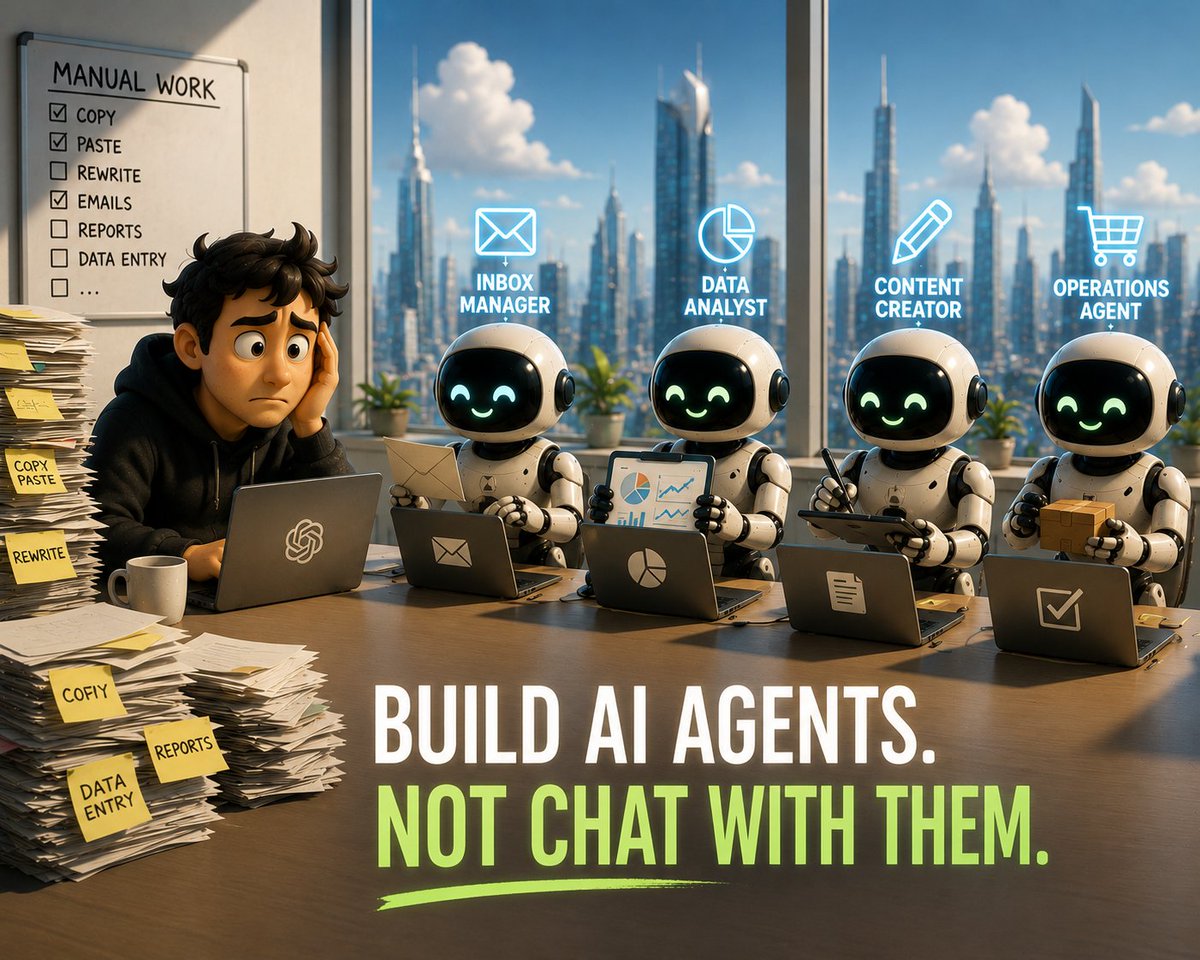
"Handle my emails." Good prompt: "Done means every morning at 9:00 AM the inbox is empty, replies are drafted in my voice, and VIP escalations are flagged to the top." 👤 2. Give it an Identity. An LLM out of the box knows a little about everything, making it generic. Giving it an identity focuses its genius. You need 3 simple plain-text configuration files to ground it: The Soul File: Defines its personality, values, quirks, and exact communication voice. The Identity File: Its name, specific DNA, core role, and strict boundary parameters (e.g., "Inbox only. Never touch my calendar."). The User File: Massive context about you—your goals, your business ecosystem, and who the agent is serving. 🛠️ 3. Equip It. Context is your agent's ultimate moat. To let it work effectively, you must map your workflows. The best way? Reverse prompt the source. Instead of writing a manual playbook, connect your agent to past logs (like your last 50 sent emails) and prompt it: "Study my tone, sentence length, and best practices. Generate a style guide capturing my voice, and draft the next unread email as a test." 🔎 4. Narrow the Scope Avoid the "Mega-Agent" trap. Do not build one agent to handle marketing, coding, and admin—it leads to massive context rot. You need one specialized agent per lane. For complex workflows, build a Manager Agent whose sole job is to orchestrate, delegate, and monitor specialized sub-agents underneath it. 🤝 5. Trust in Stages. You don’t hand over the keys to the car on day one. You build trust systematically: Guardrails: Define hard code boundaries inside the identity files. Review: Set it to generate drafts/actions for approval first. Loosen the leash: Allow autonomous execution on low-risk tasks (like forwarding sorting logs). Heartbeat: Turn on the recurring timer loop so it executes solo every 15 minutes. Where to start?Look for tasks that fit the Rules of R: Is it Repetitive? Is it Rules-based? Does automating it generate a massive Return on Time? Stop babysitting chatbots. Start orchestrating your digital workforce.
Ver resultados

Tu prompt

"Handle my emails." Good prompt: "Done means every morning at 9:00 AM the inbox is empty, replies are drafted in my voice, and VIP escalations are flagged to the top." 👤 2. Give it an Identity. An LLM out of the box knows a little about everything, making it generic. Giving it an identity focuses its genius. You need 3 simple plain-text configuration files to ground it: The Soul File: Defines its personality, values, quirks, and exact communication voice. The Identity File: Its name, specific DNA, core role, and strict boundary parameters (e.g., "Inbox only. Never touch my calendar."). The User File: Massive context about you—your goals, your business ecosystem, and who the agent is serving. 🛠️ 3. Equip It. Context is your agent's ultimate moat. To let it work effectively, you must map your workflows. The best way? Reverse prompt the source. Instead of writing a manual playbook, connect your agent to past logs (like your last 50 sent emails) and prompt it: "Study my tone, sentence length, and best practices. Generate a style guide capturing my voice, and draft the next unread email as a test." 🔎 4. Narrow the Scope Avoid the "Mega-Agent" trap. Do not build one agent to handle marketing, coding, and admin—it leads to massive context rot. You need one specialized agent per lane. For complex workflows, build a Manager Agent whose sole job is to orchestrate, delegate, and monitor specialized sub-agents underneath it. 🤝 5. Trust in Stages. You don’t hand over the keys to the car on day one. You build trust systematically: Guardrails: Define hard code boundaries inside the identity files. Review: Set it to generate drafts/actions for approval first. Loosen the leash: Allow autonomous execution on low-risk tasks (like forwarding sorting logs). Heartbeat: Turn on the recurring timer loop so it executes solo every 15 minutes. Where to start?Look for tasks that fit the Rules of R: Is it Repetitive? Is it Rules-based? Does automating it generate a massive Return on Time? Stop babysitting chatbots. Start orchestrating your digital workforce.

Qué obtienes

  • Un marco de cinco pasos para construir un agente de IA especializado y fiable
  • Una estructura de tres archivos de configuración: Alma, Identidad y Usuario
  • Un método de ingeniería inversa para extraer el estilo de registros reales
  • Un modelo de delegación con Agente Gestor y subagentes especializados
  • Una hoja de ruta de confianza gradual, de la revisión a la ejecución autónoma
  • Las reglas de la R para seleccionar tareas aptas para automatización

Casos de uso

  • Gestionar correo electrónico y respuestas con la voz del usuario
  • Automatizar tareas repetitivas basadas en reglas, como clasificar y reenviar
  • Construir equipos de agentes digitales especializados para marketing, administración y más
  • Entrenar agentes en el estilo de escritura de una persona o marca

Cómo usarlo

  • Define un resultado final medible para tu tarea, como un buzón vacío cada mañana a las 9:00 AM con respuestas redactadas en tu propia voz.
  • Crea los tres archivos de configuración: un archivo de Alma para personalidad y voz, un archivo de Identidad para rol y límites estrictos, y un archivo de Usuario con todo tu contexto.
  • Conecta el agente a tus registros previos (como tus últimos 50 correos enviados) y pídele extraer una guía de estilo que capture tu tono.
  • Asigna un agente especializado por función y evita la trampa del Mega-Agente, usando un Agente Gestor para coordinar subagentes en flujos complejos.
  • Aplica las etapas de confianza: barreras estrictas, luego borradores para aprobación, luego ejecución autónoma de tareas de bajo riesgo y un bucle cada 15 minutos.

Prompts relacionados