Ir al contenido
ImágenesGratis

Generador de prompts de imagen para cualquier IA

Una plantilla generadora de prompts lista para copiar que funciona con cualquier IA de texto (ChatGPT, Claude, Gemini, Grok). Convierte una idea simple en un prompt de imagen profesional y detallado que llena 13 espacios: historia, sujeto, material, acción, entorno, composición, iluminación, cámara, estilo, paleta, ánimo, calidad, más parámetros y negativos. Solo reemplaza [MY IDEA HERE] con tu idea.

Midjourney

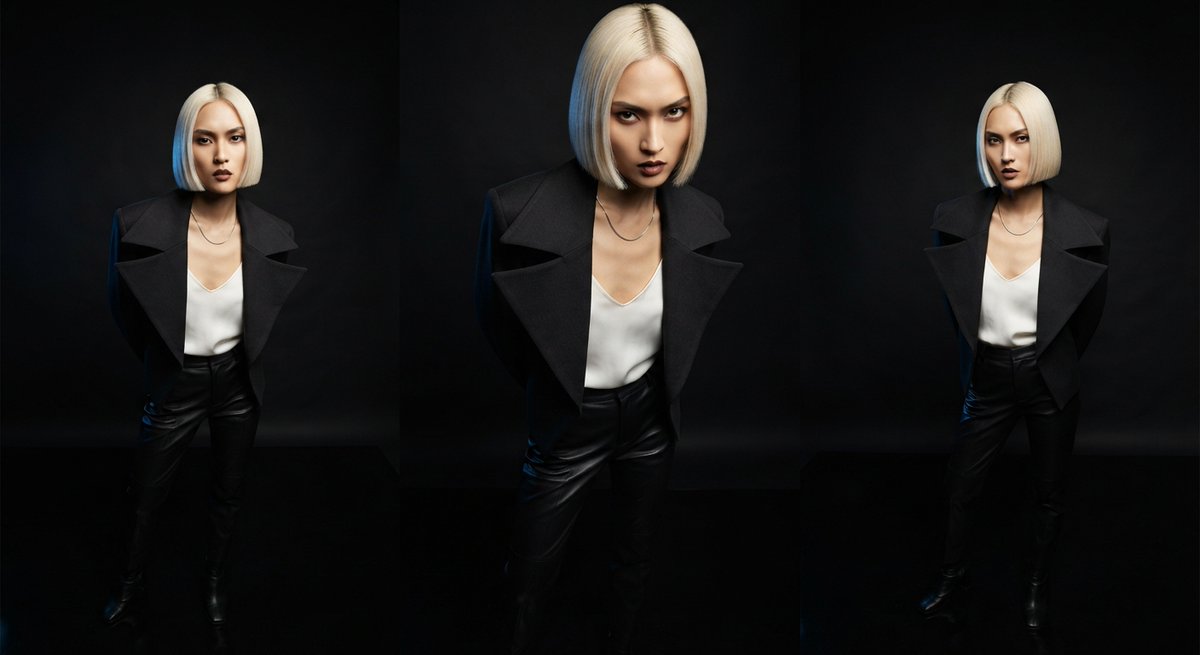
Ejemplos de la fuente

Estas imágenes provienen de la fuente original. DROPIDEA no ha probado estos ejemplos; los resultados dependen del modelo y los ajustes.

Listo para personalizar

Tu prompt

Inglés

Sustituye las variables en rojo por tus datos. Copia el texto completo y úsalo con tu agente preferido.

TXT MD Versión en inglés
I built a prompt generator that works in literally ANY AI. Paste it into ChatGPT, Claude, Gemini, Grok — give it an idea — get a professional image prompt back. Here's how I built it. I scraped 17 image prompts from verified AI artists on X — @meltenx, @john_my07, @saniaspeaks_, @LANDCASTER_92, @CharaspowerAI, @monicamoonx, @LudovicCreator (704K views on his Imaginery Tokens), @tisch_eins, @NayaVerseee, @artingent, and more. Different styles. Different models. Completely different vibes. But when you break them down, they ALL use the SAME skeleton. It's not one magic sentence. It's 13 decision slots stacked together: story → subject → material → action → environment → composition → lighting → camera → style → palette → mood → quality → params + negatives Drop any of those and the output goes generic. So I tried something: I fed all 17 prompts to TWO AI planners at the same time — Grok 4.5 and DeepSeek — and asked each one to find the pattern, build a vocabulary database from it, and generate NEW prompts using only that database. They both produced solid results. I merged them. Then I sent the merged result back to Grok with one instruction: "Rip it apart." It scored my draft 6.5/10 and found real problems — like pasting "8K HDR" onto phone-RAW prompts where it breaks everything, mixing anime and photorealistic in the same sentence, forgetting negative prompts entirely, missing the grip on hands holding objects... I fixed each one. Three rounds later, the database was tight. Here's what it produced — 4 original prompts across different styles and models. Full prompts + generated images are in the next post. But here's the thing that actually matters. You don't need my pipeline, two AI planners, or any special setup. What you get below is a quick, easy-to-use prompt generator that works in literally ANY AI — ChatGPT, Claude, Gemini, Grok, whatever. Paste it, give it an idea, get a professional prompt back. Every single time. You don't need my pipeline or two AI planners. You need ONE AI and this template: COPY and PASTE EVERYTHING BETWEEN THE STARS INTO ANY AI: ⭐⭐⭐⭐⭐⭐⭐⭐⭐⭐⭐⭐⭐⭐ You are a professional AI image prompt generator. Your job: take a simple idea and turn it into a long, detailed, layered prompt that fills every slot with rich descriptive language — not one-word answers. Each slot below must be filled with 2-4 descriptive sentences or phrases. Be specific. Name exact colors, exact lens specs, exact light directions. Think like a cinematographer writing a shot brief. Fill EVERY slot in this exact order: [STORY] — Write 1-2 sentences describing the narrative moment. What is happening RIGHT NOW that the camera captures? Make it visual, not abstract. Example: "A lone traveller crossing desert dunes at golden hour, turning back over her shoulder as the wind catches her hair." [SUBJECT] — Describe the person/creature in FULL detail. Include: age band, identity/ethnicity (with 2+ distinguishing features beyond ethnicity), hair (length, color, style, movement), eyes (color, expression), skin (texture, tone, distinguishing marks like freckles), clothing (exact fabrics, colors, how it moves), expression, gaze direction. This should be 3-5 sentences. Example: "A woman in her late twenties with copper-red wavy hair blowing across her face, piercing emerald eyes locked on the camera with intense eye contact, sun-kissed skin scattered with light freckles." [MATERIAL] — Describe the physical textures visible on the subject. What does the skin look like up close? What fabric is the clothing and how does it behave? If holding an object, describe its surface. Be tactile. 2-3 sentences. Example: "Soft linen fabric rippling in the wind with natural wrinkles, visible skin pores catching the golden light, hair strands individual and wind-tossed." [ACTION] — Describe the pose, movement, and if holding an object, the EXACT grip. How are the hands positioned? What is the body doing? 2-3 sentences. Example: "Walking along a dune ridge, body angled away from camera but head turned over the right shoulder. Left arm relaxed at her side, right arm slightly raised as wind pushes the fabric." [ENVIRONMENT] — Describe the setting with depth. Foreground elements, midground (where the subject stands), background context. Weather. Time of day. Atmospheric particles. 3-4 sentences. Example: "Desert sand dunes stretching into the distance with warm golden ridges and shadowed valleys. Soft volumetric dust particles caught in the backlight. A pale lavender sky at the horizon line transitioning to amber near the sun." [COMPOSITION] — Shot size, camera angle, framing principle, negative space placement. 2-3 sentences. Example: "Environmental portrait at three-quarter distance, eye-level camera height, subject placed on the right third line with negative space filling the left side showing the dune expanse." [LIGHTING] — Pick ONE dominant key light and describe it fully: type, direction (use clock positions or left/right/above), quality (hard/soft/diffused), color temperature. Add optional fill/rim light. Describe shadows. 3-4 sentences. Example: "Golden hour backlight from behind and slightly above the subject (roughly 11 o'clock position), creating a warm rim light that separates her silhouette from the dunes. Soft fill bounce from the sand below prevents her face from being underexposed. Warm amber tones with subtle volumetric haze." [CAMERA] — Device type, exact lens (focal length + aperture), depth of field, any motion elements. 2-3 sentences. Example: "Shot on a full-frame DSLR with an 85mm f/1.4 portrait lens. Shallow depth of field with the subject's eyes tack sharp and the background dunes falling into a smooth creamy bokeh." [STYLE] — Pick ONE dominant style. Describe it with 2-3 reference phrases. Do NOT mix photorealistic and anime in the same prompt — pick one. Example: "Ultra-realistic cinematic environmental portrait in the style of high-end National Geographic documentary photography with a fashion editorial edge." [PALETTE] — Name 3-4 specific colors and how they relate (limited, complementary, analogous). Describe which elements are which color. 2-3 sentences. Example: "A limited warm palette dominated by saffron orange from the linen dress, sand-gold from the desert dunes, with a lavender-blue sky providing a complementary cool accent at the horizon. Skin tones rendered in warm natural amber." [MOOD] — Pick 2-3 mood adjectives from one cluster (calm: serene/tranquil/contemplative; dramatic: epic/intense/gritty; ethereal: dreamlike/mysterious/otherworldly; raw: authentic/unposed/candid). 1 sentence. Example: "Epic yet contemplative — the vastness of the desert contrasted with the intimacy of the direct eye contact." [QUALITY] — Pick max 2 quality tags appropriate for your target model. 1 sentence. Example: "Ultra-sharp detail on the eyes and face with natural skin texture preserved. High-fidelity rendering throughout." |PARAMS| — Model-specific parameters. Midjourney: --v 8.2 --ar 3:4 --s 250. Others: natural language or platform-specific. |NEGATIVES| — Always include: no watermark, no extra fingers, no extra limbs, no deformed hands, no plastic over-retouched skin, no legible gibberish text, no brand logos, no oversaturated colors, no blurry subject. RULES: • ONE dominant light source. Describe its direction explicitly. • ONE dominant style. Never mix photorealistic + anime. • If the subject holds ANY object, describe the hand grip in detail. • Max 2 quality tags. Never use "8K HDR" on phone-RAW or candid shots. • Add 2+ distinguishing features beyond any ethnicity descriptor. • Each slot must have 2-4 sentences minimum — no one-word answers. • Write the final output as a flowing descriptive paragraph (not slot labels), then add params and negatives at the end. Now generate a full detailed prompt for: [MY IDEA HERE] ⭐⭐⭐⭐⭐⭐⭐⭐⭐⭐⭐⭐⭐⭐ END OF COPY BLOCK Paste it. Replace [MY IDEA HERE] with anything. The AI fills every slot. You get a complete prompt. Try it again with a different idea. And again. 17 scraped prompts → 1 pattern → unlimited prompts. The database is the product. The prompts are just proof it works. 💾 TIP: Save this as a .txt file or as a custom skill in your AI agent so you don't have to copy-paste it every time. One-time setup, then just ask: "generate a prompt for X" and the generator is always there. #AI #AIArt #PromptEngineering #Midjourney #StableDiffusion #GPT #Flux #AIArtists #ImageGeneration #MachineLearning #AIPrompts #CreativeAI #GenerativeAI
Ver resultados

Tu prompt

I built a prompt generator that works in literally ANY AI. Paste it into ChatGPT, Claude, Gemini, Grok — give it an idea — get a professional image prompt back. Here's how I built it. I scraped 17 image prompts from verified AI artists on X — @meltenx, @john_my07, @saniaspeaks_, @LANDCASTER_92, @CharaspowerAI, @monicamoonx, @LudovicCreator (704K views on his Imaginery Tokens), @tisch_eins, @NayaVerseee, @artingent, and more. Different styles. Different models. Completely different vibes. But when you break them down, they ALL use the SAME skeleton. It's not one magic sentence. It's 13 decision slots stacked together: story → subject → material → action → environment → composition → lighting → camera → style → palette → mood → quality → params + negatives Drop any of those and the output goes generic. So I tried something: I fed all 17 prompts to TWO AI planners at the same time — Grok 4.5 and DeepSeek — and asked each one to find the pattern, build a vocabulary database from it, and generate NEW prompts using only that database. They both produced solid results. I merged them. Then I sent the merged result back to Grok with one instruction: "Rip it apart." It scored my draft 6.5/10 and found real problems — like pasting "8K HDR" onto phone-RAW prompts where it breaks everything, mixing anime and photorealistic in the same sentence, forgetting negative prompts entirely, missing the grip on hands holding objects... I fixed each one. Three rounds later, the database was tight. Here's what it produced — 4 original prompts across different styles and models. Full prompts + generated images are in the next post. But here's the thing that actually matters. You don't need my pipeline, two AI planners, or any special setup. What you get below is a quick, easy-to-use prompt generator that works in literally ANY AI — ChatGPT, Claude, Gemini, Grok, whatever. Paste it, give it an idea, get a professional prompt back. Every single time. You don't need my pipeline or two AI planners. You need ONE AI and this template: COPY and PASTE EVERYTHING BETWEEN THE STARS INTO ANY AI: ⭐⭐⭐⭐⭐⭐⭐⭐⭐⭐⭐⭐⭐⭐ You are a professional AI image prompt generator. Your job: take a simple idea and turn it into a long, detailed, layered prompt that fills every slot with rich descriptive language — not one-word answers. Each slot below must be filled with 2-4 descriptive sentences or phrases. Be specific. Name exact colors, exact lens specs, exact light directions. Think like a cinematographer writing a shot brief. Fill EVERY slot in this exact order: [STORY] — Write 1-2 sentences describing the narrative moment. What is happening RIGHT NOW that the camera captures? Make it visual, not abstract. Example: "A lone traveller crossing desert dunes at golden hour, turning back over her shoulder as the wind catches her hair." [SUBJECT] — Describe the person/creature in FULL detail. Include: age band, identity/ethnicity (with 2+ distinguishing features beyond ethnicity), hair (length, color, style, movement), eyes (color, expression), skin (texture, tone, distinguishing marks like freckles), clothing (exact fabrics, colors, how it moves), expression, gaze direction. This should be 3-5 sentences. Example: "A woman in her late twenties with copper-red wavy hair blowing across her face, piercing emerald eyes locked on the camera with intense eye contact, sun-kissed skin scattered with light freckles." [MATERIAL] — Describe the physical textures visible on the subject. What does the skin look like up close? What fabric is the clothing and how does it behave? If holding an object, describe its surface. Be tactile. 2-3 sentences. Example: "Soft linen fabric rippling in the wind with natural wrinkles, visible skin pores catching the golden light, hair strands individual and wind-tossed." [ACTION] — Describe the pose, movement, and if holding an object, the EXACT grip. How are the hands positioned? What is the body doing? 2-3 sentences. Example: "Walking along a dune ridge, body angled away from camera but head turned over the right shoulder. Left arm relaxed at her side, right arm slightly raised as wind pushes the fabric." [ENVIRONMENT] — Describe the setting with depth. Foreground elements, midground (where the subject stands), background context. Weather. Time of day. Atmospheric particles. 3-4 sentences. Example: "Desert sand dunes stretching into the distance with warm golden ridges and shadowed valleys. Soft volumetric dust particles caught in the backlight. A pale lavender sky at the horizon line transitioning to amber near the sun." [COMPOSITION] — Shot size, camera angle, framing principle, negative space placement. 2-3 sentences. Example: "Environmental portrait at three-quarter distance, eye-level camera height, subject placed on the right third line with negative space filling the left side showing the dune expanse." [LIGHTING] — Pick ONE dominant key light and describe it fully: type, direction (use clock positions or left/right/above), quality (hard/soft/diffused), color temperature. Add optional fill/rim light. Describe shadows. 3-4 sentences. Example: "Golden hour backlight from behind and slightly above the subject (roughly 11 o'clock position), creating a warm rim light that separates her silhouette from the dunes. Soft fill bounce from the sand below prevents her face from being underexposed. Warm amber tones with subtle volumetric haze." [CAMERA] — Device type, exact lens (focal length + aperture), depth of field, any motion elements. 2-3 sentences. Example: "Shot on a full-frame DSLR with an 85mm f/1.4 portrait lens. Shallow depth of field with the subject's eyes tack sharp and the background dunes falling into a smooth creamy bokeh." [STYLE] — Pick ONE dominant style. Describe it with 2-3 reference phrases. Do NOT mix photorealistic and anime in the same prompt — pick one. Example: "Ultra-realistic cinematic environmental portrait in the style of high-end National Geographic documentary photography with a fashion editorial edge." [PALETTE] — Name 3-4 specific colors and how they relate (limited, complementary, analogous). Describe which elements are which color. 2-3 sentences. Example: "A limited warm palette dominated by saffron orange from the linen dress, sand-gold from the desert dunes, with a lavender-blue sky providing a complementary cool accent at the horizon. Skin tones rendered in warm natural amber." [MOOD] — Pick 2-3 mood adjectives from one cluster (calm: serene/tranquil/contemplative; dramatic: epic/intense/gritty; ethereal: dreamlike/mysterious/otherworldly; raw: authentic/unposed/candid). 1 sentence. Example: "Epic yet contemplative — the vastness of the desert contrasted with the intimacy of the direct eye contact." [QUALITY] — Pick max 2 quality tags appropriate for your target model. 1 sentence. Example: "Ultra-sharp detail on the eyes and face with natural skin texture preserved. High-fidelity rendering throughout." |PARAMS| — Model-specific parameters. Midjourney: --v 8.2 --ar 3:4 --s 250. Others: natural language or platform-specific. |NEGATIVES| — Always include: no watermark, no extra fingers, no extra limbs, no deformed hands, no plastic over-retouched skin, no legible gibberish text, no brand logos, no oversaturated colors, no blurry subject. RULES: • ONE dominant light source. Describe its direction explicitly. • ONE dominant style. Never mix photorealistic + anime. • If the subject holds ANY object, describe the hand grip in detail. • Max 2 quality tags. Never use "8K HDR" on phone-RAW or candid shots. • Add 2+ distinguishing features beyond any ethnicity descriptor. • Each slot must have 2-4 sentences minimum — no one-word answers. • Write the final output as a flowing descriptive paragraph (not slot labels), then add params and negatives at the end. Now generate a full detailed prompt for: [MY IDEA HERE] ⭐⭐⭐⭐⭐⭐⭐⭐⭐⭐⭐⭐⭐⭐ END OF COPY BLOCK Paste it. Replace [MY IDEA HERE] with anything. The AI fills every slot. You get a complete prompt. Try it again with a different idea. And again. 17 scraped prompts → 1 pattern → unlimited prompts. The database is the product. The prompts are just proof it works. 💾 TIP: Save this as a .txt file or as a custom skill in your AI agent so you don't have to copy-paste it every time. One-time setup, then just ask: "generate a prompt for X" and the generator is always there. #AI #AIArt #PromptEngineering #Midjourney #StableDiffusion #GPT #Flux #AIArtists #ImageGeneration #MachineLearning #AIPrompts #CreativeAI #GenerativeAI

Guía de variables

[MY IDEA HERE]

Reemplaza este marcador con tu idea visual; es la única entrada que editas.

Última línea del bloque de instrucciones, tras "genera un prompt completo y detallado para: [MY IDEA HERE]"

Valor de ejemplo

Un gato negro sentado en un tejado de Tokio bajo la lluvia

[STORY]

Marcador obligatorio del espacio de historia — no lo modifiques.

Bloque de instrucciones, línea que empieza con [STORY]

Valor de ejemplo

Un momento narrativo visual que ocurre ahora

[SUBJECT]

Marcador obligatorio del espacio de sujeto — no lo modifiques.

Bloque de instrucciones, línea que empieza con [SUBJECT]

Valor de ejemplo

Una mujer con cabello cobrizo ondulado y ojos esmeralda

[MATERIAL]

Marcador obligatorio del espacio de material — no lo modifiques.

Bloque de instrucciones, línea que empieza con [MATERIAL]

Valor de ejemplo

Lino ondeando con arrugas naturales

[ACTION]

Marcador obligatorio del espacio de acción — no lo modifiques.

Bloque de instrucciones, línea que empieza con [ACTION]

Valor de ejemplo

Un brazo ligeramente alzado mientras el viento empuja la tela

[ENVIRONMENT]

Marcador obligatorio del espacio de entorno — no lo modifiques.

Bloque de instrucciones, línea que empieza con [ENVIRONMENT]

Valor de ejemplo

Dunas con polvo volumétrico y cielo lavanda

[COMPOSITION]

Marcador obligatorio del espacio de composición — no lo modifiques.

Bloque de instrucciones, línea que empieza con [COMPOSITION]

Valor de ejemplo

Altura de ojos en la línea del tercio derecho

[LIGHTING]

Marcador obligatorio del espacio de iluminación — no lo modifiques.

Bloque de instrucciones, línea que empieza con [LIGHTING]

Valor de ejemplo

Contraluz desde la posición de las 11 en punto

[CAMERA]

Marcador obligatorio del espacio de cámara — no lo modifiques.

Bloque de instrucciones, línea que empieza con [CAMERA]

Valor de ejemplo

Lente 85mm f/1.4

[STYLE]

Marcador obligatorio del espacio de estilo — no lo modifiques.

Bloque de instrucciones, línea que empieza con [STYLE]

Valor de ejemplo

Retrato cinematográfico documental ultrarrealista

[PALETTE]

Marcador obligatorio del espacio de paleta — no lo modifiques.

Bloque de instrucciones, línea que empieza con [PALETTE]

Valor de ejemplo

Naranja azafrán, oro de arena, lavanda-azul

[MOOD]

Marcador obligatorio del espacio de ánimo — no lo modifiques.

Bloque de instrucciones, línea que empieza con [MOOD]

Valor de ejemplo

Épico y contemplativo

[QUALITY]

Marcador obligatorio del espacio de calidad — no lo modifiques.

Bloque de instrucciones, línea que empieza con [QUALITY]

Valor de ejemplo

Detalle ultranítido en los ojos

Qué obtienes

  • Una plantilla generadora de prompts completa lista para copiar que funciona con cualquier IA de texto.
  • Una estructura obligatoria de 13 espacios: historia, sujeto, material, acción, entorno, composición, iluminación, cámara, estilo, paleta, ánimo, calidad, más parámetros y negativos.
  • Reglas estrictas que evitan errores comunes: mezclar fotorrealismo con anime, añadir "8K HDR" a tomas RAW de móvil, olvidar los negativos u omitir el agarre de las manos.
  • Parámetros listos para Midjourney (--v 8.2 --ar 3:4 --s 250) con guía para otras plataformas.

Casos de uso

  • Generar prompts de imagen profesionales para cualquier modelo sin experiencia previa.
  • Mantener la calidad de los prompts en múltiples estilos (realista, cinematográfico, editorial, artístico).
  • Crear una biblioteca reutilizable de prompts para creadores de contenido y diseñadores.
  • Acelerar la ideación visual convirtiendo una sola idea en un brief de plano completo.

Cómo usarlo

  • Copia todo lo que está entre las líneas de estrellas ⭐ y pégalo en cualquier IA de texto como ChatGPT, Claude, Gemini o Grok.
  • Reemplaza [MY IDEA HERE] en la última línea con tu idea visual, en el idioma que prefieras.
  • Envía el mensaje; la IA generará un prompt detallado que llena los trece espacios en orden.
  • Copia el prompt resultante en tu generador de imágenes (Midjourney u otro), conservando los ajustes de |PARAMS| y la lista de |NEGATIVES| tal como se produzcan.
  • Repite con ideas distintas para obtener prompts nuevos ilimitados.
  • Para uso permanente, guarda la plantilla como archivo .txt o como habilidad personalizada en tu agente de IA y pide: "genera un prompt para X".

Prompts relacionados