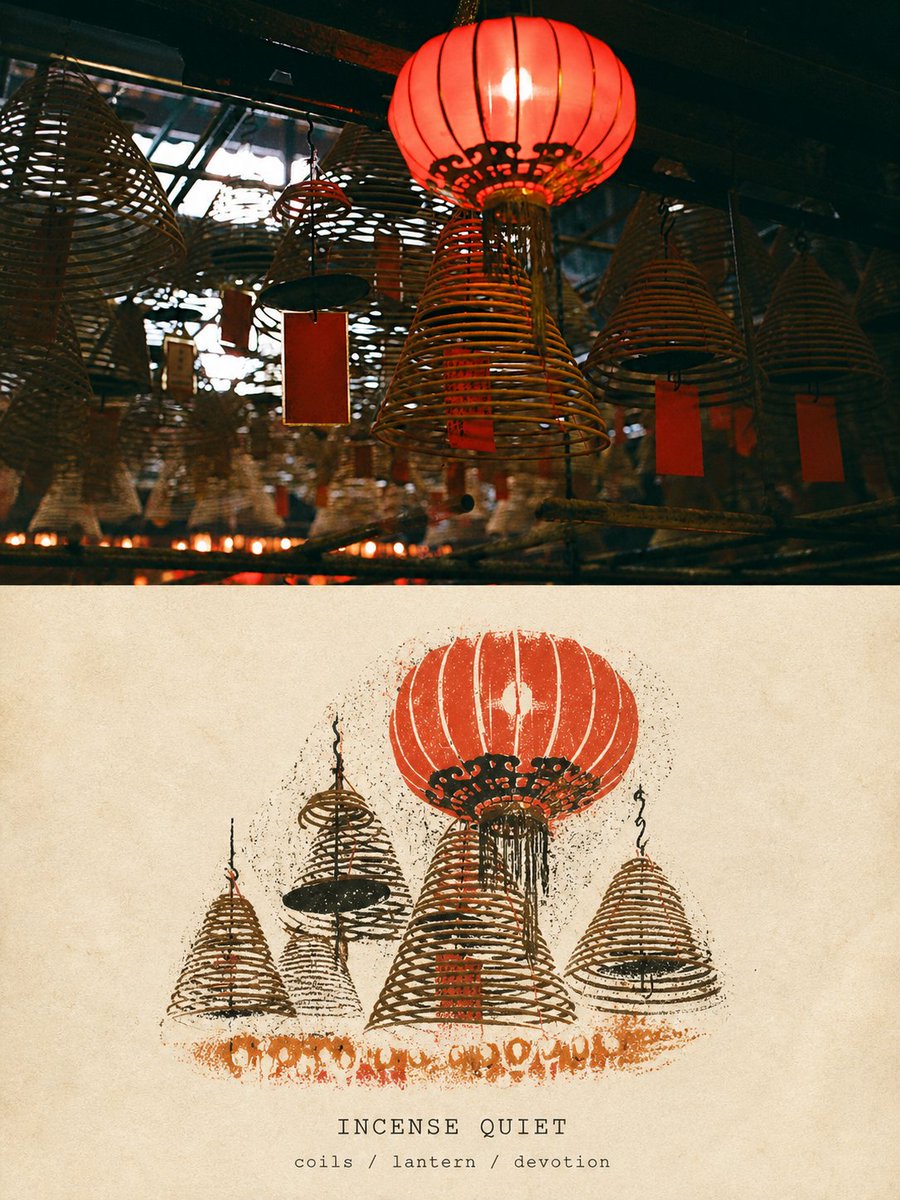
Using the currently uploaded photo as the sole reference, in a single image-editing generation, produce it as a complete, standalone high-end travel design poster.
Do not add other reference photos. Do not create multi-image collages, 3x3 grids, or poster mockup displays. Output only the front face of the poster itself.
I. Overall Layout
Use a precise 3:4 vertical composition.
The image is divided into two horizontal regions, top and bottom, with heights close to a 1:1 ratio, each occupying approximately 50% of the whole. The division must be clear, horizontal, and restrained; do not let the upper and lower content encroach on each other.
The upper half is a high-fidelity realistic photography region.
The lower half is a "TRAVEL RELIEF PRINT" limited-color travel relief-print region of the same photo.
The top and bottom must represent the same location, the same subject, and the same travel memory.
II. Upper Half: High-Fidelity Preservation of the Original Photo
The upper half must faithfully preserve the currently uploaded original photo.
Accurately maintain:
- The identity and quantity of the subject
- The posture, action, and facing direction of the person or animal
- The architectural structure, terrain, and street orientation
- The vehicle(s) and core object(s)
- The original viewing angle and spatial perspective
- The relative positions of important objects
- Real materials
- Natural light and shadow
- The original color atmosphere
The upper half must clearly still look like a real photographic work; it must not become a relief print, illustration, painting, or AI-reconstructed photo.
Only very slight, restrained high-end photographic color grading, dynamic range cleanup, and an extremely thin film grain are allowed, so that the photo carries the quality of an independent travel magazine, architectural photography, art publication, or photography exhibition.
To fit the upper region, the sky, ground, or surrounding environment may be naturally extended, but the extended content must match the perspective, texture, lighting, and spatial orientation of the original photo.
Do not stretch, squeeze, distort, mirror, duplicate the subject, alter the person, move objects, reshape architecture, replace the sky, or use blurred photo copies to fill the edges.
If natural extension is not reasonable, prefer clean ivory paper margins consistent with the entire poster rather than damaging the original photo.
III. Lower Half: TRAVEL RELIEF PRINT
The lower half uses a warm cream or ivory natural printmaking paper background.
The paper should have:
visible paper grain,
subtle paper fibers,
slightly rough matte surface,
warm archival paper,
natural pigment absorption.
Select one most identifiable subject from the upper photo, or an overall scene that can represent the photo's meaning, and recreate it as an independent "travel printmaking imprint" floating on the paper surface.
Retain what determines the recognizability of the original photo:
- The subject's outer silhouette
- Posture or direction of movement
- Main light/dark partitions
- Perspective direction
- Key structures
- Material texture rhythm
- Iconic colors
- The most important spatial relationships
Actively remove:
- Complex backgrounds
- Repeating architectural structures
- Large numbers of windows
- Dense crowds
- Irrelevant vehicles
- Tiny signs
- Clutter
- Fine, fragmented textures
- Secondary objects
- Text that cannot be accurately generated
Lower…