Ir al contenido
ImágenesGratis

Pósters editoriales de parches de viaje bordados

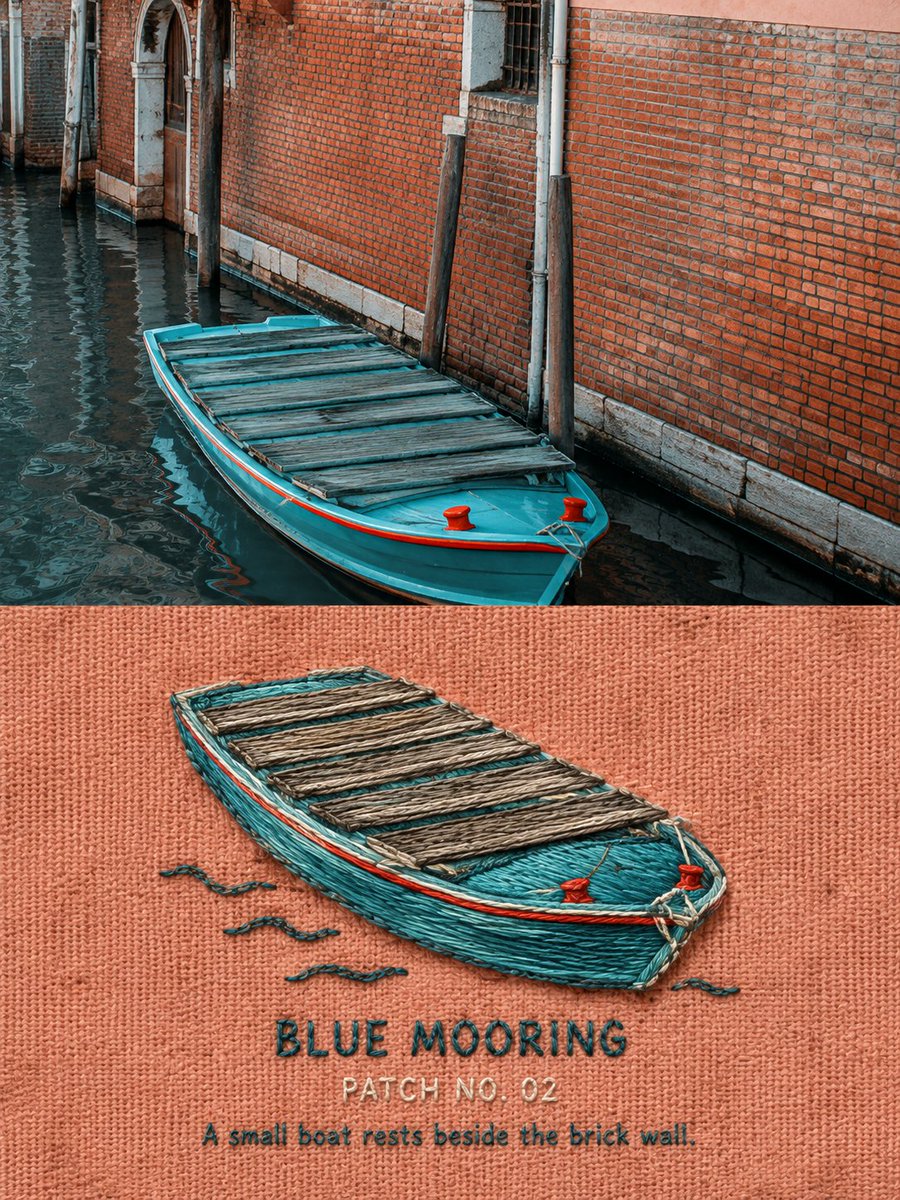
Convierte cada foto de viaje que subas en un póster editorial vertical independiente de 3:4 que combina la foto original con un leve ajuste de color arriba y un parche de tela bordado a mano con un solo sujeto extraído de la misma foto abajo, con texto bordado, un campo de número de parche y una breve observación en inglés. El color de la tela y de los hilos se adapta a cada foto.

OpenAI

Ejemplos de la fuente

Estas imágenes provienen de la fuente original. DROPIDEA no ha probado estos ejemplos; los resultados dependen del modelo y los ajustes.

Listo para personalizar

Tu prompt

Inglés

Sustituye las variables en rojo por tus datos. Copia el texto completo y úsalo con tu agente preferido.

TXT MD Versión en inglés
Please turn each of the travel photos I upload into an independent, high-end editorial poster of an "embroidered travel cloth patch," without tiling multiple images together — output each photo separately. Use an overall 3:4 vertical original-photo comparison composition. The upper half must clearly keep the original photo with substantial area; the lower half presents a single embroidered travel subject extracted from the same photo. Each half usually occupies about 50%, and may be adjusted slightly according to the photo's proportions, but the original-photo comparison must not be removed. In the upper half, preserve the subject's identity, quantity, pose, structure, viewing angle, environmental relationships, real materials, natural light and shadow, and original colors in high fidelity. Only apply subtle travel-magazine and art-publication color grading. The upper half must remain a real photographic work — do not illustrate it, replace the scene, add or remove subjects, or alter the structure of buildings or vehicles. When the original photo's proportions do not fit the horizontal area, center it while preserving its own aspect ratio, and fill the remaining space with solid-color side panels using the lower half's fabric base color. Do not stretch, mirror, or fill the sides with a blurred photo. In the lower half, do not embroider the entire photo. Select only one core subject with the strongest recognizability and clearest silhouette from the photo, for example a tram, a boat, a bicycle, a hot-air balloon, an animal, a figure with a clear action, or a travel object. Preserve the outer silhouette, orientation, pose, key structures, and signature color blocks that define the subject's identity, and remove building groups, streets, sky, water, mountains, trees, and other complex backgrounds. The subject should use a reduced and refined or single-object display composition, occupying about 28%–52% of the width and 30%–50% of the height of the lower area, usually placed in the center or lower-center. Reserve about 45%–65% of the surrounding space as continuous, complete fabric negative space without fragmentary decorations. You may add 2–5 short stitches to suggest tracks, water ripples, wind direction, ground, or the direction of motion, but they must not develop into a complete background, and no second visual subject may appear. The lower background is a single, visibly real piece of twill, old canvas, coarse cotton, or linen. The fabric base color must be extracted from the original photo and adapt to each photo — for example grey-blue, terracotta pink, blue-green, smoky blue-grey, warm beige, or other low-saturation colors. Do not fix the same off-white fabric for all photos. Use real satin stitch, split stitch, chain stitch, backstitch, and a small amount of loose thread to construct the subject. The stitch direction must change according to the subject's volumes, structure, and motion: metal, wood, clothing, animal fur, wheels, hull, balloon, or plants need to be rendered with different stitch directions, lengths, and thread pile heights. Locally allow thread buildup, slightly uneven stitches, misaligned edges, exposed ground fabric, loose threads, thread ends, and wrinkled cloth surface, so it looks like hand embroidery actually sewn onto cloth rather than a printed illustration or digital filter. For each piece, extract 4–8 thread colors from the original photo, preserve the subject's most recognizable color relationships, then appropriately summarize and soften them. Do not use fixed rainbow threads, neon gradients, or high-saturation clashing colors unrelated to the photo. Text is concentrated below the embroidered subject, using lower-pile chain stitches, small woven labels, or cloth embroidery. By default include a title of 1–3 English words, a field in the style of "PATCH NO. 01", and a short observation sentence of 5–10 English words. The text content must be distilled from the truly visible subject, action, or state in the photo, and must be clearly legible…
Ver resultados

Tu prompt

Please turn each of the travel photos I upload into an independent, high-end editorial poster of an "embroidered travel cloth patch," without tiling multiple images together — output each photo separately. Use an overall 3:4 vertical original-photo comparison composition. The upper half must clearly keep the original photo with substantial area; the lower half presents a single embroidered travel subject extracted from the same photo. Each half usually occupies about 50%, and may be adjusted slightly according to the photo's proportions, but the original-photo comparison must not be removed. In the upper half, preserve the subject's identity, quantity, pose, structure, viewing angle, environmental relationships, real materials, natural light and shadow, and original colors in high fidelity. Only apply subtle travel-magazine and art-publication color grading. The upper half must remain a real photographic work — do not illustrate it, replace the scene, add or remove subjects, or alter the structure of buildings or vehicles. When the original photo's proportions do not fit the horizontal area, center it while preserving its own aspect ratio, and fill the remaining space with solid-color side panels using the lower half's fabric base color. Do not stretch, mirror, or fill the sides with a blurred photo. In the lower half, do not embroider the entire photo. Select only one core subject with the strongest recognizability and clearest silhouette from the photo, for example a tram, a boat, a bicycle, a hot-air balloon, an animal, a figure with a clear action, or a travel object. Preserve the outer silhouette, orientation, pose, key structures, and signature color blocks that define the subject's identity, and remove building groups, streets, sky, water, mountains, trees, and other complex backgrounds. The subject should use a reduced and refined or single-object display composition, occupying about 28%–52% of the width and 30%–50% of the height of the lower area, usually placed in the center or lower-center. Reserve about 45%–65% of the surrounding space as continuous, complete fabric negative space without fragmentary decorations. You may add 2–5 short stitches to suggest tracks, water ripples, wind direction, ground, or the direction of motion, but they must not develop into a complete background, and no second visual subject may appear. The lower background is a single, visibly real piece of twill, old canvas, coarse cotton, or linen. The fabric base color must be extracted from the original photo and adapt to each photo — for example grey-blue, terracotta pink, blue-green, smoky blue-grey, warm beige, or other low-saturation colors. Do not fix the same off-white fabric for all photos. Use real satin stitch, split stitch, chain stitch, backstitch, and a small amount of loose thread to construct the subject. The stitch direction must change according to the subject's volumes, structure, and motion: metal, wood, clothing, animal fur, wheels, hull, balloon, or plants need to be rendered with different stitch directions, lengths, and thread pile heights. Locally allow thread buildup, slightly uneven stitches, misaligned edges, exposed ground fabric, loose threads, thread ends, and wrinkled cloth surface, so it looks like hand embroidery actually sewn onto cloth rather than a printed illustration or digital filter. For each piece, extract 4–8 thread colors from the original photo, preserve the subject's most recognizable color relationships, then appropriately summarize and soften them. Do not use fixed rainbow threads, neon gradients, or high-saturation clashing colors unrelated to the photo. Text is concentrated below the embroidered subject, using lower-pile chain stitches, small woven labels, or cloth embroidery. By default include a title of 1–3 English words, a field in the style of "PATCH NO. 01", and a short observation sentence of 5–10 English words. The text content must be distilled from the truly visible subject, action, or state in the photo, and must be clearly legible…

Guía de variables

PATCH NO. 01

El número de parche en el campo "PATCH NO. 01"; cambia 01 en cada foto para numerar la serie, manteniendo el formato del campo.

En el párrafo de texto cerca del final de la plantilla en inglés, en la frase: a field in the style of "PATCH NO. 01" (plantilla árabe: حقلًا بنمط «PATCH NO. 01»)

Valor de ejemplo

PATCH NO. 02

Qué obtienes

  • Un póster vertical de 3:4 por foto, dividido en dos mitades de aproximadamente 50% cada una.
  • Una mitad superior que conserva la foto original con un sutil grading estilo revista de viajes.
  • Una mitad inferior con un solo sujeto bordado a mano sobre tela real cuyo color base se extrae de la foto.
  • Texto bordado con un título de 1–3 palabras en inglés, un campo "PATCH NO. 01" y una observación de 5–10 palabras en inglés.

Casos de uso

  • Serie conmemorativa de pósters para un viaje o blog de viajes.
  • Láminas enmarcadas y tarjetas de estilo editorial.
  • Contenido para redes sociales de marcas de viaje y productos artesanales.
  • Identidad visual o empaquetado para una tienda de artículos de viaje.

Cómo usarlo

  • Sube una o más fotos de viaje (las fotos deben subirse, ya que son la fuente tanto de la mitad superior como del sujeto bordado).
  • Si quieres parches numerados, cambia el número en "PATCH NO. 01" en el párrafo de texto al valor deseado para cada foto.
  • Envía la solicitud; se generará un póster independiente por foto, sin combinar fotos entre sí.
  • Revisa el resultado y repite con las demás fotos para crear una serie coherente.

Prompts relacionados