Ir al contenido
ImágenesGratis

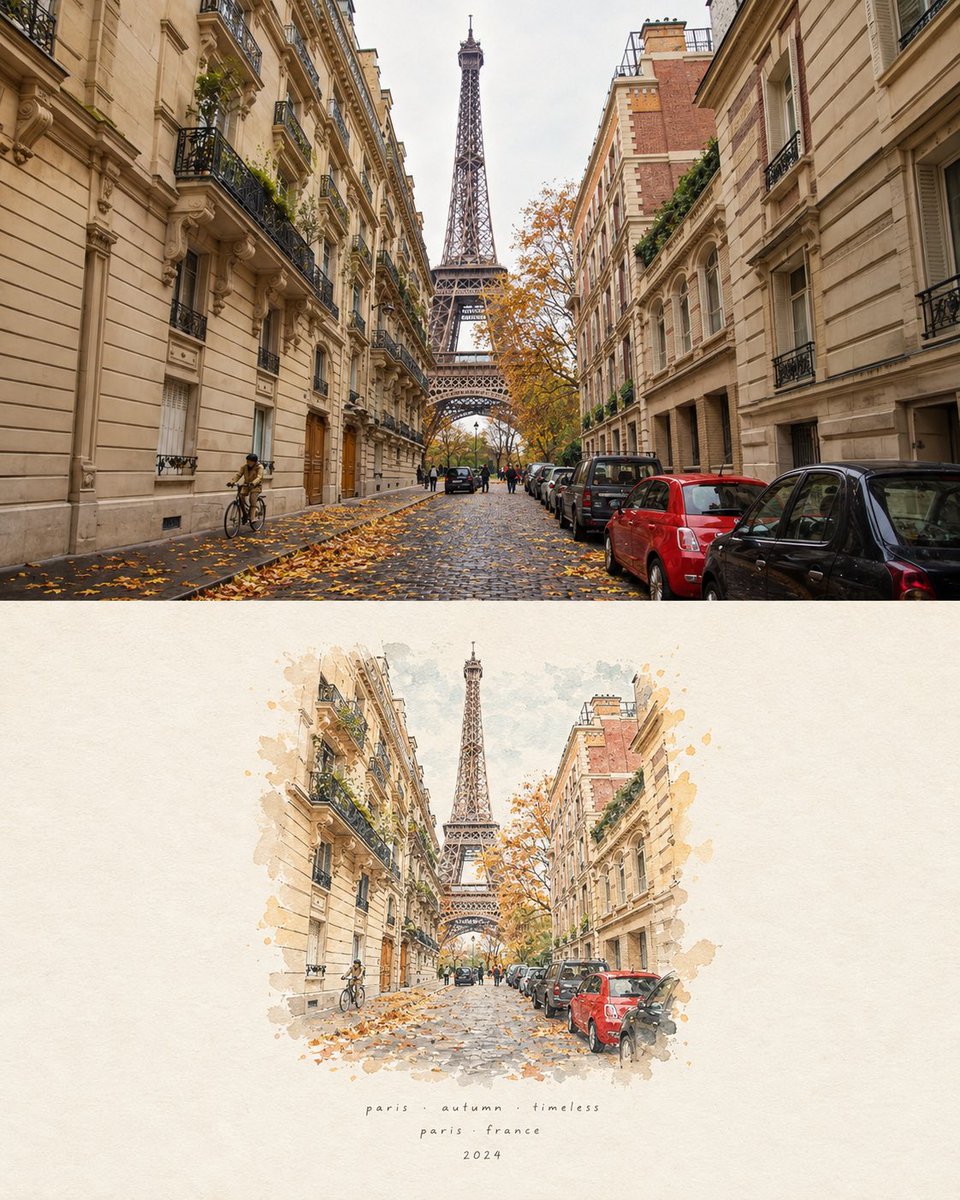
Póster de viaje editorial combinando fotografía real y acuarela

Un cartel minimalista y sofisticado que une una fotografía real en la parte superior con un boceto en acuarela y tipografía abajo.

OpenAI

Ejemplos de la fuente

Estas imágenes provienen de la fuente original. DROPIDEA no ha probado estos ejemplos; los resultados dependen del modelo y los ajustes.
Listo para personalizar

Tu prompt

Inglés

Sustituye las variables en rojo por tus datos. Copia el texto completo y úsalo con tu agente preferido.

TXT MD Versión en inglés
Create a sophisticated minimalist editorial travel-art poster based on the provided reference photograph of [LANDMARK / COUNTRY ]. TOP SECTION — REAL PHOTOGRAPH: Preserve the original photograph as faithfully as possible. Keep the exact subject, recognizable architecture or facial features, proportions, pose, clothing, surroundings, perspective, lighting, and important environmental details. Enhance it with a cinematic yet natural color grade, atmospheric depth, subtle film grain, and beautiful soft lighting. The photograph should feel authentic, premium, calm, and emotionally evocative. BOTTOM SECTION — HAND-PAINTED MEMORY: Recreate the same subject and scene as a delicate handcrafted watercolor and ink illustration. Preserve the recognizable silhouette, composition, proportions, and defining details, but simplify them into elegant artistic brushwork. Use loose watercolor washes, fine ink outlines, subtle paper texture, soft bleeding pigments, imperfect hand-painted edges, and minimal architectural/environmental details. The illustrated version should feel like a beautiful travel sketch painted from memory, not a completely different scene. Keep the main subject immediately recognizable. COMPOSITION: Use a clean vertical 4:5 poster format with the realistic photograph occupying the upper portion and the watercolor interpretation occupying the lower portion. Separate the two sections with a subtle clean transition and generous warm ivory/off-white negative space. BACKGROUND: Warm textured handmade paper, subtle natural grain, minimal and uncluttered. Use a restrained color palette derived from the original photograph and the location. TYPOGRAPHY: Add small elegant handwritten/editorial typography beneath the illustration: [SHORT PHRASE / POETIC LINE] [CITY / COUNTRY / PERSON / PLACE] [YEAR / COORDINATES / SHORT DESCRIPTION] Typography should be tiny, refined, widely spaced, understated, and slightly imperfect like handwritten travel-journal lettering. AESTHETIC: Recreate the landmark as a delicate architectural watercolor sketch, preserving its exact silhouette, proportions, distinctive structural details, surrounding landscape, and recognizable character.
Ver resultados

Tu prompt

Create a sophisticated minimalist editorial travel-art poster based on the provided reference photograph of [LANDMARK / COUNTRY ]. TOP SECTION — REAL PHOTOGRAPH: Preserve the original photograph as faithfully as possible. Keep the exact subject, recognizable architecture or facial features, proportions, pose, clothing, surroundings, perspective, lighting, and important environmental details. Enhance it with a cinematic yet natural color grade, atmospheric depth, subtle film grain, and beautiful soft lighting. The photograph should feel authentic, premium, calm, and emotionally evocative. BOTTOM SECTION — HAND-PAINTED MEMORY: Recreate the same subject and scene as a delicate handcrafted watercolor and ink illustration. Preserve the recognizable silhouette, composition, proportions, and defining details, but simplify them into elegant artistic brushwork. Use loose watercolor washes, fine ink outlines, subtle paper texture, soft bleeding pigments, imperfect hand-painted edges, and minimal architectural/environmental details. The illustrated version should feel like a beautiful travel sketch painted from memory, not a completely different scene. Keep the main subject immediately recognizable. COMPOSITION: Use a clean vertical 4:5 poster format with the realistic photograph occupying the upper portion and the watercolor interpretation occupying the lower portion. Separate the two sections with a subtle clean transition and generous warm ivory/off-white negative space. BACKGROUND: Warm textured handmade paper, subtle natural grain, minimal and uncluttered. Use a restrained color palette derived from the original photograph and the location. TYPOGRAPHY: Add small elegant handwritten/editorial typography beneath the illustration: [SHORT PHRASE / POETIC LINE] [CITY / COUNTRY / PERSON / PLACE] [YEAR / COORDINATES / SHORT DESCRIPTION] Typography should be tiny, refined, widely spaced, understated, and slightly imperfect like handwritten travel-journal lettering. AESTHETIC: Recreate the landmark as a delicate architectural watercolor sketch, preserving its exact silhouette, proportions, distinctive structural details, surrounding landscape, and recognizable character.

Guía de variables

[LANDMARK / COUNTRY ]

Nombre del monumento y país que aparece en la foto de referencia

Primera línea después de 'reference photograph of'

Valor de ejemplo

Eiffel Tower / France

[SHORT PHRASE / POETIC LINE]

Frase poética o breve que resume el ambiente

Primera línea tipográfica debajo de la ilustración

Valor de ejemplo

Mornings in Paris

[CITY / COUNTRY / PERSON / PLACE]

Ciudad, país o lugar específico

Segunda línea tipográfica debajo de la ilustración

Valor de ejemplo

Paris, France

[YEAR / COORDINATES / SHORT DESCRIPTION]

Año, coordenadas GPS o breve descripción

Tercera línea tipográfica debajo de la ilustración

Valor de ejemplo

48.8584° N, 2.2945° E • Autumn 2023

Qué obtienes

  • Un cartel editorial de viaje en formato vertical 4:5 con diseño dividido.
  • Una fotografía cinematográfica y fiel en la mitad superior.
  • Una ilustración delicada en acuarela sobre papel texturizado con tipografía sutil en la parte inferior.

Casos de uso

  • Pósteres artísticos de recuerdos de viajes para imprimir y decorar.
  • Publicidad editorial para agencias de viajes boutique y revistas.
  • Postales artísticas y portadas de cuadernos de viaje.

Cómo usarlo

  • Sube tu fotografía de referencia del lugar o monumento seleccionado.
  • Sustituye el marcador [LANDMARK / COUNTRY ] con el nombre del monumento y país.
  • Personaliza las tres líneas de texto inferiores con una frase evocadora, ubicación y fecha o coordenadas.
  • Ejecuta la generación con una relación de aspecto vertical de 4:5.

Prompts relacionados