Ir al contenido
ImágenesGratis

Póster de Viaje y Pasaporte Arquitectónico Vintage

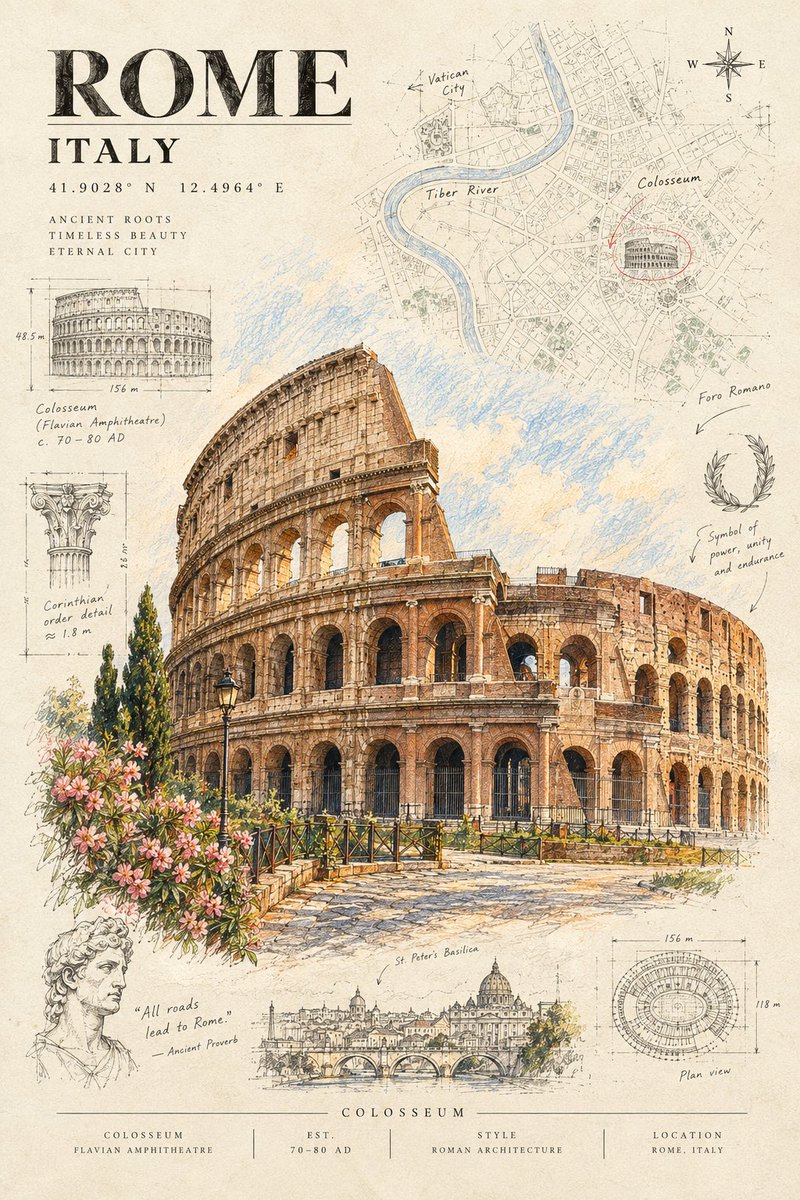
Genera un cartel de viaje coleccionable que combina la ilustración a mano de monumentos con planos arquitectónicos vintage y diseño editorial.

OpenAI

Ejemplos de la fuente

Estas imágenes provienen de la fuente original. DROPIDEA no ha probado estos ejemplos; los resultados dependen del modelo y los ajustes.
Listo para personalizar

Tu prompt

Inglés

Sustituye las variables en rojo por tus datos. Copia el texto completo y úsalo con tu agente preferido.

TXT MD Versión en inglés
Create a highly detailed “Architectural Passport” travel poster for [CITY / LANDMARK], designed to look like a premium collectible art print that blends colored-pencil illustration, fine ink drawing, vintage architectural documentation, and subtle watercolor texture. Place the landmark as the dramatic hero, drawn with intricate hand-rendered details, realistic perspective, delicate pencil hatching, visible paper grain, and carefully controlled pops of natural color. Surround it with a faint city map, street names, architectural measurements, tiny elevation sketches, construction lines, botanical details, directional arrows, and miniature diagrammatic studies. Use an elegant warm ivory paper background with mostly muted graphite, charcoal, terracotta, olive green, dusty blue, and warm beige tones. Keep the background extremely clean and editorial, allowing the landmark to visually emerge from the page. Add sophisticated typography: [CITY] [LANDMARK NAME] small coordinates, founding/construction date, architectural style, neighborhood name, and tiny archival annotations. Include one or two miniature architectural detail drawings beside the main structure, as if taken from an architect’s sketchbook. Add subtle imperfections: pencil smudges, uneven ink pressure, erased construction marks, paper fibers, faint halftone texture, and hand-drawn annotation marks. The composition should feel like a cross between a vintage travel poster, an architectural magazine cover, a museum exhibition print, and a designer’s sketchbook. Visual hook: make the landmark extremely detailed and colorful while the surrounding city information remains almost ghost-like, creating a striking contrast between “the place” and “the blueprint of the place.” Vertical 4:5 composition, premium editorial design, sophisticated negative space, ultra-detailed hand illustration, realistic architectural perspective, tactile paper texture, collectible poster aesthetic, visually striking at thumbnail size, no photorealistic rendering, no 3D CGI look.
Ver resultados

Tu prompt

Create a highly detailed “Architectural Passport” travel poster for [CITY / LANDMARK], designed to look like a premium collectible art print that blends colored-pencil illustration, fine ink drawing, vintage architectural documentation, and subtle watercolor texture. Place the landmark as the dramatic hero, drawn with intricate hand-rendered details, realistic perspective, delicate pencil hatching, visible paper grain, and carefully controlled pops of natural color. Surround it with a faint city map, street names, architectural measurements, tiny elevation sketches, construction lines, botanical details, directional arrows, and miniature diagrammatic studies. Use an elegant warm ivory paper background with mostly muted graphite, charcoal, terracotta, olive green, dusty blue, and warm beige tones. Keep the background extremely clean and editorial, allowing the landmark to visually emerge from the page. Add sophisticated typography: [CITY] [LANDMARK NAME] small coordinates, founding/construction date, architectural style, neighborhood name, and tiny archival annotations. Include one or two miniature architectural detail drawings beside the main structure, as if taken from an architect’s sketchbook. Add subtle imperfections: pencil smudges, uneven ink pressure, erased construction marks, paper fibers, faint halftone texture, and hand-drawn annotation marks. The composition should feel like a cross between a vintage travel poster, an architectural magazine cover, a museum exhibition print, and a designer’s sketchbook. Visual hook: make the landmark extremely detailed and colorful while the surrounding city information remains almost ghost-like, creating a striking contrast between “the place” and “the blueprint of the place.” Vertical 4:5 composition, premium editorial design, sophisticated negative space, ultra-detailed hand illustration, realistic architectural perspective, tactile paper texture, collectible poster aesthetic, visually striking at thumbnail size, no photorealistic rendering, no 3D CGI look.

Guía de variables

[CITY / LANDMARK]

Ciudad o monumento principal a ilustrar

Primera línea después de 'travel poster for '

Valor de ejemplo

Paris / Eiffel Tower

[CITY]

Nombre de la ciudad para el texto tipográfico

Sección tipográfica, primera línea

Valor de ejemplo

PARIS

[LANDMARK NAME]

Nombre específico del monumento arquitectónico

Sección tipográfica, segunda línea debajo de [CITY]

Valor de ejemplo

EIFFEL TOWER

Qué obtienes

  • Una ilustración muy detallada a tinta y lápices de colores de un monumento icónico.
  • Un fondo de planos técnicos con mapas sutiles, notas manuscritas y texturas de papel marfil.
  • Una lámina artística coleccionable de estética editorial y acabado de museo.

Casos de uso

  • Impresiones de arte mural y decoración para estudios y despachos de arquitectura.
  • Postales de viaje, láminas de recuerdo y merchandising para tiendas de museos.
  • Portadas para guías de viaje y publicaciones arquitectónicas.

Cómo usarlo

  • Elige la ciudad y el monumento arquitectónico, reemplazando [CITY / LANDMARK].
  • Actualiza los textos tipográficos sustituyendo [CITY] por la ciudad y [LANDMARK NAME] por el nombre del monumento.
  • Ejecuta el prompt con una relación de aspecto vertical (4:5 o 3:4) para una composición editorial óptima.

Prompts relacionados