Ir al contenido
ImágenesGratis

Póster de notas de viaje con sello de goma

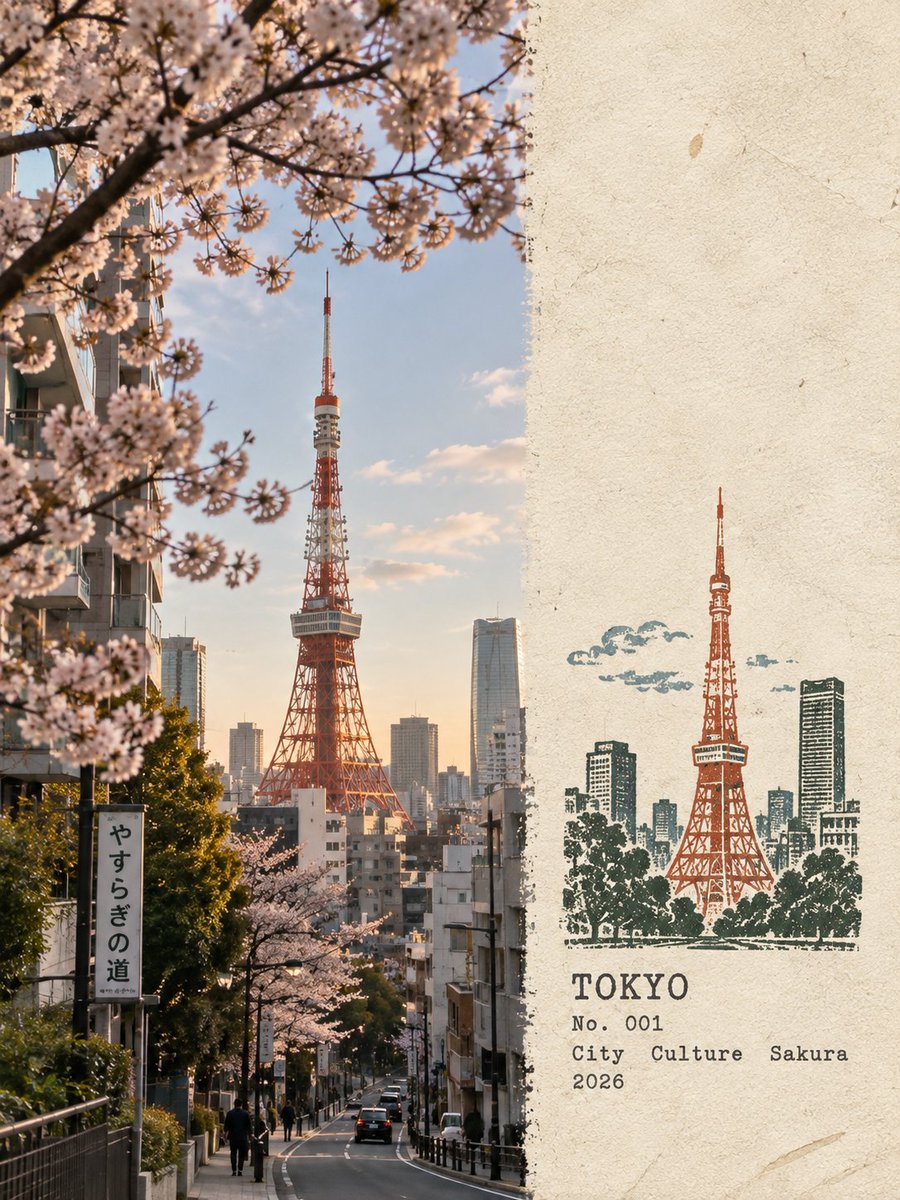
Crea un póster individual 3:4 por cada foto subida, conservando la fotografía original realista junto a papel envejecido con un sello de goma tallado específico del lugar y tipografía de máquina de escribir en inglés.

OpenAI

Ejemplos de la fuente

Estas imágenes provienen de la fuente original. DROPIDEA no ha probado estos ejemplos; los resultados dependen del modelo y los ajustes.

Listo para personalizar

Tu prompt

Inglés

Sustituye las variables en rojo por tus datos. Copia el texto completo y úsalo con tu agente preferido.

TXT MD Versión en inglés
Created with GPT image 2 Prompt Create one individual “Travel Field Notes” poster for each uploaded photo, never combining multiple photos into a collage. Use a 3:4 portrait composition with the original photograph occupying roughly 58% of the frame and a warm, slightly aged paper field filling the remaining 42%, blending naturally without a visible dividing line. Keep the photograph highly realistic and faithful to the source, preserving the subject, architecture, landscape, vegetation, people, proportions, perspective, lighting, shadows, textures, and original atmosphere, with only subtle editorial color correction and fine film grain; never redraw, replace, distort, or reposition important elements. On the paper side, leave generous empty space and create a compact location-specific rubber stamp inspired only by the most recognizable visual features of the photograph, such as a landmark silhouette, roofline, skyline, mountain contour, shoreline, road direction, trees, or other defining forms. Simplify the scene rather than reproducing everything, removing crowds, cars, repetitive buildings, tiny windows, clutter, and insignificant details. Keep the stamp relatively small, around 30–38% of the paper section’s height, and place it toward the lower-middle area with plenty of breathing room. Build the stamp from 2–4 muted spot colors naturally sampled from the original scene, such as charcoal, forest green, faded brick, ochre, slate blue, or earthy brown, using authentic carved-rubber printing characteristics including rough engraved marks, irregular edges, uneven pressure, broken ink coverage, paper show-through, granular pigment, tiny imperfections, ghosting, and subtle layer misregistration. The result should feel physically stamped onto real fibrous paper rather than digitally illustrated. Add restrained typewriter-style field-note typography near the stamp containing the location’s English name, a small numbered entry, exactly three concise English keywords describing the place, and the current Gregorian year, with accurate spelling and no slogans or unnecessary decoration. The final aesthetic should resemble a quiet archival travel record made by an architect, explorer, or observant traveler: tactile, understated, authentic, collectible, and strongly connected to the actual location. Avoid obvious panel borders, hard dividing lines, circular seals, postage perforations, wax seals, souvenir-card layouts, generic icons, polished vector graphics, cartoon styling, 3D effects, glossy gradients, excessive saturation, dense illustration, decorative clutter, or any alteration of the original photograph.
Ver resultados

Tu prompt

Created with GPT image 2 Prompt Create one individual “Travel Field Notes” poster for each uploaded photo, never combining multiple photos into a collage. Use a 3:4 portrait composition with the original photograph occupying roughly 58% of the frame and a warm, slightly aged paper field filling the remaining 42%, blending naturally without a visible dividing line. Keep the photograph highly realistic and faithful to the source, preserving the subject, architecture, landscape, vegetation, people, proportions, perspective, lighting, shadows, textures, and original atmosphere, with only subtle editorial color correction and fine film grain; never redraw, replace, distort, or reposition important elements. On the paper side, leave generous empty space and create a compact location-specific rubber stamp inspired only by the most recognizable visual features of the photograph, such as a landmark silhouette, roofline, skyline, mountain contour, shoreline, road direction, trees, or other defining forms. Simplify the scene rather than reproducing everything, removing crowds, cars, repetitive buildings, tiny windows, clutter, and insignificant details. Keep the stamp relatively small, around 30–38% of the paper section’s height, and place it toward the lower-middle area with plenty of breathing room. Build the stamp from 2–4 muted spot colors naturally sampled from the original scene, such as charcoal, forest green, faded brick, ochre, slate blue, or earthy brown, using authentic carved-rubber printing characteristics including rough engraved marks, irregular edges, uneven pressure, broken ink coverage, paper show-through, granular pigment, tiny imperfections, ghosting, and subtle layer misregistration. The result should feel physically stamped onto real fibrous paper rather than digitally illustrated. Add restrained typewriter-style field-note typography near the stamp containing the location’s English name, a small numbered entry, exactly three concise English keywords describing the place, and the current Gregorian year, with accurate spelling and no slogans or unnecessary decoration. The final aesthetic should resemble a quiet archival travel record made by an architect, explorer, or observant traveler: tactile, understated, authentic, collectible, and strongly connected to the actual location. Avoid obvious panel borders, hard dividing lines, circular seals, postage perforations, wax seals, souvenir-card layouts, generic icons, polished vector graphics, cartoon styling, 3D effects, glossy gradients, excessive saturation, dense illustration, decorative clutter, or any alteration of the original photograph.

Qué obtienes

  • Un póster vertical 3:4 por cada foto subida, con la fotografía original ocupando alrededor del 58% del encuadre y papel cálido ligeramente envejecido llenando el 42% restante.
  • Un sello de goma tallado y simplificado con 2–4 colores tenues tomados de la escena original e imperfecciones de impresión auténticas.
  • Tipografía de máquina de escribir en inglés con el nombre del lugar, una entrada numerada, exactamente tres palabras clave y el año gregoriano actual.
  • Una estética de registro de viaje archivístico, táctil y discreta, sin bordes ni decoración artificial.

Casos de uso

  • Pósters-recuerdo imprimibles de viajes documentados con un estilo archivístico elegante.
  • Contenido para redes sociales de blogs de viaje y portfolios de fotografía.
  • Regalos personalizados a partir de fotos de viajes de amigos y familiares.
  • Piezas de decoración de pared al estilo de las notas de campo de exploradores y arquitectos.

Cómo usarlo

  • Sube una o varias fotos de viaje nítidas; el prompt genera un póster separado por cada foto sin combinarlas en un collage.
  • Usa una herramienta de generación de imágenes que admita subir y referenciar imágenes para que la fotografía original se mantenga realista en el encuadre vertical 3:4.
  • Revisa el resultado para confirmar que el sujeto, la iluminación y las texturas permanecen intactos, sin redibujar ni distorsionar elementos importantes.
  • Si lo deseas, solicita cambios en los colores del sello, su ubicación o las tres palabras clave en inglés, conservando el estilo archivístico sobrio.

Prompts relacionados