Ir al contenido
ImágenesGratis

Pósters con recuerdo de collage en tela para fotos de viaje

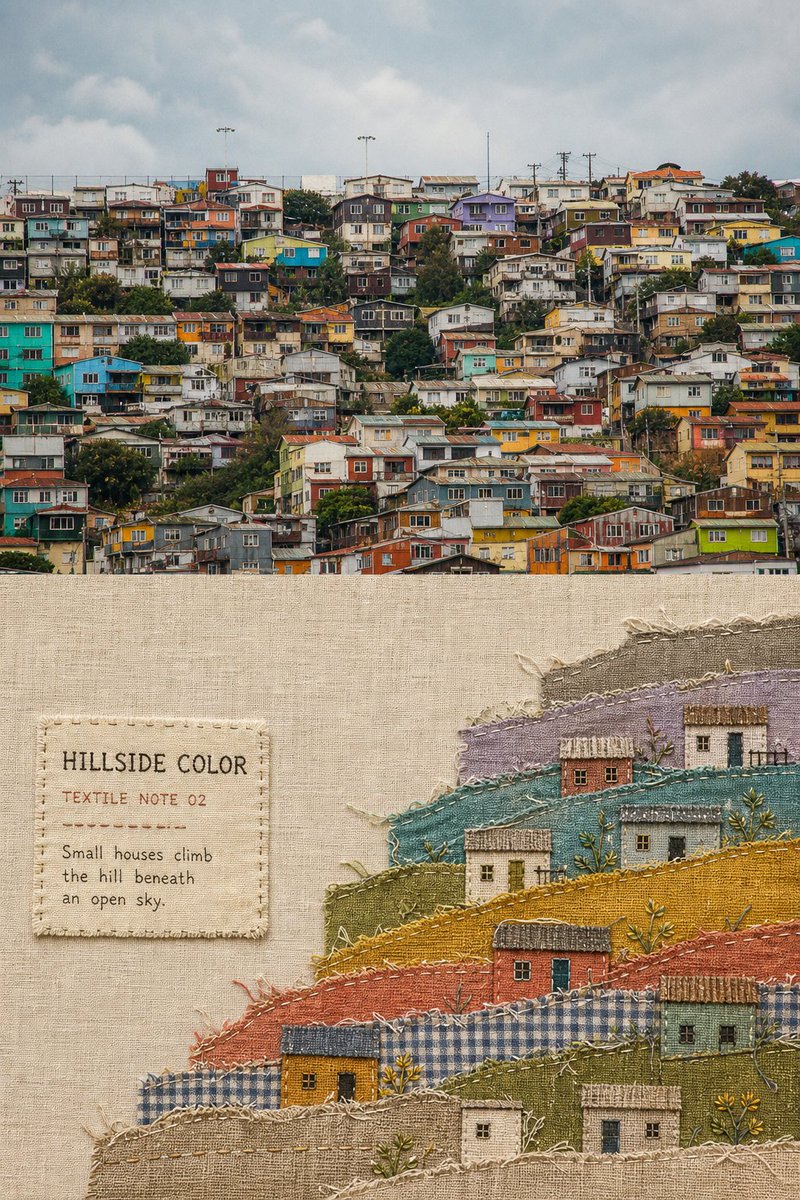
Convierte cada foto de viaje subida en un póster vertical 3:4 que combina la fotografía original arriba con una reinterpretación en telas envejecidas cosidas a mano abajo, además de un título, número y línea de observación en inglés.

OpenAI

Ejemplos de la fuente

Estas imágenes provienen de la fuente original. DROPIDEA no ha probado estos ejemplos; los resultados dependen del modelo y los ajustes.

Listo para personalizar

Tu prompt

Inglés

Sustituye las variables en rojo por tus datos. Copia el texto completo y úsalo con tu agente preferido.

TXT MD Versión en inglés
Create one independent premium fabric-collage memory poster for each of my uploaded travel photos, outputting each photo separately without combining multiple images. Use an overall 3:4 vertical composition. The finished piece must clearly show both the recognisable original photograph and a same-scene fabric reinterpretation. Reserve the top roughly 46%–52% for the original photo. Faithfully preserve the subject's identity, number, pose, architectural structure, mountain–water layering, horizon, roads, water surfaces, real material textures, natural light, shadows, and original colours. Apply only light travel-magazine and art-publication colour grading. Do not stretch, mirror, alter the subject, or redraw the photograph as an illustration. Use a warm base of natural linen, old cotton, or faded fabric for the lower section. First understand the truly identity-defining ridges, cloud layers, architecture, tree groups, water surfaces, roads, people, animals, or vehicles in the photo, then compress the complex scene into 4–8 main fabric layers. Recompose the same scene using faded cotton, coarse linen, denim, plaid cloth, corduroy, old-shirt cloth, gauze, and a very small amount of yarn; every fabric piece must correspond to a real spatial relationship in the photo. Add no unrelated decorations. The fabric layers must retain real warp-and-weft grain, washed-out fading, frayed edges, pulled threads, creases, layered patches, and slight thickness. Use uneven hand stitching, overcast edges, back stitches, and a small amount of embroidery thread to emphasise subject outlines, ridges, reflections, or movement direction. Stitches may hesitate, loosen, and vary in density, but do not make it look like a refined craft sample. People and animals are only suggested with small fabric scraps and thread marks, keeping their number, pose, and direction without drawing facial features. The lower section uses a physically structured secondary composition: the main fabric collage occupies roughly 58%–76% of the reinterpretation area and may be scaled down into an independent fabric scene or formed from a few large fabric layers with strong outlines. Do not reuse the photo's full framing at the same scale. Around the collage, keep at least 25%–40% of continuous visible linen or old-cotton empty field. Colours are extracted entirely from the original photo and softened, prioritising the most recognisable single local colour of the place, with the rest unified into low-to-medium saturation aged-fabric tones. Do not mechanically default to a country-floral or orange-and-blue palette. In the lower empty area, add a title of 1–3 English words, a cloth-label-style number, and a single observation line of 5–10 English words. The title should resemble slightly uneven hand-embroidered lettering. The label fields and observation line should look like an old woven label or fine stitch text sewn onto the base fabric, clearly readable at normal preview size. The text must come from truly visible location, action, weather, or colour in the photo; when the location cannot be confirmed, use the scene's theme. Do not invent place names or dates. The overall mood is warm, quiet, handcrafted, and worn, like a preserved travel memory. Strictly avoid: paper collage, torn paper edges, pure felt painting, tufted rug, crochet doll, refined embroidery sample, lace buttons, scrapbook clutter, printed photo patches, smooth vector colour blocks, plastic synthetic fabric, children's craft, a fully filled lower half, a fixed sunset palette, author name, signature, logo, QR code, watermark, garbled text.
Ver resultados

Tu prompt

Create one independent premium fabric-collage memory poster for each of my uploaded travel photos, outputting each photo separately without combining multiple images. Use an overall 3:4 vertical composition. The finished piece must clearly show both the recognisable original photograph and a same-scene fabric reinterpretation. Reserve the top roughly 46%–52% for the original photo. Faithfully preserve the subject's identity, number, pose, architectural structure, mountain–water layering, horizon, roads, water surfaces, real material textures, natural light, shadows, and original colours. Apply only light travel-magazine and art-publication colour grading. Do not stretch, mirror, alter the subject, or redraw the photograph as an illustration. Use a warm base of natural linen, old cotton, or faded fabric for the lower section. First understand the truly identity-defining ridges, cloud layers, architecture, tree groups, water surfaces, roads, people, animals, or vehicles in the photo, then compress the complex scene into 4–8 main fabric layers. Recompose the same scene using faded cotton, coarse linen, denim, plaid cloth, corduroy, old-shirt cloth, gauze, and a very small amount of yarn; every fabric piece must correspond to a real spatial relationship in the photo. Add no unrelated decorations. The fabric layers must retain real warp-and-weft grain, washed-out fading, frayed edges, pulled threads, creases, layered patches, and slight thickness. Use uneven hand stitching, overcast edges, back stitches, and a small amount of embroidery thread to emphasise subject outlines, ridges, reflections, or movement direction. Stitches may hesitate, loosen, and vary in density, but do not make it look like a refined craft sample. People and animals are only suggested with small fabric scraps and thread marks, keeping their number, pose, and direction without drawing facial features. The lower section uses a physically structured secondary composition: the main fabric collage occupies roughly 58%–76% of the reinterpretation area and may be scaled down into an independent fabric scene or formed from a few large fabric layers with strong outlines. Do not reuse the photo's full framing at the same scale. Around the collage, keep at least 25%–40% of continuous visible linen or old-cotton empty field. Colours are extracted entirely from the original photo and softened, prioritising the most recognisable single local colour of the place, with the rest unified into low-to-medium saturation aged-fabric tones. Do not mechanically default to a country-floral or orange-and-blue palette. In the lower empty area, add a title of 1–3 English words, a cloth-label-style number, and a single observation line of 5–10 English words. The title should resemble slightly uneven hand-embroidered lettering. The label fields and observation line should look like an old woven label or fine stitch text sewn onto the base fabric, clearly readable at normal preview size. The text must come from truly visible location, action, weather, or colour in the photo; when the location cannot be confirmed, use the scene's theme. Do not invent place names or dates. The overall mood is warm, quiet, handcrafted, and worn, like a preserved travel memory. Strictly avoid: paper collage, torn paper edges, pure felt painting, tufted rug, crochet doll, refined embroidery sample, lace buttons, scrapbook clutter, printed photo patches, smooth vector colour blocks, plastic synthetic fabric, children's craft, a fully filled lower half, a fixed sunset palette, author name, signature, logo, QR code, watermark, garbled text.

Qué obtienes

  • Un póster vertical 3:4 por cada foto subida, sin combinar imágenes.
  • Una sección superior que conserva la fotografía original con gradación de color suave.
  • Una sección inferior que recompone la escena en 4–8 capas de telas envejecidas cosidas a mano.
  • Un título en inglés de 1–3 palabras, un número estilo etiqueta tejida y una línea de observación de 5–10 palabras en inglés.

Casos de uso

  • Convertir recuerdos de viaje en arte conmemorativo imprimible para enmarcar.
  • Diseñar tarjetas de recuerdo o páginas de álbum con estilo artesanal.
  • Crear una serie unificada de pósters para un viaje con varios destinos.
  • Regalar a un amigo o familiar una pieza conmemorativa de un viaje compartido.

Cómo usarlo

  • Sube una o más fotos de viaje; cada una se procesa por separado en su propio póster independiente.
  • Asegúrate de que la foto muestre con claridad el lugar o sujeto que quieres convertir en collage de tela.
  • Tras la generación, revisa las proporciones del diseño: la foto original arriba y el collage de tela abajo con espacio vacío de lino alrededor.
  • Si lo deseas, ajusta el título en inglés y la línea de observación para que reflejen lo realmente visible en la foto.

Prompts relacionados