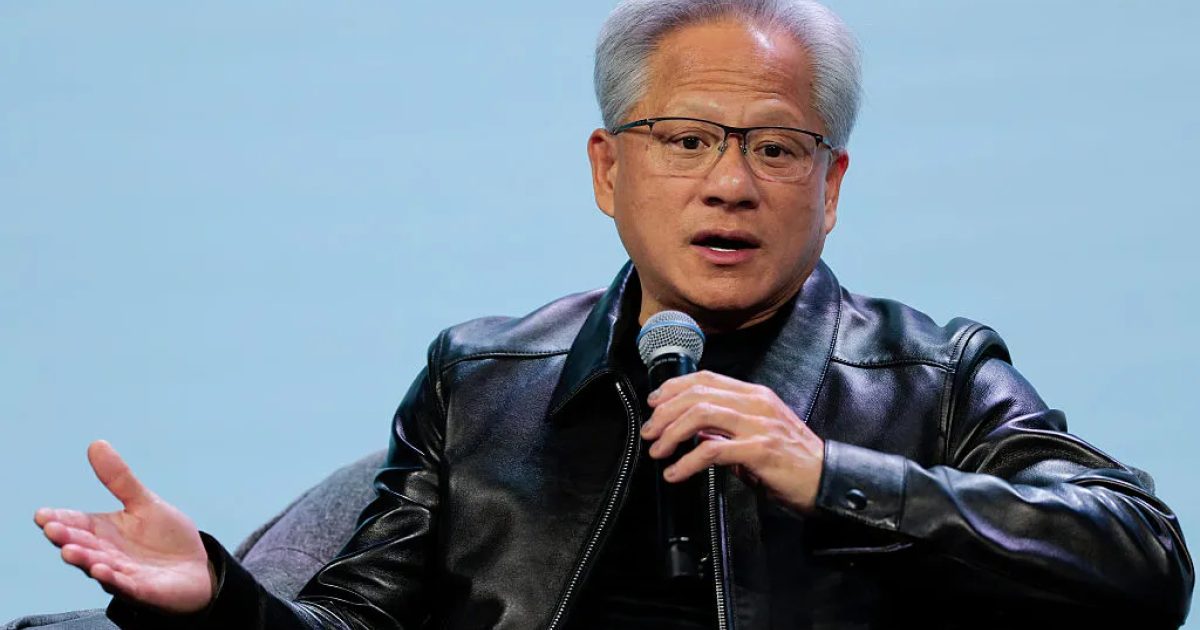
Nvidia is preparing for one of the most sensitive earnings announcements in its history, as Colette Kress — the company's longtime chief financial officer and acting chief executive — takes on the task of presenting third-quarter figures and forward guidance for the first time without founder Jensen Huang. His absence is not an incidental organizational detail but a fundamental shift in how the largest company in the semiconductor sector is run, and it leaves behind a long list of questions to which investors and analysts are awaiting candid answers.
The backdrop to the turmoil at the company
According to published reports, Huang was compelled to submit his resignation after acknowledging a personal relationship with an executive at one of the company's client firms — a figure around whom allegations of spying on behalf of China had been raised, alongside other allegations concerning relationships within the company itself. This coincided with questions about the possible leakage of export-restricted chips into the Chinese market, prompting Nvidia to pledge an internal investigation, while Huang was asked to answer questions from U.S. congressional committees in a closed session, with Democratic members vowing to open parallel lines of inquiry.
Question one: Where does the founder stand today?
Huang ran Nvidia in a highly centralized fashion, receiving direct reports from dozens of executives and tracking operational details himself; no one knows the company's inner workings as he does. With an online petition calling for his reinstatement surpassing 180,000 signatures, and press reports pointing to possible attempts at a return set against other reports denying any negotiations on the matter, attention turns to what Kress will say about three things:
- The nature of any remaining connection between Huang and the company.
- The process for finding a permanent chief executive and the criteria being applied.
- Whether the option of his return is genuinely on the board's table.
Question two: China, Singapore, and chip tracking
Huang long argued for easing export restrictions to China, insisting there was no evidence that the company's chips were being diverted from legitimate buyers to prohibited entities. Yet press reports have described a U.S. investigation into a Singapore-based cloud company over allegations of chip diversion — the same company that Nvidia later said it had voluntarily stopped supplying with products since mid-year.
The file is all the more significant because Singapore had been counted among the company's fastest-growing markets, reaching roughly 22% of total reported revenue in one quarter last year. Nvidia then changed the way it allocates revenue geographically, basing it on the purchasing company's headquarters rather than the shipping address — a change that effectively obscured the scale of sales tied to that region. The focus will therefore be on what Kress says about the future of sales in the China region, and about the tools the company uses to track where its restricted chips actually end up.
Question three: Sales policy toward China
The previous management's argument was that Washington cannot prevent China from developing advanced artificial intelligence systems, and that it is better to sell it less capable chips in order to keep it in a state of technological dependence — a position that simultaneously delivers enormous profits to Nvidia. Against that stands a hardline view holding that selling any powerful chips to a strategic competitor serves that competitor's interests. The question here: will the new leadership maintain this approach or recalibrate it?
Question four: Funding the expansion of AI infrastructure
Reports indicate that Kress previously tried, without success, to rein in the pace of the massive deals Huang drove to fund the expansion of the AI ecosystem through cross-investments with customers and startups. It is reasonable to expect a more conservative approach, which puts the focus on:
- The financial impact of existing deals on the books.
- Whether the model of investing in customers will continue going forward.
- The level of transparency in disclosing these commitments.
Question five: Corporate governance
The deeper problem remains structural: how did the management structure allow this much influence to be concentrated in one person's hands? Any serious answer should include the outlines of a restructuring, a clearer distribution of responsibilities, and stricter compliance controls on the export file.
What does this mean for the market?
Legal caution will most likely dominate the answers, as ongoing investigations limit the scope for disclosure. But even carefully measured language will carry important signals: the tone of the financial guidance, the handling of geographic risks, and the degree of commitment to transparency. For companies building their plans on advanced computing supply chains, the practical lesson is the need to diversify sources of compute capacity and avoid tying a technology roadmap to a single supplier or to an export policy subject to change.
✦ بقلم فريق دروب أيديا
DROPIDEA
We hope this article has added real value to you. At DROPIDEA, we always strive to deliver high-quality content that helps you grow and evolve in the digital space. Follow us for more useful articles and guides.
Tags
Admin
DROPIDEA
Latest Articles

Corma Hits $1 Billion in 3 Months with AI-Powered Cybersecurity

Indian Startup Raises $24 Million for Smart Image Sensors

Apple Launches Study App to Understand AI Use in Health

LangChain Valued at $3 Billion After New Funding Round