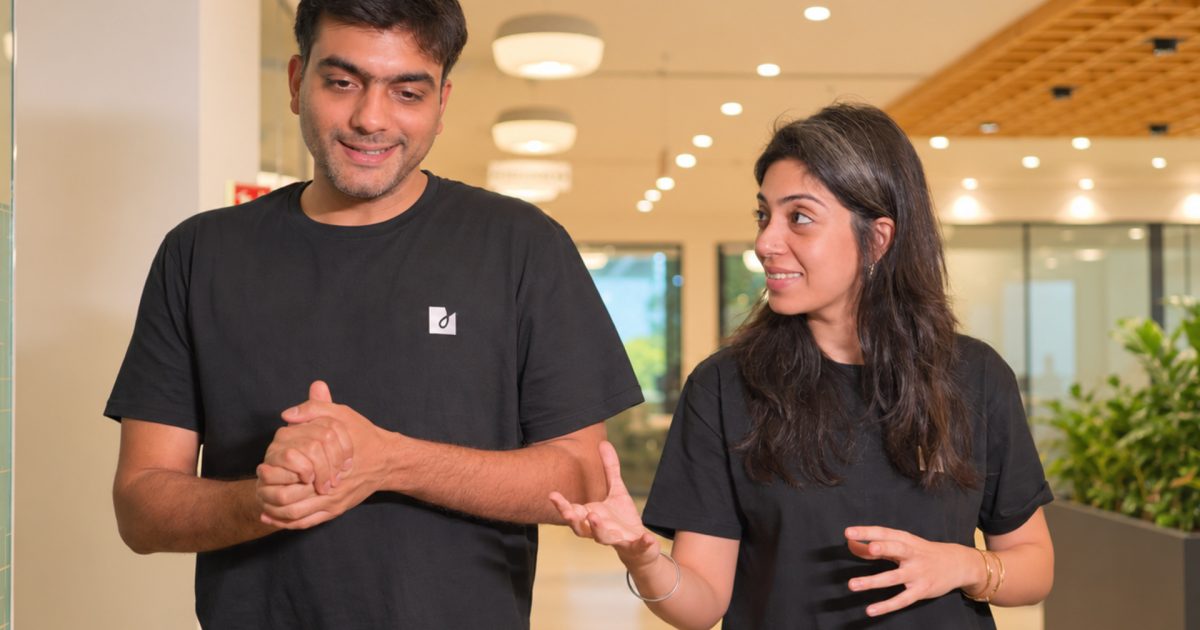
At a time when nations are racing to secure a place within semiconductor supply chains, an Indian startup has managed to capture investors' attention with an idea that appears simple on the surface yet carries profound implications: integrating imaging, processing, and artificial intelligence into a single chip. The company, known as Bharat Semi and headquartered in New Delhi, has announced the completion of a $24 million seed funding round to develop smart image sensors aimed at customers in the United States and other markets.
One Chip Instead of Three Components
The company's technical approach is built on what it calls "programmable sensors." In traditional systems, the task is divided among three separate elements: a sensor to capture the image, an image signal processor, and then a system-on-chip to execute logic and analysis. Bharat Semi's solution, by contrast, combines these functions into a single chip, eliminating the need to transfer visual data to external processors.
According to the company's estimates, this integration could reduce the cost of the complete system by no less than 70% compared with common designs. Co-founder Vrinda Kapoor sums up the idea by saying the goal is to move from merely "sensing" to "understanding" the visual scene within the chip itself.
Where Are These Sensors Used?
The company is targeting four main sectors:
- Smart homes: Air conditioning units capable of sensing when a room is empty and adjusting their operation automatically.
- Industrial automation: Quality inspection and production line monitoring at lower computational cost.
- Surveillance systems: Local scene analysis without sending all data to the cloud.
- Aerospace: Drones that process visual information internally without the need for expensive computing hardware.
This direction aligns with a broader industry trend toward "edge AI" — running inference close to the data source rather than sending it to data centers, thereby reducing latency, power consumption, and bandwidth costs.
Product Roadmap
The company, founded roughly five years ago, is still pre-revenue, with its sensors under development. It plans to begin its first commercial production in 2027. The first generation of sensors has already entered the prototyping stage, while the second generation — which will carry more advanced AI capabilities — is expected to reach the prototype stage by mid-2027, with delivery to customers before the end of that same year.
The company says it has secured preliminary design wins from entities including U.S. defense technology firm General Atomics and India's Kaynes Semicon — an important step for any early-stage chip company, since it is usually difficult to persuade major customers to adopt a design that has not been commercially proven.
The Team and the Investors
Kapoor founded the company in late 2021 with Vinayak Dalmia. She comes from a background in healthcare technology, while her partner came from the world of consulting and private investment. The chief technology officer is Boyd Fowler, who previously held the same position at image sensor specialist OmniVision — lending the venture engineering depth in a highly specialized field.
The funding round — an all-equity round — was led by Info Edge Group, South Park Commons, and Indus Bridge Ventures, with participation from Valour Capital, Micromax, Gaingels, and individual investors. The proceeds will go toward expanding the engineering team, completing product development, and bringing it to market.
The company currently employs around 75 people across India and the United States, including 10 to 12 at its Santa Clara office covering engineering and business development, with a plan to raise the U.S. headcount to roughly 20 by mid-2027. The company has also begun hiring engineers in Europe.
The Broader Indian Context
This round comes at a moment when India is pouring billions of dollars into building a domestic semiconductor industry, hoping to become a manufacturing alternative as American companies seek to diversify their supply chains away from China. The country, however, has yet to establish itself as a major chip manufacturing hub, making design and software a more realistic space for startups.
In 2024, Bharat Semi announced a plan for a chip manufacturing project in India involving a technology partnership with the U.S. Space Force — a project still under development, with the company seeking local partners to build and operate it. The company stresses that this track is entirely separate from its image sensor business, that it will remain a "fabless" company relying on outsourced manufacturing and focusing its efforts on design and software, and that the new funding will not be used to finance the proposed fab.
The bottom line is that the story here is bigger than a funding round: it is a test of India's ability to produce deep-tech companies that compete globally on the strength of design rather than manufacturing.
✦ بقلم فريق دروب أيديا
DROPIDEA
We hope this article has added real value to you. At DROPIDEA, we always strive to deliver high-quality content that helps you grow and evolve in the digital space. Follow us for more useful articles and guides.
Tags
Admin
DROPIDEA
Latest Articles

Apple Launches Study App to Understand AI Use in Health

LangChain Valued at $3 Billion After New Funding Round
Jensen Huang's Departure Leaves a Funding Gap in the AI Startup Market

The Jensen Huang Crisis: A Personal Scandal Turns Into a National Security Case