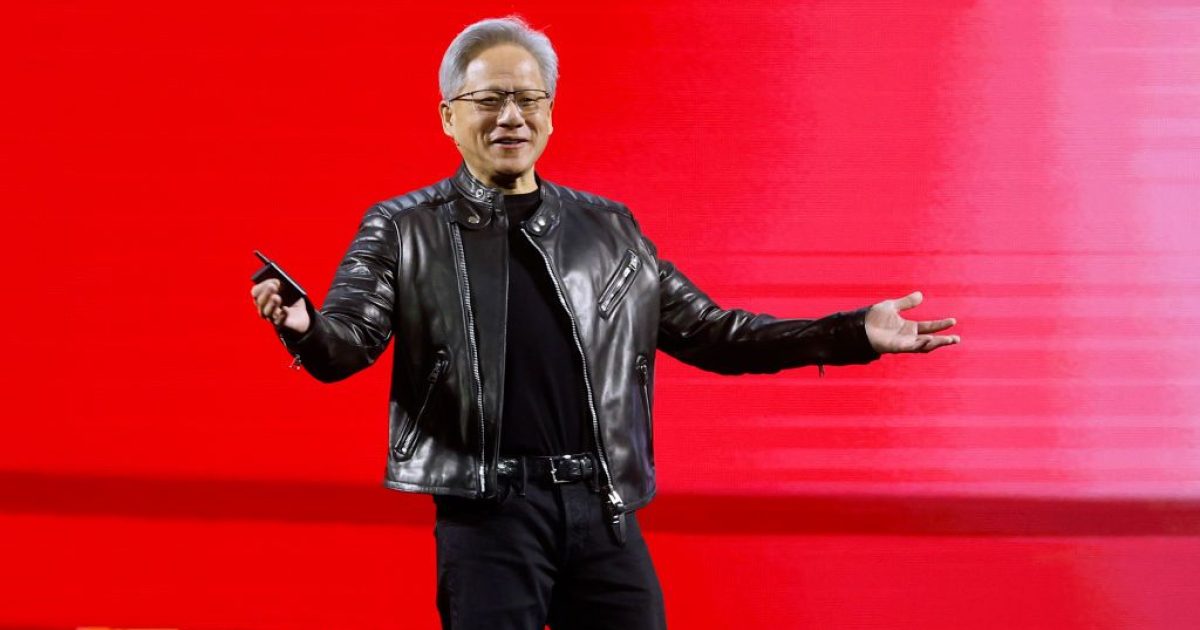
Those who follow the artificial intelligence sector have grown accustomed to Jensen Huang, co-founder and CEO of NVIDIA, being the least controversial figure among industry leaders — unlike names such as Sam Altman or Elon Musk. But recent weeks have turned that image upside down: a personal admission of marital infidelity rapidly evolved into a tangled case involving US national security, AI chip smuggling, and escalating pressure on the board of the world's largest maker of AI chips.
How the Story Began
Huang, 63, published a letter to company employees — also issued as a press release — in which he acknowledged that he had not been faithful to his wife of some forty years. In the letter, he said he was apologizing to his family and to the company's employees, and that there was no excuse for what he had done. More significantly, he explicitly linked what happened to "the security concerns raised by media reports," confirming that NVIDIA's board had launched an independent investigation and that he would cooperate with it fully.
The reason the matter has been tied to national security is that the other party in the relationship, according to press reports, is Alice Huang (no family relation to Jensen Huang), an executive at the company MegaSpeed who holds Chinese citizenship. US officials believe she was passing information to Beijing.
MegaSpeed and the Restricted Chips
MegaSpeed is a Singapore-based AI infrastructure company said to have purchased roughly $4.8 billion worth of chips from NVIDIA over two years. The company had previously been the subject of investigations in both the United States and Singapore over suspicions that it was rerouting chips to China, before the US Department of Justice took over the federal investigation.
Other reports added details about a network of companies in China and Singapore likely used to secure the chips, including a Chinese firm founded in 2023 that obtained "preferred cloud partner" status with NVIDIA — a designation granting priority access to chips. Estimates cited in those reports point to the facilitation of purchases worth around $7.5 billion in chips, some of them covered by export restrictions. It was also reported that the company's general counsel contacted an official at the Department of Commerce to inquire about the case of Alice Huang's detention.
A Surprising Development: A Second Relationship Inside the Company
The case took a new turn with a report based on five people who had worked at NVIDIA, which alleged a second extramarital relationship with Kimberly Powell, vice president for healthcare, who reports directly to the CEO. Neither the company nor Huang nor Powell confirmed this information, and when contacted, Huang offered only a terse remark before hanging up.
In the aftermath, reports indicated the board was preparing to meet to discuss Huang's future at the company, sending the stock down about 8% in after-hours trading and roughly 11% over five days. An added complication is that Huang is known for delegating very little, with some 60 executives reporting directly to him, and the company has no clear successor or publicly announced succession plan.
The Political Dimension
- Three US House committee chairs (the Select Committee on China, Foreign Affairs, and Intelligence) have requested a closed-door briefing from Huang.
- Huang has not yet responded to the request, and the chair of the China committee has signaled the possibility of issuing a formal subpoena if he does not comply.
- Huang withdrew from speaking engagements he had been scheduled to make at two technology conferences.
- President Trump expressed implicit support for the CEO, saying he believes he should remain in his post.
Why the Story Goes Beyond a Personal Scandal
Washington and Beijing are competing fiercely to build the most advanced AI infrastructure, because the outcome of that competition will shape economic futures, military capabilities, and each side's capacity to innovate. NVIDIA sits at the heart of this equation as the largest producer of chips for training and running models — but it is at the same time an American company subject to government restrictions on selling its most powerful products to Chinese entities. Any gap in the supply chain — through intermediaries or cloud partners in third countries — becomes a political matter before it is a commercial one.
What to Watch
Three tracks will determine the direction of the crisis: the outcome of the board's independent investigation and how genuinely independent it proves to be; the course of the Justice Department's investigation into MegaSpeed and its associated network of companies; and finally, whether Congress will receive a voluntary briefing or resort to a subpoena. For companies that depend on NVIDIA chips, the practical lesson is that corporate governance and compliance risks in AI supply chains are no longer marginal details, but a core component of risk assessment.
✦ بقلم فريق دروب أيديا
DROPIDEA
We hope this article has added real value to you. At DROPIDEA, we always strive to deliver high-quality content that helps you grow and evolve in the digital space. Follow us for more useful articles and guides.
Tags
Admin
DROPIDEA
Latest Articles
Who Will Succeed Jensen Huang at the Helm of Nvidia? A List of Potential Candidates
New York Safety Law Puts OpenAI and Anthropic Under Fresh Scrutiny

OpenAI Acquires Odessia, Opening the Door to the Future of Smart Travel
Short Seller Warned About Nvidia CEO's Ties Six Months Before the Scandal