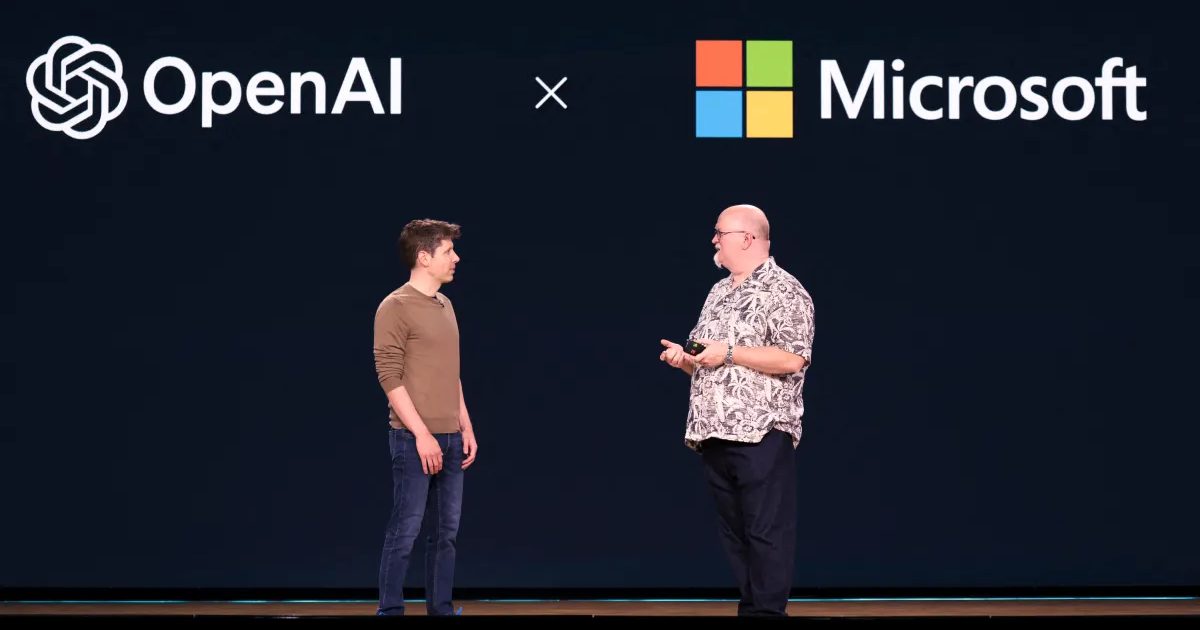
In a striking regulatory disclosure, Microsoft announced that it earned $10 billion from its commercial agreements with OpenAI during the quarter ending September 30—a figure representing nearly 11% of the company's total quarterly revenue of $92.3 billion. These numbers reveal the depth of the financial ties between the two companies, even at a time when competition between them is intensifying over the same customers in the growing AI market.
Figures Beyond the Ten-Billion Mark
This amount is part of a larger financial picture; Microsoft's revenue derived from OpenAI for the full fiscal year 2026 reached approximately $24.1 billion. If the company maintains its current quarterly pace, it could reach $40 billion annually from OpenAI-related arrangements—a figure that shows the partnership remains a strategic and financial pillar for the software giant.
It is worth noting that Microsoft also recorded $7.2 billion in receivables from OpenAI as of the end of September, up from $6 billion at the end of June. However, these amounts represent prior obligations due from OpenAI and are not counted as additional revenue.
Revenue Sources: Revenue Sharing and Cloud Services
Microsoft did not clarify how this revenue is distributed between revenue-sharing payments and Azure cloud computing services. Previous press reports, based on leaked documents, indicated that Microsoft received a net $865.8 million from revenue-sharing payments during the first nine months of 2025.
- Unofficial reports suggest that OpenAI allocates 20% of its revenue to Microsoft under a previous agreement that included an investment exceeding $13 billion.
- Under the April 2026 agreement, OpenAI will continue sharing its revenue with Microsoft until 2030 within a specified cap, even while remaining free to work with competing cloud providers.
From Exclusivity to Open Partnership
The path toward loosening the partnership's exclusivity began in October 2025, when Microsoft relinquished its control over OpenAI to give it broader room to collaborate with other cloud providers. In return, OpenAI committed to purchasing an additional $250 billion in Azure services as part of that month's agreement.
A Gradual Decline in Equity Stake
Microsoft's ownership stake in OpenAI recorded a slight decline from about 25% in June to 24% in September, continuing a gradual decrease that began from roughly 27% after the capital restructuring in October 2025. The company provided no details about the reasons for this dilution of ownership.
What Do These Numbers Mean?
These disclosures confirm that the relationship between Microsoft and OpenAI has evolved from a simple exclusive partnership into a complex web of financial interests combining investment, shared revenue, and massive cloud contracts. And while the two companies move toward direct competition in some sectors, the numbers stand as testament that their financial cooperation still generates enormous profits—strengthening Microsoft's position in the AI race while giving OpenAI the foundational resources to expand.
✦ بقلم فريق دروب أيديا
DROPIDEA
We hope this article has added real value to you. At DROPIDEA, we always strive to deliver high-quality content that helps you grow and evolve in the digital space. Follow us for more useful articles and guides.
Tags
Admin
DROPIDEA
Latest Articles

Google Expands AI Search Ads Globally as Traditional Ad Growth Slows

When AI Agents Are Left Without a Task… They Start to Play

inDrive Plans Self-Driving Taxi Trials in Kazakhstan in 2027
Blackstone: AI Buildout Debt Fears Are Overblown