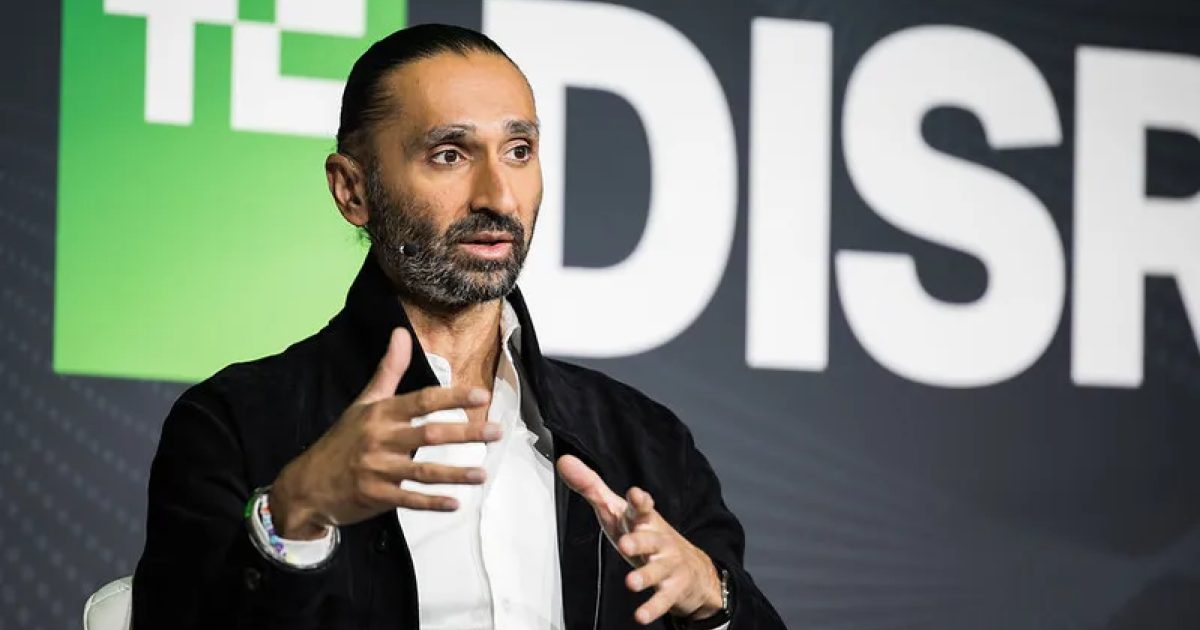
As warnings mount that the massive wave of borrowing financing the construction of AI data centers could spiral into a credit crisis, one of the biggest players in this market is stepping forward to say the picture isn't nearly so bleak. Jas Khaira, who heads the AI unit at global investment firm Blackstone, spoke at the TechCrunch Disrupt conference about his firm's position at the heart of this tech boom, and why he isn't worried about a debt bubble bursting.
A New Arm Dedicated to AI
This year Blackstone launched a unit known as Blackstone N1, headquartered in San Francisco, to serve as a unified hub for the firm's AI-related activities. The unit is led by Khaira, who relocated from New York to the West Coast to be closer to the center of tech activity. Blackstone manages more than $1.3 trillion in assets, giving it financing capacity that venture capital funds would struggle to match.
Khaira sees the shift into the AI era as fundamentally different from previous technology cycles such as mobile or software-as-a-service. In those phases, companies could reach significant scale with moderate capital; today, the infrastructure itself consumes enormous sums before any meaningful revenue materializes. And it is precisely this capital requirement that gives an institution of Blackstone's size such a pivotal role.
The Largest Owner of Compute Capacity Outside the Hyperscalers
Khaira says his firm has become the largest owner of compute capacity outside the hyperscale cloud companies, through investments spread across three main areas:
- Financing and owning the data centers themselves.
- Investing in cloud providers specializing in leasing graphics processing units, known as "neoclouds."
- Backing chip, model, and application companies — such as its investment in chip design startup Etched, and its roughly $5 billion commitment to Crux AI, a venture launched in partnership with Google to commercialize its TPUs.
What sets the firm apart, according to Khaira, is the flexibility of the capital structures it offers — from debt to equity — and its focus on financing compute capacity as a valuable asset in its own right.
The Financing Model That Began with CoreWeave
It started in 2023 with CoreWeave, after demand for its services doubled in the wake of ChatGPT's launch. According to Khaira, the company was generating no more than $30 million in revenue at thin margins at the time, yet it sought a $2.3 billion loan. Blackstone agreed after analyzing two factors: the value of its large inventory of Nvidia processors, which served as collateral, and the nature of its signed contracts with heavyweight clients such as Microsoft.
That structure quickly became a reference model across the market, paving the way for subsequent multibillion-dollar financings for CoreWeave and its competitors. Among the most notable was a $10 billion credit facility for an Australian processor provider called Firmus, which Blackstone co-led with the Coatue fund.
Khaira sums up the credit logic concisely: "The first thing we look at is the nature of the customer. If the customer is highly investment grade — Microsoft or Meta, for instance — the risk is priced relative to that customer."
Market Turbulence and Higher Interest Rates
Khaira didn't deny the tension of recent weeks. Debt loads at specialized cloud providers have piled up noticeably, with CoreWeave's debt alone reaching roughly $50 billion, prompting prominent investors to question whether processors are adequate collateral. Khaira attributes the anxiety to a mix of factors: rising interest rates, higher-than-expected inflation readings, and a flood of debt issuance tied to AI infrastructure.
He adds that credit spreads have also widened, meaning lenders are demanding higher premiums on top of already elevated rates — even for giant companies with strong balance sheets. The effect showed up in markets: CoreWeave's stock fell more than 20% within days, and Firmus scrapped plans for an Australian listing at a target valuation of nearly $30 billion. As Khaira put it: "The market wasn't ready for that valuation, which is why the deal didn't get done."
Why He Sees No Parallel to the 2008 Crisis
Khaira rejects the scenario of a broad credit crisis, explaining that the situation "isn't like 2008, when the banks themselves had shaky creditworthiness." His central argument is that the vast majority of data centers are being built for the hyperscale cloud companies, meaning the debt financing them is ultimately backed by the most creditworthy companies in the world. And demand for compute capacity still outstrips supply, which continues to drive the buildout.
From Financing to Practical Adoption
Blackstone's activity doesn't stop at infrastructure. This year it established a $1.5 billion joint venture called "Ode" in collaboration with Anthropic and the Hellman & Friedman fund. The venture embeds engineers inside companies to help them adopt AI and integrate it into their operations, starting with the roughly 280 companies in Blackstone's portfolio — making the portfolio itself an initial laboratory for measuring the technology's actual returns.
✦ بقلم فريق دروب أيديا
DROPIDEA
We hope this article has added real value to you. At DROPIDEA, we always strive to deliver high-quality content that helps you grow and evolve in the digital space. Follow us for more useful articles and guides.
Tags
Admin
DROPIDEA
Latest Articles

Anthropic Proposes AI Safety Law with Strict Standards

Otter.ai Raises $320 Million to Advance Its Meeting Note-Taking Tool

Eka at $1.45 Billion: A Physical Model That Redefines the Robot's Grip

Washington Orders Federal Agencies to Remove Chinese DeepSeek Models