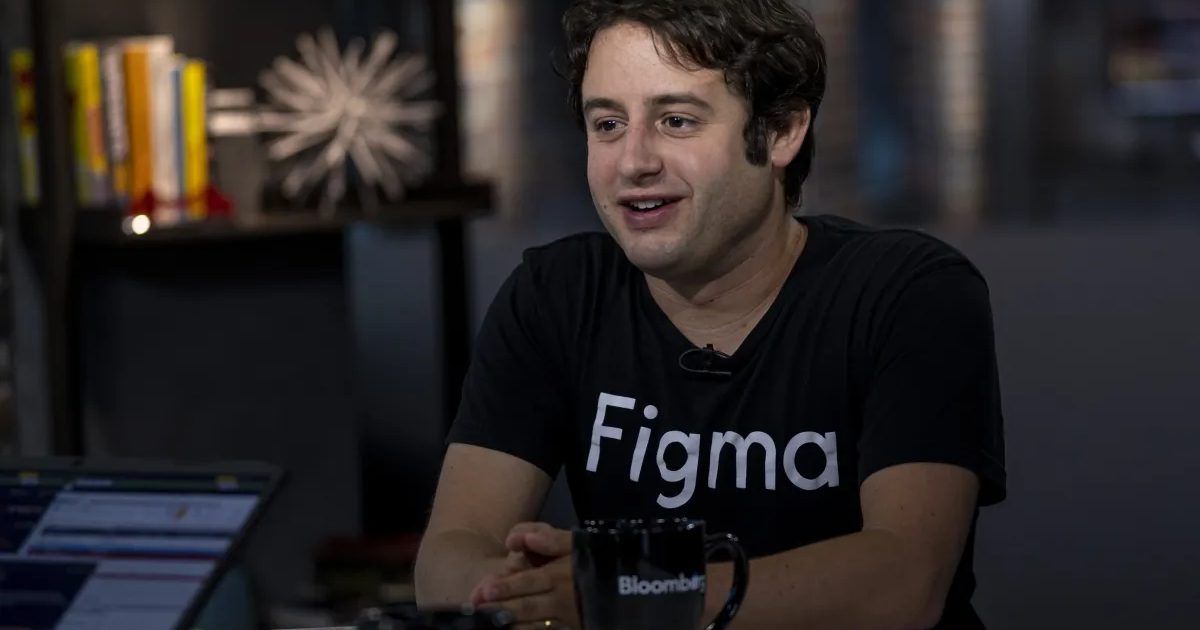
In what appears at first glance to be a contradiction, Figma is moving ahead with expanding its support for the Model Context Protocol (MCP) at the very moment one of its co-founders, Dylan Field, is voicing clear reservations about this open standard. This dual stance reveals one of the most complex technical debates currently underway: how can companies open up their data to AI agents without losing control over it or exposing their users to risk?
What Is the MCP Protocol and Why Does It Matter?
The Model Context Protocol is an open-source standard developed by Anthropic with the aim of unifying the way AI agents connect to external data sources and tools. Instead of building a custom integration for each application individually, MCP provides a unified intermediary layer that allows models to read content and execute actions within different services.
In practical terms, this means a coding assistant can access a design file in Figma, a task in a project management tool, or a document on a documentation platform, without the developer needing to write a separate connector every time. This simplicity is the main reason behind the standard's rapid adoption over a short period.
20 New Partners in Figma's Ecosystem
During the first edition of the Config conference held by the company in India, Figma announced the addition of twenty new partners to its MCP ecosystem. The list includes prominent names in productivity, programming, and artificial intelligence, among them:
- Task and project management tools such as ClickUp, Linear, and Notion
- Development environments and coding assistants such as Junie from JetBrains, OpenCode, and Amp
- Model providers and AI platforms such as Mistral, Meta Muse, and Sarvam Agents
- New AI-powered browsers and applications such as Dia
The purpose of this expansion is clear: to make design data stored in Figma directly usable from within the daily workflows of designers and developers, whether while writing code, managing tasks, or generating interfaces.
Field's Reservations: An Unbalanced Protocol
Despite this openness, Field has not concealed his doubts. In comments published on X, he pointed to what he described as a striking paradox: that Anthropic, the very entity that created the standard, does not provide access to a number of its own cloud resources via MCP itself.
Field argues that the public debate is often reduced to a binary of "open versus closed" — a binary in which everyone chooses openness in theory, while a more fundamental issue goes neglected: the imbalance in context exchange between the parties involved. In other words: who opens up their data, and who benefits from it?
In a press interview, Field explained his position in greater detail, noting that MCP is not a perfect protocol and has considerable room for improvement, and that in its current form it tilts in favor of the leading model-development labs more than the companies providing the data. Nevertheless, he affirmed his commitment to ensuring users can access their data in Figma in whatever way suits them.
Security as a Reason for Partial Openness
The second factor in Figma's equation is security. Field explains that every additional layer of data exposed through the protocol raises the likelihood of misuse, and that the company is obliged to consider worst-case scenarios even if the vast majority of users harbor no malicious intent.
This position is not unique to Figma. As AI agents evolve into tools capable of executing real actions rather than merely generating text, concerns are mounting over prompt injection attacks, leaks of sensitive data, and the unauthorized use of copyright-protected content.
What Does This Mean for Organizations and Developers?
The practical lesson from Figma's case is that adopting MCP is not a simple technical decision but a strategic one that requires balancing three elements: ease of integration, the value of enterprise data, and the acceptable level of risk. At "Drop Idea," we advise teams planning to adopt the protocol to begin with:
- Precisely defining the scope of data permitted for exposure, rather than relying on default settings
- Implementing granular, auditable permissions for each AI agent
- Logging all access operations and reviewing them periodically
- Assessing whether the party benefiting from the integration provides reciprocal value or merely extracts data in one direction
MCP remains a promising and rapidly spreading standard, but the debate Field has sparked reminds us that open standards need fair governance just as much as they need broad adoption. The next phase will determine whether the protocol is capable of addressing this imbalance, or whether it will remain a tool that serves the major labs more than content and data providers.
✦ بقلم فريق دروب أيديا
DROPIDEA
We hope this article has added real value to you. At DROPIDEA, we always strive to deliver high-quality content that helps you grow and evolve in the digital space. Follow us for more useful articles and guides.
Tags
Admin
DROPIDEA
Latest Articles
Otter.ai Raises $320 Million to Advance Its Meeting Note-Taking Tool

Eka at $1.45 Billion: A Physical Model That Redefines the Robot's Grip

Washington Orders Federal Agencies to Remove Chinese DeepSeek Models

An AI Model Decodes the Electrical Signals in Plants