Ir al contenido
ImágenesGratis

Tu OC en moda de espantapájaros en una boutique de lujo

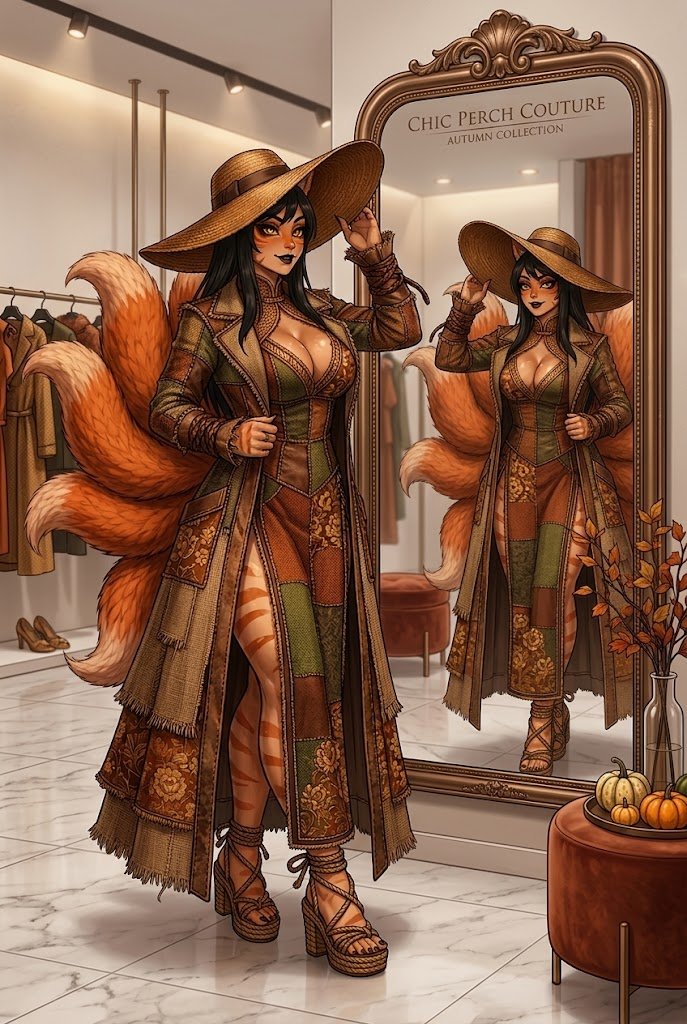
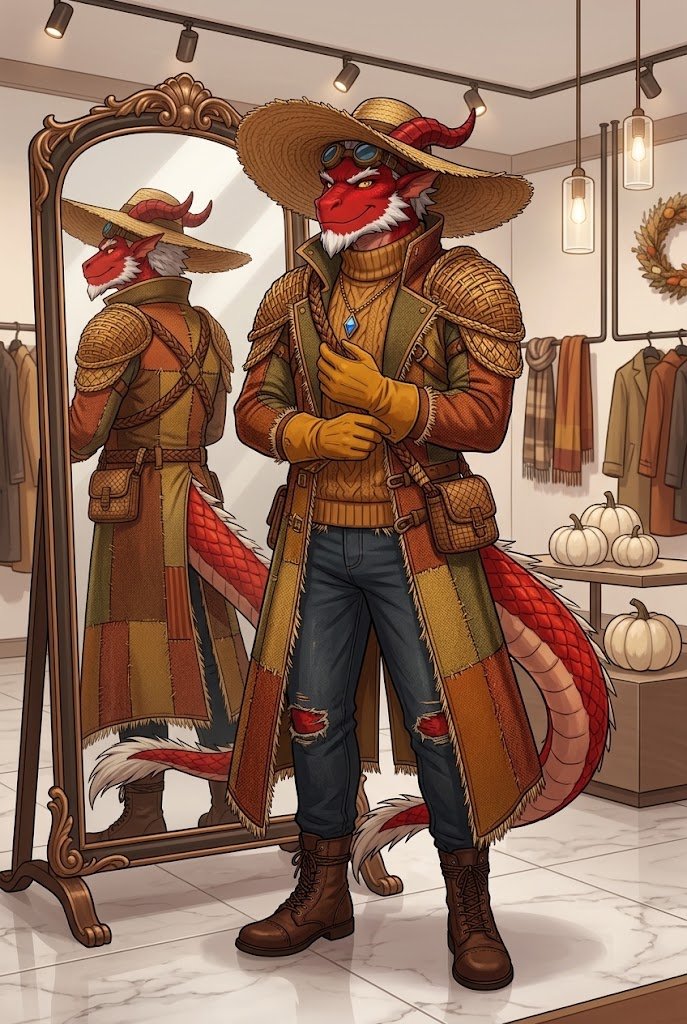
Un prompt de imagen a imagen que viste a tu personaje original en moda otoñal de alta costura inspirada en espantapájaros, construida a partir de su vestuario real de la imagen de referencia, en un momento de espejo de probador dentro de una boutique de lujo, preservando estrictamente su identidad y estilo artístico original.

Generación de imágenes

Ejemplos de la fuente

Estas imágenes provienen de la fuente original. DROPIDEA no ha probado estos ejemplos; los resultados dependen del modelo y los ajustes.

Listo para personalizar

Tu prompt

Inglés

Sustituye las variables en rojo por tus datos. Copia el texto completo y úsalo con tu agente preferido.

TXT MD Versión en inglés
Please remain calm! There is absolutely no reason to panic. Unless you forgot it’s JOLLY’S PROMPT OF THE DAY! Fashion is weird. they will take the most random thing and say "here you go, put this on!" but sometimes, if you know what your doing, it looks good. today's prompt, Scarescrow Fashion! Special Thanks To: @RaelinAI , Wardrake Draco, @CountessLilithB , and @EmmyPendragon Your OC in Scarecrow Fashion by Jolly Joebean PROMPT STARTS HERE --- Designate the attached character reference as @Image1. @Image1 = the only character identity and visual-design reference. Using the attached reference image, create a single illustrated scene of the character trying on an elaborate, high-fashion scarecrow-inspired outfit inside a luxury designer clothing boutique, caught in the middle of a fitting-room mirror moment during peak autumn shopping season. This is an image-to-image transformation task. The character is not becoming a scarecrow, a creature, or a costumed mascot — they remain fully and clearly themselves, simply dressed in couture-level autumn fashion that borrows its silhouette, texture, and motifs from classic scarecrow imagery, reinterpreted as something you'd find in a Rodeo Drive boutique rather than a cornfield. REFERENCE RULES — HIGHEST PRIORITY Thoroughly analyze @Image1 and preserve the character's: Face and facial structure Hairstyle and hair color Eye shape and eye color Skin tone Body type and proportions Species traits Signature accessories Recognizable symbols and motifs Dominant color palette Personality and emotional energy Original illustrated art style The character must remain unmistakably the same individual beneath the outfit. Do not use characters, costumes, or visual information from previous prompts, generations, or conversations. FALLBACK LOGIC: If @Image1 is not a character (e.g., an object, logo, or landscape), invent an original character consistent with its dominant colors and motifs, and build the rest of the scene around that invented character. If the character's species or anatomy makes certain garment types implausible (wings, tails, unusual limb counts, non-humanoid proportions), adapt the outfit's construction to fit their body naturally (e.g., a slit or draped panel for a tail, an open-back cut for wings) rather than forcing a standard human garment shape. STEP 1 — INVENTORY THE OC'S ACTUAL GARMENTS (MANDATORY BEFORE DESIGNING ANYTHING): Before designing the outfit, explicitly identify every existing garment piece and construction detail visible on @Image1 — for example: a fitted jumpsuit or bodysuit, a cropped jacket, layered shoulder/chest armor, a structured vest, ripped or distressed denim, a harness or strap system, a duster coat, gloves, a specific collar or neckline shape, a belt-and-pouch rig, boots. This inventory is the mandatory foundation for Step 2 — every one of the character's existing garment categories must still be present and recognizable in the finished outfit, just rebuilt in scarecrow-couture materials. Do not skip this step and jump to a stock "blazer and trousers" silhouette; the character's actual clothing shapes come first. STEP 2 — TRANSLATE EACH EXISTING GARMENT INTO SCARECROW-COUTURE MATERIALS: Take the inventory from Step 1 and reskin each individual piece — do not replace the character's garment categories with different ones. Examples of correct translation: A fitted jumpsuit/bodysuit stays a fitted jumpsuit — its panel lines become raw-edge or frayed seam piping, its accent color becomes a woven straw-toned trim along the seams A hard-shell shoulder/knee armor piece stays armor in placement and shape, but rendered in a woven wicker, lacquered straw-composite, or braided-leather finish instead of metal A harness, strap rig, or belt-and-pouch system stays a harness/strap rig, reworked in raffia-wrapped leather or rope-textured straps A cropped jacket stays a cropped jacket, rebuilt in a plaid or tweed with frayed hems Ripped/distressed denim stays ripped denim, with the distressing rendered as intentional straw-frayed edges rather than plain tears Chain accessories, chokers, or hardware stay in place, simply rendered in an aged brass, wood, or bone-toned material instead of chrome The wide-brimmed hat, gloves, and any raffia/straw-fringe accents from the general concept (see Step 2 details below) should be added as new, additional accessories on top of this base — they supplement the character's existing wardrobe rather than replacing it outright. The goal is a viewer immediately recognizing "that's their jumpsuit/jacket/jeans, just reimagined" — not a stranger's outfit with the character's color palette pasted on. Beyond the garment-by-garment translation above, weave in classic scarecrow visual language as accents and finishing details, such as: A wide-brimmed or floppy hat reinterpreted as a high-fashion statement hat, oversized and dramatic Straw-toned texture used as a luxe accent — a woven straw-effect clutch, a raffia-fringed hem, a woven-texture belt or collar Patchwork detailing reimagined as intentional color-blocked panels or designer patchwork stitching Leather or suede gloves in a warm harvest tone, worn fingerless or gauntlet-style Integrate the character's own signature colors, accessories, and motifs directly into the design — the outfit should look like it was custom-designed for this specific character, not a stock scarecrow costume recolored. Preserve species traits and identity markers rather than concealing them. Do not depict burlap sack texture, a stitched or stuffed "scarecrow face," straw poking out of sleeves or a collar, or any element implying the character is physically made of straw. The character's own real skin, fur, scales, or material must remain fully visible and unaltered — only the clothing is scarecrow-themed. STEP 3 — POSE AND FITTING-ROOM MOMENT: Pose the character in a candid boutique fitting-room moment appropriate to their personality: admiring themselves in a full-length mirror with a pleased or surprised expression, mid-turn to check the outfit's back or silhouette, adjusting the hat or a cuff, or striking a playful runway-style pose for their own reflection. The pose should feel like a genuine in-store try-on moment, not a static product-reference stance. If the character's personality suggests it, their expression may lean confident, delighted, skeptical, or amused at their own reflection — choose whichever reaction feels true to @Image1's established energy rather than defaulting to a neutral smile. STEP 4 — THE BOUTIQUE SETTING: Build a luxury designer clothing store interior consistent with a high-end Rodeo Drive-style boutique during autumn: Polished marble or hardwood flooring A large, elegantly framed fitting-room mirror as the focal point Minimalist, tastefully lit clothing racks in the background holding a few additional coordinated autumn pieces (echoing the outfit's palette, softly out of focus) Warm seasonal styling touches appropriate to an upscale retail space (a small tasteful pumpkin or gourd display, an autumn wreath, seasonal florals in a vase) kept understated and boutique-appropriate rather than rustic or farm-themed Soft directional boutique lighting (pendant lights, warm spotlights) consistent with premium retail design A glimpse of a garment rack, a folded scarf display, or a shoe display nearby to reinforce the retail setting The setting should feel unmistakably upscale and urban — never a barn, farm, or rustic outdoor setting. The contrast between "scarecrow" motif and "luxury boutique" setting is the core joke/charm of the concept and should read clearly. STEP 5 — RENDERING STYLE: Preserve @Image1's original illustrated art style rather than forcing photorealism. Render the scene with polished, editorial-fashion-illustration energy: confident linework, rich fabric rendering with visible texture and drape, warm autumn-boutique color grading, and a sense of glossy, upscale presentation appropriate to a high-fashion lookbook or magazine spread. COMPOSITION: Use a vertical or portrait-oriented composition with the character large, centered, and dominant in the frame, reflected in or standing beside the fitting-room mirror. If the mirror reflection is shown, ensure the reflected version of the character remains anatomically consistent and correctly mirrored — same outfit, same identity, same details. Keep the boutique background clearly present but secondary, supporting the scene without competing with the character for focus. LIGHTING AND MOOD: Use warm, soft, upscale retail lighting — golden accent spotlights, warm ambient glow, and a cozy autumn color temperature. The mood should feel playful, stylish, and a little indulgent: a charming, high-fashion twist on a familiar autumn icon, delivered with confidence rather than parody. QUALITY TARGET: High-quality illustration with confident linework, accurate anatomy, convincing luxury-fabric rendering, a clearly readable "couture scarecrow" design concept that is visibly derived from the character's own existing wardrobe, a natural and characterful fitting-room pose, and a boutique setting that reads as genuinely upscale. DO NOT: Do not change the character's identity, eye color, species traits, or signature accessories. Do not use information from previous characters or prompts. Do not depict the character as literally becoming a scarecrow — no burlap-sack skin, stitched face, stuffed limbs, straw-filled sleeves, or button eyes. Their real face, skin/fur/scales, and body must remain fully visible and unaltered. Do not default to a generic plaid blazer, trench coat, or trouser set regardless of the character's actual reference clothing — the finished outfit's garment categories (jumpsuit, jacket, jeans, harness, armor, etc.) must match what @Image1 is actually wearing, only rebuilt in scarecrow-couture materials. Do not use a rustic, farm, cornfield, or barn setting — the setting must be an upscale designer boutique. Do not use a generic, off-the-rack costume-store scarecrow design — the outfit must be couture-level and derived from the character's own existing wardrobe and palette. Do not use real designer brand names, logos, or storefront signage. Do not use a neutral, static reference pose — the character should be caught in a genuine candid try-on moment. Do not overload the scene with text, price tags, or signage. Do not create malformed hands, extra limbs, distorted anatomy, or an incorrectly mirrored reflection. Do not make the tone spooky, sinister, or horror-themed — this is a lighthearted, stylish, feel-good fashion moment. The finished image should feel like a charming editorial fashion-magazine moment — an OC caught mid-delight (or mid-side-eye) at their own reflection, dressed in an impossibly chic scarecrow-inspired outfit that visibly grew out of their own signature wardrobe, that could only exist on the racks of the world's fanciest boutique during the height of fall. --- PROMPT ENDS HERE
Ver resultados

Tu prompt

Please remain calm! There is absolutely no reason to panic. Unless you forgot it’s JOLLY’S PROMPT OF THE DAY! Fashion is weird. they will take the most random thing and say "here you go, put this on!" but sometimes, if you know what your doing, it looks good. today's prompt, Scarescrow Fashion! Special Thanks To: @RaelinAI , Wardrake Draco, @CountessLilithB , and @EmmyPendragon Your OC in Scarecrow Fashion by Jolly Joebean PROMPT STARTS HERE --- Designate the attached character reference as @Image1. @Image1 = the only character identity and visual-design reference. Using the attached reference image, create a single illustrated scene of the character trying on an elaborate, high-fashion scarecrow-inspired outfit inside a luxury designer clothing boutique, caught in the middle of a fitting-room mirror moment during peak autumn shopping season. This is an image-to-image transformation task. The character is not becoming a scarecrow, a creature, or a costumed mascot — they remain fully and clearly themselves, simply dressed in couture-level autumn fashion that borrows its silhouette, texture, and motifs from classic scarecrow imagery, reinterpreted as something you'd find in a Rodeo Drive boutique rather than a cornfield. REFERENCE RULES — HIGHEST PRIORITY Thoroughly analyze @Image1 and preserve the character's: Face and facial structure Hairstyle and hair color Eye shape and eye color Skin tone Body type and proportions Species traits Signature accessories Recognizable symbols and motifs Dominant color palette Personality and emotional energy Original illustrated art style The character must remain unmistakably the same individual beneath the outfit. Do not use characters, costumes, or visual information from previous prompts, generations, or conversations. FALLBACK LOGIC: If @Image1 is not a character (e.g., an object, logo, or landscape), invent an original character consistent with its dominant colors and motifs, and build the rest of the scene around that invented character. If the character's species or anatomy makes certain garment types implausible (wings, tails, unusual limb counts, non-humanoid proportions), adapt the outfit's construction to fit their body naturally (e.g., a slit or draped panel for a tail, an open-back cut for wings) rather than forcing a standard human garment shape. STEP 1 — INVENTORY THE OC'S ACTUAL GARMENTS (MANDATORY BEFORE DESIGNING ANYTHING): Before designing the outfit, explicitly identify every existing garment piece and construction detail visible on @Image1 — for example: a fitted jumpsuit or bodysuit, a cropped jacket, layered shoulder/chest armor, a structured vest, ripped or distressed denim, a harness or strap system, a duster coat, gloves, a specific collar or neckline shape, a belt-and-pouch rig, boots. This inventory is the mandatory foundation for Step 2 — every one of the character's existing garment categories must still be present and recognizable in the finished outfit, just rebuilt in scarecrow-couture materials. Do not skip this step and jump to a stock "blazer and trousers" silhouette; the character's actual clothing shapes come first. STEP 2 — TRANSLATE EACH EXISTING GARMENT INTO SCARECROW-COUTURE MATERIALS: Take the inventory from Step 1 and reskin each individual piece — do not replace the character's garment categories with different ones. Examples of correct translation: A fitted jumpsuit/bodysuit stays a fitted jumpsuit — its panel lines become raw-edge or frayed seam piping, its accent color becomes a woven straw-toned trim along the seams A hard-shell shoulder/knee armor piece stays armor in placement and shape, but rendered in a woven wicker, lacquered straw-composite, or braided-leather finish instead of metal A harness, strap rig, or belt-and-pouch system stays a harness/strap rig, reworked in raffia-wrapped leather or rope-textured straps A cropped jacket stays a cropped jacket, rebuilt in a plaid or tweed with frayed hems Ripped/distressed denim stays ripped denim, with the distressing rendered as intentional straw-frayed edges rather than plain tears Chain accessories, chokers, or hardware stay in place, simply rendered in an aged brass, wood, or bone-toned material instead of chrome The wide-brimmed hat, gloves, and any raffia/straw-fringe accents from the general concept (see Step 2 details below) should be added as new, additional accessories on top of this base — they supplement the character's existing wardrobe rather than replacing it outright. The goal is a viewer immediately recognizing "that's their jumpsuit/jacket/jeans, just reimagined" — not a stranger's outfit with the character's color palette pasted on. Beyond the garment-by-garment translation above, weave in classic scarecrow visual language as accents and finishing details, such as: A wide-brimmed or floppy hat reinterpreted as a high-fashion statement hat, oversized and dramatic Straw-toned texture used as a luxe accent — a woven straw-effect clutch, a raffia-fringed hem, a woven-texture belt or collar Patchwork detailing reimagined as intentional color-blocked panels or designer patchwork stitching Leather or suede gloves in a warm harvest tone, worn fingerless or gauntlet-style Integrate the character's own signature colors, accessories, and motifs directly into the design — the outfit should look like it was custom-designed for this specific character, not a stock scarecrow costume recolored. Preserve species traits and identity markers rather than concealing them. Do not depict burlap sack texture, a stitched or stuffed "scarecrow face," straw poking out of sleeves or a collar, or any element implying the character is physically made of straw. The character's own real skin, fur, scales, or material must remain fully visible and unaltered — only the clothing is scarecrow-themed. STEP 3 — POSE AND FITTING-ROOM MOMENT: Pose the character in a candid boutique fitting-room moment appropriate to their personality: admiring themselves in a full-length mirror with a pleased or surprised expression, mid-turn to check the outfit's back or silhouette, adjusting the hat or a cuff, or striking a playful runway-style pose for their own reflection. The pose should feel like a genuine in-store try-on moment, not a static product-reference stance. If the character's personality suggests it, their expression may lean confident, delighted, skeptical, or amused at their own reflection — choose whichever reaction feels true to @Image1's established energy rather than defaulting to a neutral smile. STEP 4 — THE BOUTIQUE SETTING: Build a luxury designer clothing store interior consistent with a high-end Rodeo Drive-style boutique during autumn: Polished marble or hardwood flooring A large, elegantly framed fitting-room mirror as the focal point Minimalist, tastefully lit clothing racks in the background holding a few additional coordinated autumn pieces (echoing the outfit's palette, softly out of focus) Warm seasonal styling touches appropriate to an upscale retail space (a small tasteful pumpkin or gourd display, an autumn wreath, seasonal florals in a vase) kept understated and boutique-appropriate rather than rustic or farm-themed Soft directional boutique lighting (pendant lights, warm spotlights) consistent with premium retail design A glimpse of a garment rack, a folded scarf display, or a shoe display nearby to reinforce the retail setting The setting should feel unmistakably upscale and urban — never a barn, farm, or rustic outdoor setting. The contrast between "scarecrow" motif and "luxury boutique" setting is the core joke/charm of the concept and should read clearly. STEP 5 — RENDERING STYLE: Preserve @Image1's original illustrated art style rather than forcing photorealism. Render the scene with polished, editorial-fashion-illustration energy: confident linework, rich fabric rendering with visible texture and drape, warm autumn-boutique color grading, and a sense of glossy, upscale presentation appropriate to a high-fashion lookbook or magazine spread. COMPOSITION: Use a vertical or portrait-oriented composition with the character large, centered, and dominant in the frame, reflected in or standing beside the fitting-room mirror. If the mirror reflection is shown, ensure the reflected version of the character remains anatomically consistent and correctly mirrored — same outfit, same identity, same details. Keep the boutique background clearly present but secondary, supporting the scene without competing with the character for focus. LIGHTING AND MOOD: Use warm, soft, upscale retail lighting — golden accent spotlights, warm ambient glow, and a cozy autumn color temperature. The mood should feel playful, stylish, and a little indulgent: a charming, high-fashion twist on a familiar autumn icon, delivered with confidence rather than parody. QUALITY TARGET: High-quality illustration with confident linework, accurate anatomy, convincing luxury-fabric rendering, a clearly readable "couture scarecrow" design concept that is visibly derived from the character's own existing wardrobe, a natural and characterful fitting-room pose, and a boutique setting that reads as genuinely upscale. DO NOT: Do not change the character's identity, eye color, species traits, or signature accessories. Do not use information from previous characters or prompts. Do not depict the character as literally becoming a scarecrow — no burlap-sack skin, stitched face, stuffed limbs, straw-filled sleeves, or button eyes. Their real face, skin/fur/scales, and body must remain fully visible and unaltered. Do not default to a generic plaid blazer, trench coat, or trouser set regardless of the character's actual reference clothing — the finished outfit's garment categories (jumpsuit, jacket, jeans, harness, armor, etc.) must match what @Image1 is actually wearing, only rebuilt in scarecrow-couture materials. Do not use a rustic, farm, cornfield, or barn setting — the setting must be an upscale designer boutique. Do not use a generic, off-the-rack costume-store scarecrow design — the outfit must be couture-level and derived from the character's own existing wardrobe and palette. Do not use real designer brand names, logos, or storefront signage. Do not use a neutral, static reference pose — the character should be caught in a genuine candid try-on moment. Do not overload the scene with text, price tags, or signage. Do not create malformed hands, extra limbs, distorted anatomy, or an incorrectly mirrored reflection. Do not make the tone spooky, sinister, or horror-themed — this is a lighthearted, stylish, feel-good fashion moment. The finished image should feel like a charming editorial fashion-magazine moment — an OC caught mid-delight (or mid-side-eye) at their own reflection, dressed in an impossibly chic scarecrow-inspired outfit that visibly grew out of their own signature wardrobe, that could only exist on the racks of the world's fanciest boutique during the height of fall. --- PROMPT ENDS HERE
Qué obtienes

  • Una única escena ilustrada vertical o en orientación retrato de tu personaje probándose moda otoñal de alta costura inspirada en espantapájaros en una boutique de lujo.
  • Un atuendo que reconstruye cada categoría del vestuario existente de tu personaje (mono, chaqueta, jeans, armadura, arnés...) en materiales de paja, rafia y mimbre, preservando identidad, rasgos y paleta.
  • Un momento espontáneo frente al espejo del probador con estilo de ilustración editorial pulido e iluminación otoñal cálida.

Casos de uso

  • Arte de personajes y piezas de moda estacional para tus personajes originales en redes sociales.
  • Contenido otoñal para comunidades de arte e intercambios colaborativos.
  • Ideación de diseño de moda fantástica basada en el vestuario existente de un personaje.

Cómo usarlo

  • Sube una imagen de referencia clara de tu personaje original junto al prompt; el resultado depende por completo del análisis de @Image1 para identidad, vestuario y estilo artístico.
  • Adjunta el prompt tal cual con la imagen y conserva la designación @Image1, ya que es el único enlace de referencia permitido.
  • Deja intactos los pasos de inventario de prendas; garantizan que cada categoría del vestuario real de tu personaje se reconstruya en materiales de espantapájaros de alta costura en lugar de sustituirse.
  • Opcionalmente ajusta decisiones creativas editables como la expresión o los detalles de la boutique, manteniendo intactas todas las restricciones y prohibiciones.
  • Envía, revisa el resultado y vuelve a intentarlo con pequeños cambios si quieres variar la pose o el reflejo.

Prompts relacionados