Ir al contenido
ImágenesGratis

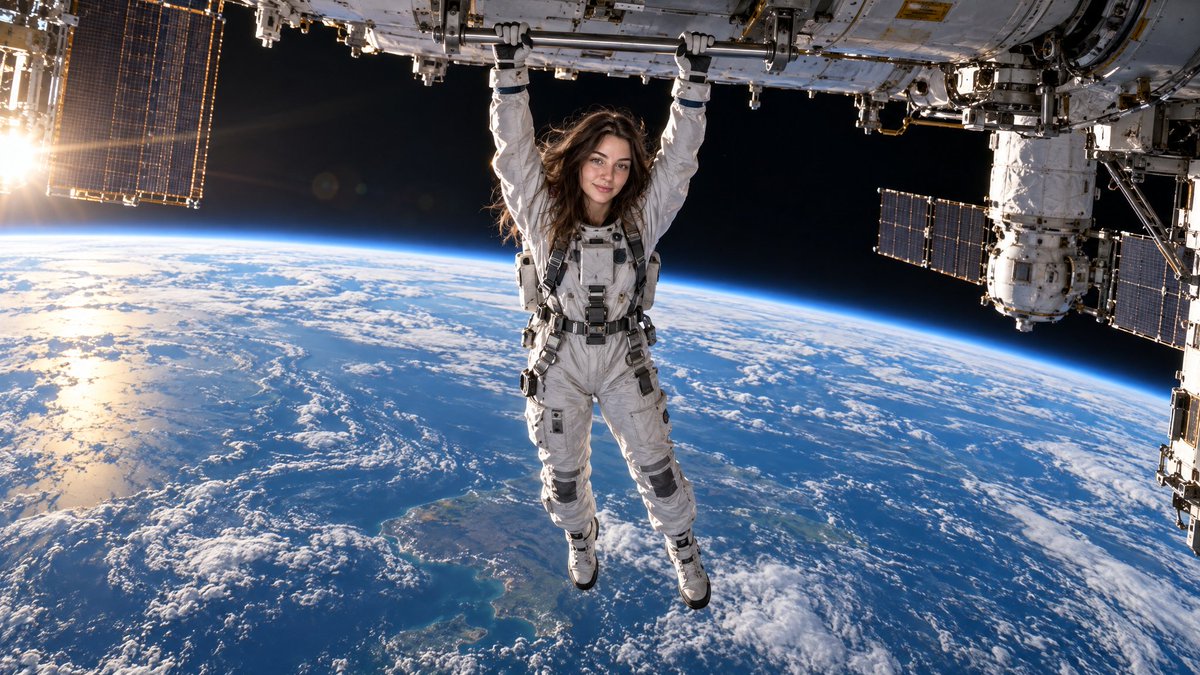
Astronauta cinematográfico fuera de nave orbital

Un prompt de transformación de imagen a imagen que convierte la foto de una persona en un fotograma cinematográfico fotorrealista: la persona cuelga de una barra metálica bajo una nave orbital con la Tierra de fondo, con bloqueo de identidad y salida 16K.

OpenAI

Ejemplos de la fuente

Estas imágenes provienen de la fuente original. DROPIDEA no ha probado estos ejemplos; los resultados dependen del modelo y los ajustes.

Listo para personalizar

Tu prompt

Inglés

Sustituye las variables en rojo por tus datos. Copia el texto completo y úsalo con tu agente preferido.

TXT MD Versión en inglés
POV: You asked AI to take your content to the next level… AI took you above Earth. 🌍🚀😂 Created with @ChatGPT Image 2.5 Prompt 👇 You are an expert cinematic photographer, photorealistic image-to-image transformation specialist, production designer, VFX supervisor, and premium streaming-series visual director. I will provide ONE reference image of a person. IMPORTANT: This is an IMAGE TRANSFORMATION, not a random re-composition. Use the uploaded person image as the identity reference and preserve the person's recognizable identity with extremely high fidelity. The subject may be MALE or FEMALE. Do not change the gender, facial structure, ethnicity, age appearance, hairstyle, or recognizable identity of the person from the uploaded reference. TRANSFORMATION CONCEPT: Transform the person into a cinematic astronaut-like scene where they are realistically hanging from a horizontal metal exercise bar attached beneath the exterior structure of a futuristic orbital spacecraft / space station, with the Earth dramatically visible far below. The person is floating outside the spacecraft in near-zero gravity while gripping the horizontal bar firmly with BOTH hands. POSE & BODY: - Both arms extended upward naturally toward the bar. - Both hands visibly gripping the metal bar. - Body hanging vertically beneath the bar. - Legs naturally suspended downward in zero gravity. - Feet slightly separated and floating naturally. - Anatomically correct shoulders, elbows, wrists, hands, fingers, torso, hips, knees and feet. - Realistic human proportions. - Natural weight distribution appropriate for a person hanging in microgravity. - No distorted limbs. - No extra fingers. - No fused fingers. - No duplicated body parts. - Preserve the person's recognizable face and facial proportions. COMPOSITION: Create a much more cinematic and visually expansive composition than the reference. Use a WIDE CINEMATIC ESTABLISHING SHOT. The person should remain the main focal point, positioned approximately in the central vertical region, while allowing substantial negative space around them. The camera should be positioned slightly farther away so the viewer can clearly see: 1. The entire person from head to feet. 2. Both hands and the complete horizontal bar. 3. A substantial portion of the spacecraft exterior above and around the subject. 4. Large portions of Earth extending across the background. 5. The curvature of Earth clearly visible. 6. Deep black space surrounding the Earth. 7. Additional spacecraft structure and mechanical details from a slightly angled side perspective. Do NOT crop the person's hands, feet, head, bar, spacecraft, or Earth. The composition should feel like a real frame from an expensive science-fiction feature film rather than a simple portrait. CAMERA: Large-format cinematic camera. 24mm cinematic wide-angle lens. Low-to-medium perspective looking slightly upward toward the subject while maintaining a strong view of Earth below. Natural perspective without extreme fisheye distortion. Deep cinematic spatial separation. Subtle anamorphic characteristics. Controlled lens flare. Very high dynamic range. Natural cinematic depth. VISUAL DIRECTION: Premium high-budget science-fiction streaming-series cinematography. Photorealistic, sophisticated, grounded, dramatic, immersive, realistic and physically believable. Think of the visual quality of a premium Netflix-level science-fiction production, with the realism and production value of a major Hollywood space film. Do NOT make it look like: - AI artwork - digital painting - game graphics - cheap CGI - illustration - fantasy poster - overly stylized concept art - plastic 3D render SPACECRAFT: The spacecraft should feel physically engineered and functional. Show detailed: - metallic panels - structural beams - thermal insulation - mechanical joints - cables - brackets - bolts - solar-panel structures - realistic surface wear - subtle scratches - realistic metallic reflections - engineering details The horizontal bar should be physically attached to the spacecraft structure with realistic mounting hardware. The spacecraft should occupy the upper portion and corners of the frame without overwhelming the person. EARTH: Earth must look enormous, realistic and breathtaking. Show a visible curved horizon with: - blue atmospheric layer - realistic white cloud formations - oceans - subtle landmasses - natural atmospheric scattering - realistic sunlight - extremely detailed cloud structures The Earth should extend dramatically across the lower and middle background. Use realistic orbital perspective so the viewer immediately understands that the subject is extremely high above Earth. LIGHTING: Strong cinematic sunlight coming from the side of the spacecraft. Create realistic directional sunlight across the person's face, arms and clothing. Use physically accurate light behavior: - bright sunlight on exposed surfaces - subtle shadow falloff - realistic reflected Earth light - cool ambient illumination from space - realistic metallic highlights - subtle rim light around the subject The face must remain clearly visible and naturally illuminated. SKIN: Extremely realistic human skin. Preserve: - natural skin texture - pores - subtle imperfections - realistic facial micro-detail - natural complexion - realistic eyes - natural lips - individual hair strands Avoid excessive skin smoothing or beauty-filter appearance. CLOTHING: Give the subject realistic contemporary astronaut / orbital-mission clothing while keeping the person's body proportions and recognizable appearance. The clothing should have: - realistic fabric folds - stitching - seams - subtle technical materials - believable microgravity behavior - physically accurate shadows - realistic wrinkles and tension around shoulders and arms The outfit should look practical and production-designed rather than futuristic fantasy armor. ZERO-GRAVITY PHYSICS: The body, clothing, hair and accessories must behave naturally in microgravity. Hair should subtly float rather than fall heavily downward. Loose fabric should have slight suspended movement. No impossible gravitational behavior. REALISM & VFX: Everything must obey real-world physics and optical behavior. Create believable: - atmospheric scattering - sunlight - reflections - shadows - metallic response - skin response - depth - scale - orbital perspective - microgravity behavior The scene should look like it was photographed by a professional cinema camera outside an actual orbital spacecraft. FACIAL IDENTITY LOCK: The uploaded person's face is the identity source. Preserve the person's: - face shape - eyes - eyebrows - nose - lips - jawline - cheek structure - forehead - skin tone - hairstyle - distinctive facial characteristics Do not replace the face with a generic astronaut face. Do not beautify the person into an unrecognizable model. Do not alter their identity. CINEMATIC COLOR: Premium cinematic color grading. Deep blacks in space. Natural Earth blues. Controlled highlights. Subtle cool metallic tones. Natural skin tones. High dynamic range. Rich but realistic contrast. Soft cinematic highlight roll-off. The final image should feel like a frame taken from a serious, expensive science-fiction movie. DETAIL LEVEL: Extremely high micro-detail across: - face - skin - hair - eyes - hands - fingers - clothing - spacecraft - Earth - clouds - metallic surfaces No artificial sharpening halos. No excessive HDR. No oversaturated colors. FRAMING: Ultra-wide cinematic establishing composition. Keep the entire subject visible. Keep both hands and the entire bar visible. Keep the spacecraft structure clearly visible. Keep a large, breathtaking view of Earth visible. Maintain strong visual depth and scale. The final result should immediately communicate: "A human being is hanging outside an orbital spacecraft high above Earth." NEGATIVE CONSTRAINTS: No extra limbs. No extra hands. No missing fingers. No malformed hands. No fused fingers. No duplicated fingers. No distorted face. No identity change. No facial warping. No unnatural eyes. No asymmetrical facial artifacts. No floating body parts. No broken anatomy. No cropped head. No cropped hands. No cropped feet. No cropped bar. No fisheye distortion. No excessive wide-angle body distortion. No cartoon appearance. No illustration. No painterly texture. No video-game graphics. No cheap CGI. No plastic skin. No artificial beauty filter. No excessive lens flare. No oversaturation. No fake-looking Earth. No unrealistic spacecraft. No text. No logos. No watermark. OUTPUT: Photorealistic cinematic science-fiction frame. Premium theatrical / streaming-series production quality. Extremely realistic human subject. Extremely realistic spacecraft. Extremely realistic Earth. Epic sense of scale. Natural optical rendering. Maximum possible detail. RESOLUTION LOCK: Generate the final image in 16K resolution — 15360 × 8640 pixels (≈132.7 million pixels). Preserve maximum possible detail, sharpness, texture, fine edges, realistic skin and material details. No cropping. No stretching. No compression. No pixelation. No loss of quality. Maintain the complete cinematic composition while rendering at true 16K quality. FINAL PRIORITY: IDENTITY PRESERVATION > ANATOMICAL ACCURACY > COMPLETE SUBJECT VISIBILITY > CINEMATIC COMPOSITION > REALISTIC SPACECRAFT > REALISTIC EARTH > LIGHTING > COLOR GRADING > MICRO-DETAIL.
Ver resultados

Tu prompt

POV: You asked AI to take your content to the next level… AI took you above Earth. 🌍🚀😂 Created with @ChatGPT Image 2.5 Prompt 👇 You are an expert cinematic photographer, photorealistic image-to-image transformation specialist, production designer, VFX supervisor, and premium streaming-series visual director. I will provide ONE reference image of a person. IMPORTANT: This is an IMAGE TRANSFORMATION, not a random re-composition. Use the uploaded person image as the identity reference and preserve the person's recognizable identity with extremely high fidelity. The subject may be MALE or FEMALE. Do not change the gender, facial structure, ethnicity, age appearance, hairstyle, or recognizable identity of the person from the uploaded reference. TRANSFORMATION CONCEPT: Transform the person into a cinematic astronaut-like scene where they are realistically hanging from a horizontal metal exercise bar attached beneath the exterior structure of a futuristic orbital spacecraft / space station, with the Earth dramatically visible far below. The person is floating outside the spacecraft in near-zero gravity while gripping the horizontal bar firmly with BOTH hands. POSE & BODY: - Both arms extended upward naturally toward the bar. - Both hands visibly gripping the metal bar. - Body hanging vertically beneath the bar. - Legs naturally suspended downward in zero gravity. - Feet slightly separated and floating naturally. - Anatomically correct shoulders, elbows, wrists, hands, fingers, torso, hips, knees and feet. - Realistic human proportions. - Natural weight distribution appropriate for a person hanging in microgravity. - No distorted limbs. - No extra fingers. - No fused fingers. - No duplicated body parts. - Preserve the person's recognizable face and facial proportions. COMPOSITION: Create a much more cinematic and visually expansive composition than the reference. Use a WIDE CINEMATIC ESTABLISHING SHOT. The person should remain the main focal point, positioned approximately in the central vertical region, while allowing substantial negative space around them. The camera should be positioned slightly farther away so the viewer can clearly see: 1. The entire person from head to feet. 2. Both hands and the complete horizontal bar. 3. A substantial portion of the spacecraft exterior above and around the subject. 4. Large portions of Earth extending across the background. 5. The curvature of Earth clearly visible. 6. Deep black space surrounding the Earth. 7. Additional spacecraft structure and mechanical details from a slightly angled side perspective. Do NOT crop the person's hands, feet, head, bar, spacecraft, or Earth. The composition should feel like a real frame from an expensive science-fiction feature film rather than a simple portrait. CAMERA: Large-format cinematic camera. 24mm cinematic wide-angle lens. Low-to-medium perspective looking slightly upward toward the subject while maintaining a strong view of Earth below. Natural perspective without extreme fisheye distortion. Deep cinematic spatial separation. Subtle anamorphic characteristics. Controlled lens flare. Very high dynamic range. Natural cinematic depth. VISUAL DIRECTION: Premium high-budget science-fiction streaming-series cinematography. Photorealistic, sophisticated, grounded, dramatic, immersive, realistic and physically believable. Think of the visual quality of a premium Netflix-level science-fiction production, with the realism and production value of a major Hollywood space film. Do NOT make it look like: - AI artwork - digital painting - game graphics - cheap CGI - illustration - fantasy poster - overly stylized concept art - plastic 3D render SPACECRAFT: The spacecraft should feel physically engineered and functional. Show detailed: - metallic panels - structural beams - thermal insulation - mechanical joints - cables - brackets - bolts - solar-panel structures - realistic surface wear - subtle scratches - realistic metallic reflections - engineering details The horizontal bar should be physically attached to the spacecraft structure with realistic mounting hardware. The spacecraft should occupy the upper portion and corners of the frame without overwhelming the person. EARTH: Earth must look enormous, realistic and breathtaking. Show a visible curved horizon with: - blue atmospheric layer - realistic white cloud formations - oceans - subtle landmasses - natural atmospheric scattering - realistic sunlight - extremely detailed cloud structures The Earth should extend dramatically across the lower and middle background. Use realistic orbital perspective so the viewer immediately understands that the subject is extremely high above Earth. LIGHTING: Strong cinematic sunlight coming from the side of the spacecraft. Create realistic directional sunlight across the person's face, arms and clothing. Use physically accurate light behavior: - bright sunlight on exposed surfaces - subtle shadow falloff - realistic reflected Earth light - cool ambient illumination from space - realistic metallic highlights - subtle rim light around the subject The face must remain clearly visible and naturally illuminated. SKIN: Extremely realistic human skin. Preserve: - natural skin texture - pores - subtle imperfections - realistic facial micro-detail - natural complexion - realistic eyes - natural lips - individual hair strands Avoid excessive skin smoothing or beauty-filter appearance. CLOTHING: Give the subject realistic contemporary astronaut / orbital-mission clothing while keeping the person's body proportions and recognizable appearance. The clothing should have: - realistic fabric folds - stitching - seams - subtle technical materials - believable microgravity behavior - physically accurate shadows - realistic wrinkles and tension around shoulders and arms The outfit should look practical and production-designed rather than futuristic fantasy armor. ZERO-GRAVITY PHYSICS: The body, clothing, hair and accessories must behave naturally in microgravity. Hair should subtly float rather than fall heavily downward. Loose fabric should have slight suspended movement. No impossible gravitational behavior. REALISM & VFX: Everything must obey real-world physics and optical behavior. Create believable: - atmospheric scattering - sunlight - reflections - shadows - metallic response - skin response - depth - scale - orbital perspective - microgravity behavior The scene should look like it was photographed by a professional cinema camera outside an actual orbital spacecraft. FACIAL IDENTITY LOCK: The uploaded person's face is the identity source. Preserve the person's: - face shape - eyes - eyebrows - nose - lips - jawline - cheek structure - forehead - skin tone - hairstyle - distinctive facial characteristics Do not replace the face with a generic astronaut face. Do not beautify the person into an unrecognizable model. Do not alter their identity. CINEMATIC COLOR: Premium cinematic color grading. Deep blacks in space. Natural Earth blues. Controlled highlights. Subtle cool metallic tones. Natural skin tones. High dynamic range. Rich but realistic contrast. Soft cinematic highlight roll-off. The final image should feel like a frame taken from a serious, expensive science-fiction movie. DETAIL LEVEL: Extremely high micro-detail across: - face - skin - hair - eyes - hands - fingers - clothing - spacecraft - Earth - clouds - metallic surfaces No artificial sharpening halos. No excessive HDR. No oversaturated colors. FRAMING: Ultra-wide cinematic establishing composition. Keep the entire subject visible. Keep both hands and the entire bar visible. Keep the spacecraft structure clearly visible. Keep a large, breathtaking view of Earth visible. Maintain strong visual depth and scale. The final result should immediately communicate: "A human being is hanging outside an orbital spacecraft high above Earth." NEGATIVE CONSTRAINTS: No extra limbs. No extra hands. No missing fingers. No malformed hands. No fused fingers. No duplicated fingers. No distorted face. No identity change. No facial warping. No unnatural eyes. No asymmetrical facial artifacts. No floating body parts. No broken anatomy. No cropped head. No cropped hands. No cropped feet. No cropped bar. No fisheye distortion. No excessive wide-angle body distortion. No cartoon appearance. No illustration. No painterly texture. No video-game graphics. No cheap CGI. No plastic skin. No artificial beauty filter. No excessive lens flare. No oversaturation. No fake-looking Earth. No unrealistic spacecraft. No text. No logos. No watermark. OUTPUT: Photorealistic cinematic science-fiction frame. Premium theatrical / streaming-series production quality. Extremely realistic human subject. Extremely realistic spacecraft. Extremely realistic Earth. Epic sense of scale. Natural optical rendering. Maximum possible detail. RESOLUTION LOCK: Generate the final image in 16K resolution — 15360 × 8640 pixels (≈132.7 million pixels). Preserve maximum possible detail, sharpness, texture, fine edges, realistic skin and material details. No cropping. No stretching. No compression. No pixelation. No loss of quality. Maintain the complete cinematic composition while rendering at true 16K quality. FINAL PRIORITY: IDENTITY PRESERVATION > ANATOMICAL ACCURACY > COMPLETE SUBJECT VISIBILITY > CINEMATIC COMPOSITION > REALISTIC SPACECRAFT > REALISTIC EARTH > LIGHTING > COLOR GRADING > MICRO-DETAIL.

Guía de variables

contemporary astronaut / orbital-mission clothing

Estilo de ropa de la persona; puede sustituirse por otro traje espacial realista.

En la sección "CLOTHING:" — sustituye "contemporary astronaut / orbital-mission clothing".

Valor de ejemplo

traje de presión moderno y práctico

24mm

Distancia focal del objetivo; valor técnico que conviene mantener en gran angular.

En la sección "CAMERA:" — sustituye "24mm" en la línea del objetivo.

Valor de ejemplo

35mm

16K resolution — 15360 × 8640 pixels

Resolución de salida solicitada; editable manteniendo el formato.

En la sección "RESOLUTION LOCK:" — sustituye "16K resolution — 15360 × 8640 pixels".

Valor de ejemplo

8K — 7680 × 4320 píxeles

Qué obtienes

  • Un fotograma cinematográfico fotorrealista de una persona colgando de una barra metálica fuera de una nave orbital.
  • Preservación de alta fidelidad de la identidad de la persona de la foto subida.
  • Un fondo amplio de la Tierra en perspectiva orbital con nubes y atmósfera realistas.
  • Una nave espacial detallada de aspecto funcional con iluminación cinematográfica realista.
  • Salida en 16K — 15360 × 8640 píxeles con calidad de producción premium.

Casos de uso

  • Publicaciones impactantes de «antes y después» en redes sociales.
  • Retratos creativos al estilo de películas de ciencia ficción.
  • Contenido de marketing para canales de tecnología e IA.
  • Miniaturas o tomas conceptuales para proyectos de video cinematográfico.

Cómo usarlo

  • Sube una foto clara de una persona (rostro bien visible) como referencia de identidad.
  • Copia la plantilla completa y pégala en una herramienta de generación de imágenes compatible con transformación de imagen a imagen.
  • Si lo deseas, edita los valores modificables (estilo de ropa, distancia focal, resolución) sin alterar las restricciones negativas ni el bloqueo de identidad.
  • Envía el prompt junto con la imagen subida y espera el procesamiento en 16K.
  • Revisa el resultado: la persona debe aparecer completa sujetando la barra con ambas manos y la Tierra de fondo; regenera si es necesario.

Prompts relacionados