Ir al contenido
ImágenesGratis

Paso 1 — Hoja de referencia de personaje

Un prompt para crear una hoja de referencia profesional de personaje con Nano Banana 2 Edit: tres paneles verticales (cuerpo completo frontal, cuerpo completo trasero y primer plano del rostro), consistencia de identidad estricta a partir de una imagen de referencia subida, iluminación uniforme y fondo gris neutro sin texto.

Gemini

Ejemplos de la fuente

Estas imágenes provienen de la fuente original. DROPIDEA no ha probado estos ejemplos; los resultados dependen del modelo y los ajustes.
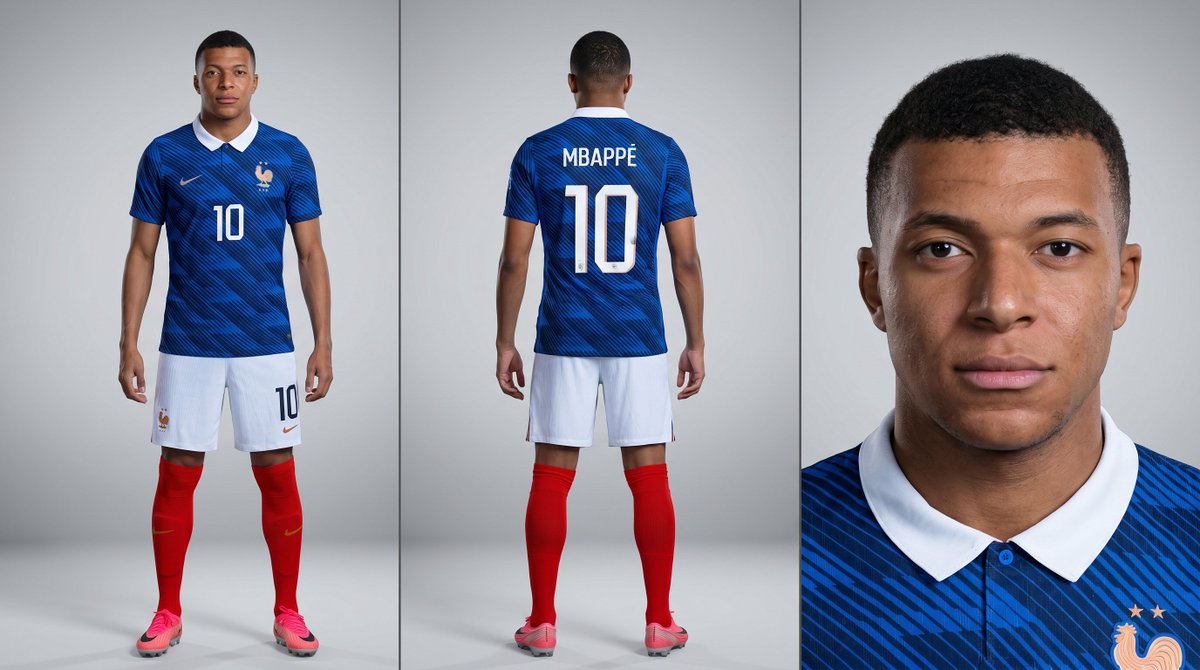
Listo para personalizar

Tu prompt

Inglés

Sustituye las variables en rojo por tus datos. Copia el texto completo y úsalo con tu agente preferido.

TXT MD Versión en inglés
Step 1 — Character cards (Nano Banana 2 Edit) Reference images + web search ON. NB2 grounds the real faces, you lock what matters: kits and shirt numbers. Mbappé = deep navy #10. Haaland = red #9. Flag colors, so red vs blue reads instantly in a fast FPV shot. Prompt 👇 Create a professional character reference sheet based strictly on the uploaded reference image. Use a clean, neutral plain background (light-to-dark gray gradient) and present the sheet as a technical model turnaround while matching the exact realistic visual style of the reference — same realism level, rendering approach, skin/fabric texture, color treatment, and overall aesthetic. # COMPOSITION Arrange the sheet into three equal-width vertical panels side-by-side, each spanning the full height of the frame, with a thin clean gutter between panels. All three panels share the same background and same camera distance-to-subject ratio. PANEL 1 (left) — Full-body front view: subject facing the camera directly, standing naturally, head-to-toe fully visible. PANEL 2 (center) — Full-body back view: subject facing away from the camera, same pose and scale as Panel 1, head-to-toe fully visible. PANEL 3 (right) — Face close-up: a single large front-facing portrait, cropped from top of hair to shoulders, centered in the frame, looking straight at the camera. # IDENTITY CONSISTENCY Maintain perfect identity consistency across all three panels: same face, hairstyle, hair color, skin tone, body proportion, outfit, accessories, and footwear. Treat the reference image as the absolute source of truth — do not invent new details, do not change clothing, do not add jewelry that isn't in the reference. # POSE & FRAMING Keep the subject in a relaxed, neutral standing pose for both full-body panels, with identical scale and head-height alignment between front and back views. Accurate anatomy, clear silhouette, feet flat on the ground. The face close-up should match the same facial expression and head angle as the front full-body view, just scaled up. # LIGHTING Consistent lighting across all three panels — same direction, intensity, and softness. Natural, controlled shadows that preserve detail. No dramatic mood lighting, no rim lights, no colored gels. # ON-IMAGE TEXT Do not include any text, titles, logos, watermarks, labels, or decorative banners anywhere on the sheet. The sheet should contain only the character imagery and clean background. # OUTPUT Crisp, print-ready reference sheet look. Sharp details, high resolution. Production-grade character design document.
Ver resultados

Tu prompt

Step 1 — Character cards (Nano Banana 2 Edit) Reference images + web search ON. NB2 grounds the real faces, you lock what matters: kits and shirt numbers. Mbappé = deep navy #10. Haaland = red #9. Flag colors, so red vs blue reads instantly in a fast FPV shot. Prompt 👇 Create a professional character reference sheet based strictly on the uploaded reference image. Use a clean, neutral plain background (light-to-dark gray gradient) and present the sheet as a technical model turnaround while matching the exact realistic visual style of the reference — same realism level, rendering approach, skin/fabric texture, color treatment, and overall aesthetic. # COMPOSITION Arrange the sheet into three equal-width vertical panels side-by-side, each spanning the full height of the frame, with a thin clean gutter between panels. All three panels share the same background and same camera distance-to-subject ratio. PANEL 1 (left) — Full-body front view: subject facing the camera directly, standing naturally, head-to-toe fully visible. PANEL 2 (center) — Full-body back view: subject facing away from the camera, same pose and scale as Panel 1, head-to-toe fully visible. PANEL 3 (right) — Face close-up: a single large front-facing portrait, cropped from top of hair to shoulders, centered in the frame, looking straight at the camera. # IDENTITY CONSISTENCY Maintain perfect identity consistency across all three panels: same face, hairstyle, hair color, skin tone, body proportion, outfit, accessories, and footwear. Treat the reference image as the absolute source of truth — do not invent new details, do not change clothing, do not add jewelry that isn't in the reference. # POSE & FRAMING Keep the subject in a relaxed, neutral standing pose for both full-body panels, with identical scale and head-height alignment between front and back views. Accurate anatomy, clear silhouette, feet flat on the ground. The face close-up should match the same facial expression and head angle as the front full-body view, just scaled up. # LIGHTING Consistent lighting across all three panels — same direction, intensity, and softness. Natural, controlled shadows that preserve detail. No dramatic mood lighting, no rim lights, no colored gels. # ON-IMAGE TEXT Do not include any text, titles, logos, watermarks, labels, or decorative banners anywhere on the sheet. The sheet should contain only the character imagery and clean background. # OUTPUT Crisp, print-ready reference sheet look. Sharp details, high resolution. Production-grade character design document.

Guía de variables

#10

El número de camiseta fijado de Mbappé; cámbialo si deseas otro número manteniendo el color del uniforme

En la línea de introducción 'Mbappé = deep navy #10' — sustituye #10 por el número deseado, conservando el símbolo #

Valor de ejemplo

#7

#9

El número de camiseta fijado de Haaland; cámbialo si deseas otro número manteniendo el color

En la línea de introducción 'Haaland = red #9' — sustituye #9 por el número deseado, conservando el símbolo #

Valor de ejemplo

#23

Qué obtienes

  • Una hoja de referencia vertical de tres paneles: vista frontal de cuerpo completo, vista trasera de cuerpo completo y primer plano del rostro.
  • Consistencia perfecta de rostro, peinado, tono de piel, vestuario, accesorios y calzado en los tres paneles.
  • Fondo neutro degradado gris con iluminación uniforme y suave, sin sombras dramáticas.
  • Una hoja limpia sin texto, logotipos ni marcas de agua, con calidad lista para impresión.

Casos de uso

  • Preparar fichas de personajes de estrellas deportivas antes de tomas FPV rápidas donde se distingue a los jugadores por color.
  • Mantener la identidad del personaje consistente en varias escenas, anuncios o imágenes secuenciales.
  • Crear referencias de diseño precisas para equipos creativos en producción fotográfica y marketing deportivo.

Cómo usarlo

  • Activa la búsqueda web en Nano Banana 2 Edit antes de empezar.
  • Sube una imagen de referencia clara de la persona real (rostro, cuerpo y vestuario completos) para fijar la identidad con precisión.
  • Copia el prompt completo y pégalo en el campo correspondiente, ajustando los números o colores de camiseta en las líneas de introducción si es necesario.
  • Adjunta las imágenes de referencia a la solicitud, envía y espera la generación de la hoja de tres paneles.
  • Usa la hoja resultante como referencia unificada de identidad para pasos posteriores (como tomas FPV rápidas).

Prompts relacionados