Ir al contenido
ImágenesGratis

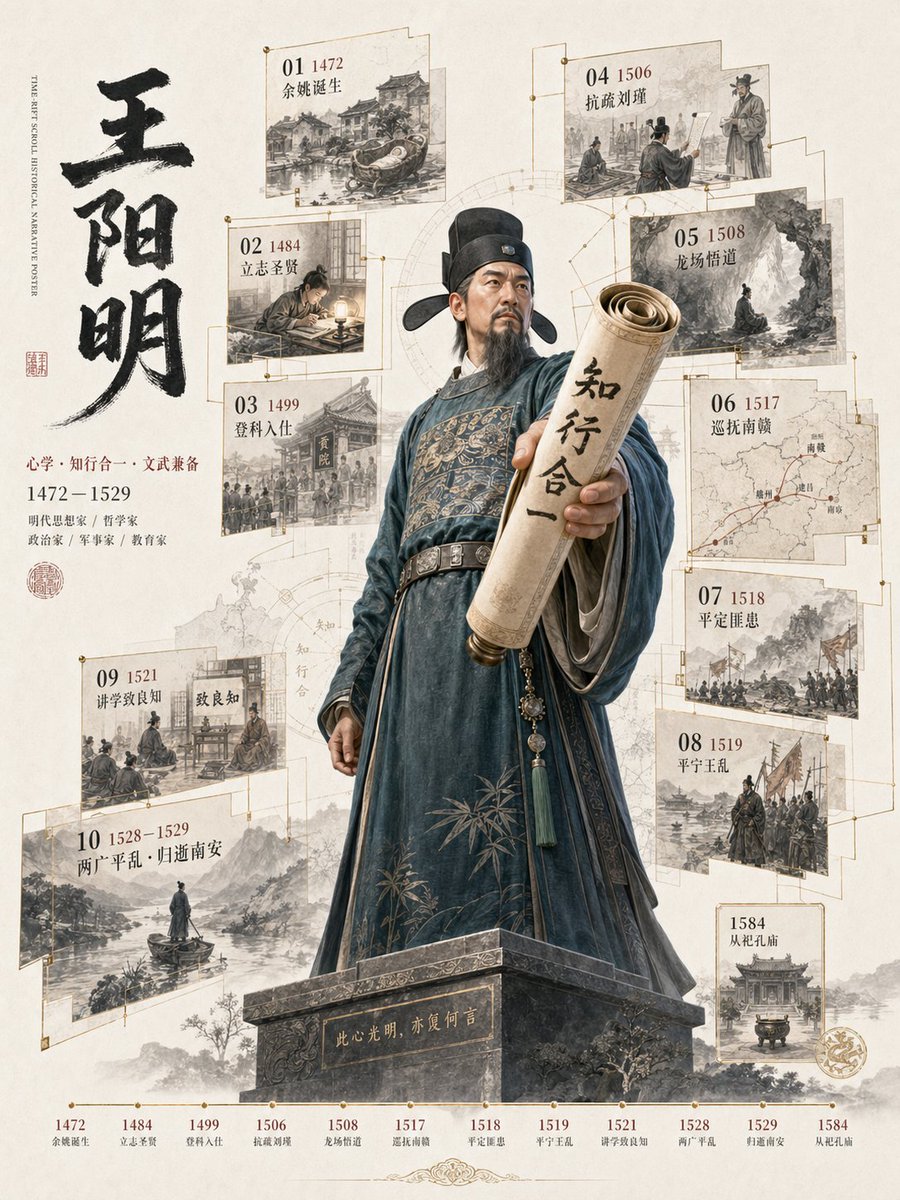
Full prompt: https://t.co/dyRG88qbyl Generate a detailed "3D Historical Figure Breakout Biography Poster" with cinematic depth and

Full prompt: https://t.co/dyRG88qbyl Generate a detailed "3D Historical Figure Breakout Biography Poster" with cinematic depth and

OpenAI

Ejemplos de la fuente

Estas imágenes provienen de la fuente original. DROPIDEA no ha probado estos ejemplos; los resultados dependen del modelo y los ajustes.

Listo para personalizar

Tu prompt

Texto original

Sustituye las variables en rojo por tus datos. Copia el texto completo y úsalo con tu agente preferido.

TXT MD Versión en inglés
Full prompt: https://t.co/dyRG88qbyl Generate a detailed "3D Historical Figure Breakout Biography Poster" with cinematic depth and archival richness. [User Inputs] Subject: [PERSON NAME] Role: [Emperor / General / Statesman / Philosopher / Writer / Reformer / Military Strategist, etc.] Time Period: [Dynasty / Historical Era] Core themes: [Unification / Reform / Loyalty / Mind Philosophy / Northern Expedition / Institution / Golden Age, etc.] Color scheme: [Black-gold-red / cyan-blue-gray-gold / dark red and ink gold / iron-blue, etc.] Aspect ratio: [3:4 vertical] At the center of the composition, place a complete, full-body 3D historical figure — the dominant visual element — with strong sculptural volume, cinematic weight, and historical gravitas. Clothing, headwear, armor, patterns, belt, and accessories must match their era and identity. The figure stands on a minimal monument-style pedestal that anchors without overwhelming. The figure must perform a clear "breakout-forward action": hands, arms, or a signature prop (jade seal, imperial edict, scroll, spear, sword, military tally, court tablet, map, or book scroll) must thrust toward the viewer, creating powerful foreshortening and 3D frame-breaking impact. The extended prop must be fully visible and unmistakable — not cropped. Surround the figure with 6–10 key historical event nodes arranged as lightweight, floating, multi-angled, semi-transparent clusters. Each node contains 2–4 fragments: number, year, event title, brief annotation, a small historical scene, plus fine gold connector lines, open frames, and node dots. These clusters should feel like dissected time slices drifting around the figure in an airy archival style — never heavy info-card blocks. Vary the orientation and depth of each cluster: some tilted left, some right, some angled inward or outward, at different heights, with slight overlaps from the figure's arms, robes, or weapon to enhance spatial depth. Give them a glass/acrylic look with faintly glowing edges, incomplete frames, and subtle layering — rich in information, light in visual weight. On the left side, place a large title with [PERSON NAME] in a font with oriental historical character — calligraphic, stele-carved, or ink-brushed. Add birth/death years, identity tags, keyword summary, and a sweeping subtitle. Keep the title area stable, clean, and uncluttered. Along the bottom, add a slim horizontal timeline connecting major life events, using thin gold lines, small dots, clean year labels, and minimal annotation. Style it like a museum time ruler or curatorial guide — not a thick info bar. Use a cream-white, antique paper, or light archival-wall texture as the background. Keep overall saturation low and restrained. Optionally include faint map textures, ancient architecture silhouettes, seal motifs, gold connector lines, or territorial outlines to evoke a historical exhibition atmosphere. Visual hierarchy rules: Central figure: heavy, realistic, three-dimensional, strong chiaroscuro. Historical event clusters: thin, transparent, floating, faintly glowing. Figure's gesture: breaking forward, full spatial impact. Bottom timeline: light, clean, informational only. Priority order if elements conflict: 1. Full-body central figure must be complete. 2. Forward-extending prop must be fully visible with strong 3D impact. 3. Event clusters must feel light and floating, not solid cards. 4. Figure stays visually heavy; information system stays visually light. 5. Timeline stays minimal and unobtrusive. If precise small text is difficult, prioritize legibility for the person's name, years, numbers, and event titles — brief descriptions may be simplified. #AIart #GPTImage2
Ver resultados

Tu prompt

Full prompt: https://t.co/dyRG88qbyl Generate a detailed "3D Historical Figure Breakout Biography Poster" with cinematic depth and archival richness. [User Inputs] Subject: [PERSON NAME] Role: [Emperor / General / Statesman / Philosopher / Writer / Reformer / Military Strategist, etc.] Time Period: [Dynasty / Historical Era] Core themes: [Unification / Reform / Loyalty / Mind Philosophy / Northern Expedition / Institution / Golden Age, etc.] Color scheme: [Black-gold-red / cyan-blue-gray-gold / dark red and ink gold / iron-blue, etc.] Aspect ratio: [3:4 vertical] At the center of the composition, place a complete, full-body 3D historical figure — the dominant visual element — with strong sculptural volume, cinematic weight, and historical gravitas. Clothing, headwear, armor, patterns, belt, and accessories must match their era and identity. The figure stands on a minimal monument-style pedestal that anchors without overwhelming. The figure must perform a clear "breakout-forward action": hands, arms, or a signature prop (jade seal, imperial edict, scroll, spear, sword, military tally, court tablet, map, or book scroll) must thrust toward the viewer, creating powerful foreshortening and 3D frame-breaking impact. The extended prop must be fully visible and unmistakable — not cropped. Surround the figure with 6–10 key historical event nodes arranged as lightweight, floating, multi-angled, semi-transparent clusters. Each node contains 2–4 fragments: number, year, event title, brief annotation, a small historical scene, plus fine gold connector lines, open frames, and node dots. These clusters should feel like dissected time slices drifting around the figure in an airy archival style — never heavy info-card blocks. Vary the orientation and depth of each cluster: some tilted left, some right, some angled inward or outward, at different heights, with slight overlaps from the figure's arms, robes, or weapon to enhance spatial depth. Give them a glass/acrylic look with faintly glowing edges, incomplete frames, and subtle layering — rich in information, light in visual weight. On the left side, place a large title with [PERSON NAME] in a font with oriental historical character — calligraphic, stele-carved, or ink-brushed. Add birth/death years, identity tags, keyword summary, and a sweeping subtitle. Keep the title area stable, clean, and uncluttered. Along the bottom, add a slim horizontal timeline connecting major life events, using thin gold lines, small dots, clean year labels, and minimal annotation. Style it like a museum time ruler or curatorial guide — not a thick info bar. Use a cream-white, antique paper, or light archival-wall texture as the background. Keep overall saturation low and restrained. Optionally include faint map textures, ancient architecture silhouettes, seal motifs, gold connector lines, or territorial outlines to evoke a historical exhibition atmosphere. Visual hierarchy rules: Central figure: heavy, realistic, three-dimensional, strong chiaroscuro. Historical event clusters: thin, transparent, floating, faintly glowing. Figure's gesture: breaking forward, full spatial impact. Bottom timeline: light, clean, informational only. Priority order if elements conflict: 1. Full-body central figure must be complete. 2. Forward-extending prop must be fully visible with strong 3D impact. 3. Event clusters must feel light and floating, not solid cards. 4. Figure stays visually heavy; information system stays visually light. 5. Timeline stays minimal and unobtrusive. If precise small text is difficult, prioritize legibility for the person's name, years, numbers, and event titles — brief descriptions may be simplified. #AIart #GPTImage2
Prompts relacionados