Ir al contenido
ImágenesGratis

Vídeo de acción cinematográfica de Elsa en el metro

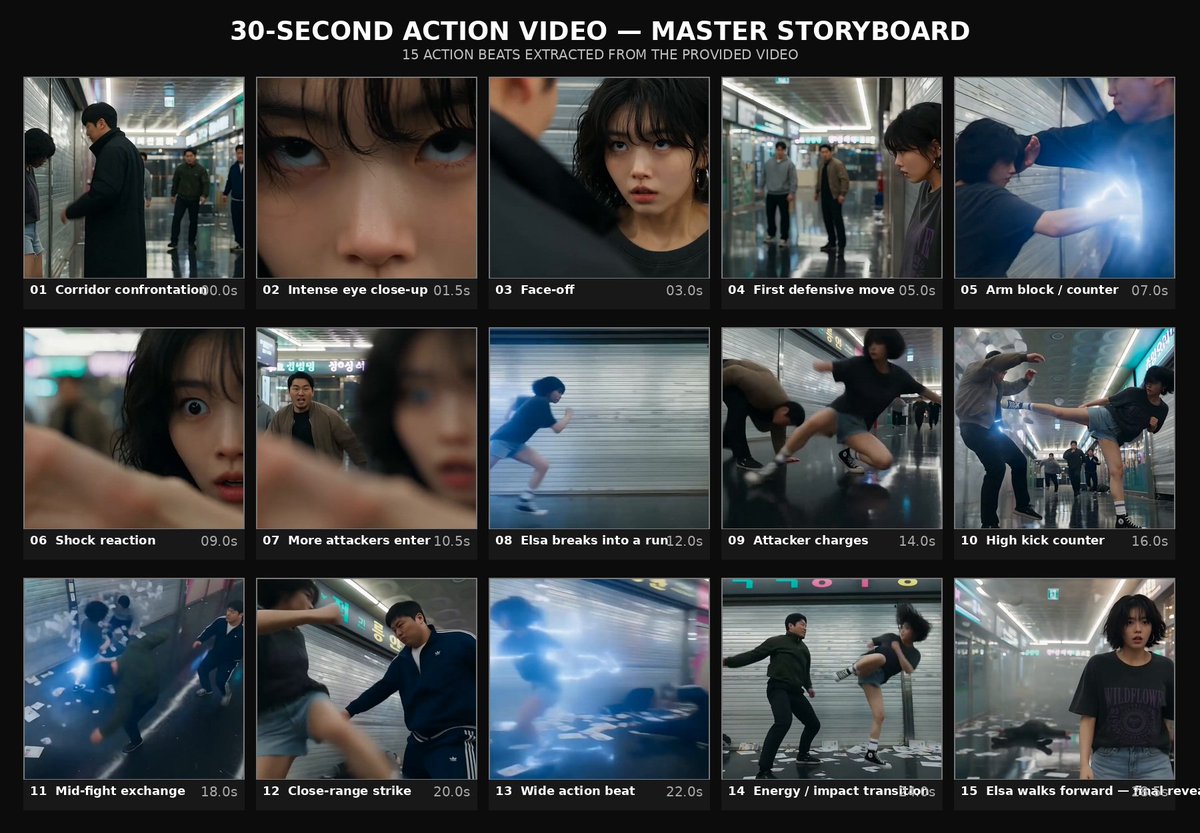
Plantilla de vídeo cinematográfico ultra realista en 1080p y 30 segundos con una secuencia de acción de 20 planos en un pasillo de metro moderno, preservando la identidad exacta de Elsa y su atuendo. Requiere subir dos conjuntos de referencia: el Elsa Master Character Set y el guion gráfico maestro de 20 paneles. Incluye coreografía defensiva controlada sin sangre, lenguaje de cámara en mano profesional y ambiente de metro auténtico sin diálogos ni textos.

Generación de imágenes

Ejemplos de la fuente

Estas imágenes provienen de la fuente original. DROPIDEA no ha probado estos ejemplos; los resultados dependen del modelo y los ajustes.

Listo para personalizar

Tu prompt

Inglés

Sustituye las variables en rojo por tus datos. Copia el texto completo y úsalo con tu agente preferido.

TXT MD Versión en inglés
Create a 30-second, 1080p ultra-realistic cinematic action video featuring Elsa. Use the provided Elsa Master Character Set only as the strict identity reference for Elsa. Use the provided 20-panel Master Storyboard as the exact visual and chronological guide for the entire video. Do not copy any identity from the storyboard. The storyboard controls the action, shot progression, locations, framing and choreography, while the Master Character Set controls Elsa's face and physical identity. CHARACTER CONSISTENCY: Preserve Elsa's exact facial identity, facial proportions, hairstyle, skin tone, body proportions and recognizable appearance throughout the entire video. Keep her outfit consistent: black cropped top, fitted black pants, black leather jacket, black boots and a black shoulder bag. The same Elsa must appear in every shot. STYLE: Ultra-realistic live-action cinematic action sequence set inside a modern underground subway corridor. The environment should feel real and lived-in: tiled walls, fluorescent ceiling lights, concrete floors, distant commuters, signage, subway entrances and realistic urban details. Use cinematic handheld camera work combined with controlled action cinematography. Natural motion blur, realistic lighting, realistic shadows, physically accurate movement and believable human reactions. No fantasy powers, no supernatural effects, no exaggerated wire-fu and no impossible movements. ACTION: Keep the confrontation clearly fictional and choreographed for cinematic storytelling. Avoid graphic injury, blood or gore. SHOT 1 — 00:00–00:01 Elsa walks alone through the subway corridor carrying her shoulder bag. Use a medium-wide tracking shot from the front as commuters move naturally in the background. SHOT 2 — 00:01–00:02 Cut to a closer side angle as Elsa senses movement behind her. She slightly turns her head and looks over her shoulder. Her expression becomes alert but controlled. SHOT 3 — 00:02–00:03 Reveal several suspicious figures approaching from behind. Use a longer lens perspective that compresses the corridor and creates tension. SHOT 4 — 00:03–00:04 Close-up on Elsa's face. She notices the situation and remains calm and focused. Use shallow depth of field with the subway corridor softly blurred behind her. SHOT 5 — 00:04–00:05 Elsa turns into a narrower side passage. The camera follows quickly behind her as the atmosphere becomes more confined. SHOT 6 — 00:05–00:06 The figures block Elsa's path. Use a frontal medium shot showing Elsa surrounded by the group while maintaining clear spatial geography. SHOT 7 — 00:06–00:08 One attacker reaches toward Elsa's arm. Elsa reacts immediately, pulling her arm away and creating distance. Use a dynamic side angle with realistic body mechanics. SHOT 8 — 00:08–00:09 Elsa performs a quick defensive movement to escape the grab. Keep the choreography controlled and realistic. The camera moves with the action rather than using exaggerated effects. SHOT 9 — 00:09–00:11 A second attacker moves toward her. Elsa pivots out of the way and uses a controlled defensive counter, causing the attacker to lose balance and fall safely. Use a wider shot so the complete movement is readable. SHOT 10 — 00:11–00:12 Elsa creates space between herself and the attackers. Her shoulder bag swings naturally with the movement. Use a fast handheld camera adjustment. SHOT 11 — 00:12–00:14 An attacker moves toward Elsa again. Elsa uses the shoulder bag defensively to create distance and escape the immediate threat. Do not depict graphic impact. SHOT 12 — 00:14–00:15 Elsa performs a fast controlled kick that stops the attacker's advance. Use a low three-quarter angle emphasizing the movement while keeping realistic proportions. SHOT 13 — 00:15–00:17 Another attacker approaches. Elsa quickly changes direction, evades the incoming movement and performs a controlled defensive strike. Use a dynamic tracking camera. SHOT 14 — 00:17–00:18 Close action beat as Elsa completes the defensive sequence and creates separation. Keep the movement realistic and clearly choreographed. SHOT 15 — 00:18–00:20 Wide shot of the corridor. The attackers are now on the ground or backing away while Elsa remains standing and composed. No blood, wounds or graphic injury. SHOT 16 — 00:20–00:22 The tension disappears. Elsa calmly fixes her hair and adjusts her jacket. Use a close-up that contrasts her calm expression with the action that just occurred. SHOT 17 — 00:22–00:24 Elsa picks up and adjusts her shoulder bag. Use a medium close-up with natural handheld movement. SHOT 18 — 00:24–00:27 Elsa walks confidently down the subway corridor. The camera tracks backward in front of her. Commuters naturally move through the background. SHOT 19 — 00:27–00:29 Elsa approaches the subway exit stairs. Use a rear tracking shot as she walks toward the brighter exit. The lighting gradually becomes warmer and brighter. SHOT 20 — 00:29–00:30 Before leaving, Elsa briefly turns her head and looks back toward the camera with a calm, confident expression. Hold for a short cinematic beat. Cut to black. CAMERA LANGUAGE: Use a mixture of wide establishing shots, handheld tracking shots, close facial shots, side angles, low three-quarter angles and dynamic action framing. Every camera movement should be motivated by the action. Use short speed ramps only where they naturally emphasize an important movement. Do not overuse slow motion. Maintain clear spatial continuity so the viewer always understands where Elsa and the other characters are positioned. PHYSICS & CONTINUITY: Realistic human anatomy and movement. Realistic weight transfer. Natural hair and clothing movement. Natural shoulder-bag physics. Realistic footsteps and body momentum. No teleportation. No duplicated characters. No disappearing props. No impossible body deformation. AUDIO: Authentic subway ambience throughout. Footsteps, distant train sounds, station announcements, ventilation, commuters talking, clothing movement, bag movement and subtle action impacts. Music should be minimal and cinematic, building tension during the confrontation and becoming quieter as Elsa walks toward the exit. No dialogue. No subtitles. No text overlays. No logos. No watermark. FINAL LOOK: Premium ultra-realistic live-action action cinema with believable choreography, strong visual continuity and a grounded urban atmosphere. The sequence should feel tense, stylish and cinematic while remaining physically realistic and non-graphic.
Ver resultados

Tu prompt

Create a 30-second, 1080p ultra-realistic cinematic action video featuring Elsa. Use the provided Elsa Master Character Set only as the strict identity reference for Elsa. Use the provided 20-panel Master Storyboard as the exact visual and chronological guide for the entire video. Do not copy any identity from the storyboard. The storyboard controls the action, shot progression, locations, framing and choreography, while the Master Character Set controls Elsa's face and physical identity. CHARACTER CONSISTENCY: Preserve Elsa's exact facial identity, facial proportions, hairstyle, skin tone, body proportions and recognizable appearance throughout the entire video. Keep her outfit consistent: black cropped top, fitted black pants, black leather jacket, black boots and a black shoulder bag. The same Elsa must appear in every shot. STYLE: Ultra-realistic live-action cinematic action sequence set inside a modern underground subway corridor. The environment should feel real and lived-in: tiled walls, fluorescent ceiling lights, concrete floors, distant commuters, signage, subway entrances and realistic urban details. Use cinematic handheld camera work combined with controlled action cinematography. Natural motion blur, realistic lighting, realistic shadows, physically accurate movement and believable human reactions. No fantasy powers, no supernatural effects, no exaggerated wire-fu and no impossible movements. ACTION: Keep the confrontation clearly fictional and choreographed for cinematic storytelling. Avoid graphic injury, blood or gore. SHOT 1 — 00:00–00:01 Elsa walks alone through the subway corridor carrying her shoulder bag. Use a medium-wide tracking shot from the front as commuters move naturally in the background. SHOT 2 — 00:01–00:02 Cut to a closer side angle as Elsa senses movement behind her. She slightly turns her head and looks over her shoulder. Her expression becomes alert but controlled. SHOT 3 — 00:02–00:03 Reveal several suspicious figures approaching from behind. Use a longer lens perspective that compresses the corridor and creates tension. SHOT 4 — 00:03–00:04 Close-up on Elsa's face. She notices the situation and remains calm and focused. Use shallow depth of field with the subway corridor softly blurred behind her. SHOT 5 — 00:04–00:05 Elsa turns into a narrower side passage. The camera follows quickly behind her as the atmosphere becomes more confined. SHOT 6 — 00:05–00:06 The figures block Elsa's path. Use a frontal medium shot showing Elsa surrounded by the group while maintaining clear spatial geography. SHOT 7 — 00:06–00:08 One attacker reaches toward Elsa's arm. Elsa reacts immediately, pulling her arm away and creating distance. Use a dynamic side angle with realistic body mechanics. SHOT 8 — 00:08–00:09 Elsa performs a quick defensive movement to escape the grab. Keep the choreography controlled and realistic. The camera moves with the action rather than using exaggerated effects. SHOT 9 — 00:09–00:11 A second attacker moves toward her. Elsa pivots out of the way and uses a controlled defensive counter, causing the attacker to lose balance and fall safely. Use a wider shot so the complete movement is readable. SHOT 10 — 00:11–00:12 Elsa creates space between herself and the attackers. Her shoulder bag swings naturally with the movement. Use a fast handheld camera adjustment. SHOT 11 — 00:12–00:14 An attacker moves toward Elsa again. Elsa uses the shoulder bag defensively to create distance and escape the immediate threat. Do not depict graphic impact. SHOT 12 — 00:14–00:15 Elsa performs a fast controlled kick that stops the attacker's advance. Use a low three-quarter angle emphasizing the movement while keeping realistic proportions. SHOT 13 — 00:15–00:17 Another attacker approaches. Elsa quickly changes direction, evades the incoming movement and performs a controlled defensive strike. Use a dynamic tracking camera. SHOT 14 — 00:17–00:18 Close action beat as Elsa completes the defensive sequence and creates separation. Keep the movement realistic and clearly choreographed. SHOT 15 — 00:18–00:20 Wide shot of the corridor. The attackers are now on the ground or backing away while Elsa remains standing and composed. No blood, wounds or graphic injury. SHOT 16 — 00:20–00:22 The tension disappears. Elsa calmly fixes her hair and adjusts her jacket. Use a close-up that contrasts her calm expression with the action that just occurred. SHOT 17 — 00:22–00:24 Elsa picks up and adjusts her shoulder bag. Use a medium close-up with natural handheld movement. SHOT 18 — 00:24–00:27 Elsa walks confidently down the subway corridor. The camera tracks backward in front of her. Commuters naturally move through the background. SHOT 19 — 00:27–00:29 Elsa approaches the subway exit stairs. Use a rear tracking shot as she walks toward the brighter exit. The lighting gradually becomes warmer and brighter. SHOT 20 — 00:29–00:30 Before leaving, Elsa briefly turns her head and looks back toward the camera with a calm, confident expression. Hold for a short cinematic beat. Cut to black. CAMERA LANGUAGE: Use a mixture of wide establishing shots, handheld tracking shots, close facial shots, side angles, low three-quarter angles and dynamic action framing. Every camera movement should be motivated by the action. Use short speed ramps only where they naturally emphasize an important movement. Do not overuse slow motion. Maintain clear spatial continuity so the viewer always understands where Elsa and the other characters are positioned. PHYSICS & CONTINUITY: Realistic human anatomy and movement. Realistic weight transfer. Natural hair and clothing movement. Natural shoulder-bag physics. Realistic footsteps and body momentum. No teleportation. No duplicated characters. No disappearing props. No impossible body deformation. AUDIO: Authentic subway ambience throughout. Footsteps, distant train sounds, station announcements, ventilation, commuters talking, clothing movement, bag movement and subtle action impacts. Music should be minimal and cinematic, building tension during the confrontation and becoming quieter as Elsa walks toward the exit. No dialogue. No subtitles. No text overlays. No logos. No watermark. FINAL LOOK: Premium ultra-realistic live-action action cinema with believable choreography, strong visual continuity and a grounded urban atmosphere. The sequence should feel tense, stylish and cinematic while remaining physically realistic and non-graphic.

Guía de variables

Elsa

El nombre de la protagonista; sustituye cada aparición para cambiar a la protagonista del vídeo.

Cada aparición del nombre en toda la plantilla, incluida la referencia al Elsa Master Character Set.

Valor de ejemplo

Sara

Qué obtienes

  • Un prompt de vídeo de acción cinematográfico ultra realista de 30 segundos en 1080p.
  • Una secuencia de 20 planos con tiempos exactos por plano.
  • Coreografía defensiva controlada y realista sin sangre ni lesiones gráficas.
  • Dirección completa de cámara, física, continuidad y audio.
  • Preservación estricta de la identidad de Elsa en cada plano.

Casos de uso

  • Clips cortos de acción cinematográfica para redes sociales.
  • Promoción de personajes con estilo urbano y anuncios.
  • Probar la consistencia de personajes de los modelos de vídeo.
  • Reels para cortometrajes o escenas conceptuales.
  • Entretenimiento sin violencia gráfica para todo público.

Cómo usarlo

  • Sube el Elsa Master Character Set (imágenes de referencia precisas de su rostro, cuerpo y atuendo) como primera imagen de referencia.
  • Sube el guion gráfico maestro de 20 paneles como segunda imagen de referencia; controla solo la progresión de planos y la acción, no la identidad.
  • Si quieres otra protagonista, sustituye cada aparición del nombre en la plantilla manteniendo intactos los tiempos y números de plano.
  • Pega la plantilla en tu herramienta de generación de vídeo, elige 30 segundos a 1080p y activa el audio si está disponible.
  • Revisa el resultado para confirmar que el rostro y el atuendo de Elsa se mantienen consistentes en los 20 planos y regenera si es necesario, ya que los resultados son estocásticos.

Prompts relacionados