Ir al contenido
ImágenesGratis

Transformación al Estilo Seikoku no Dragonar con Dragón Acompañante

Convierte cualquier personaje de referencia en una escena de anime al estilo Seikoku no Dragonar de 2014, emparejándolo con un dragón único y un entorno de academia.

Midjourney

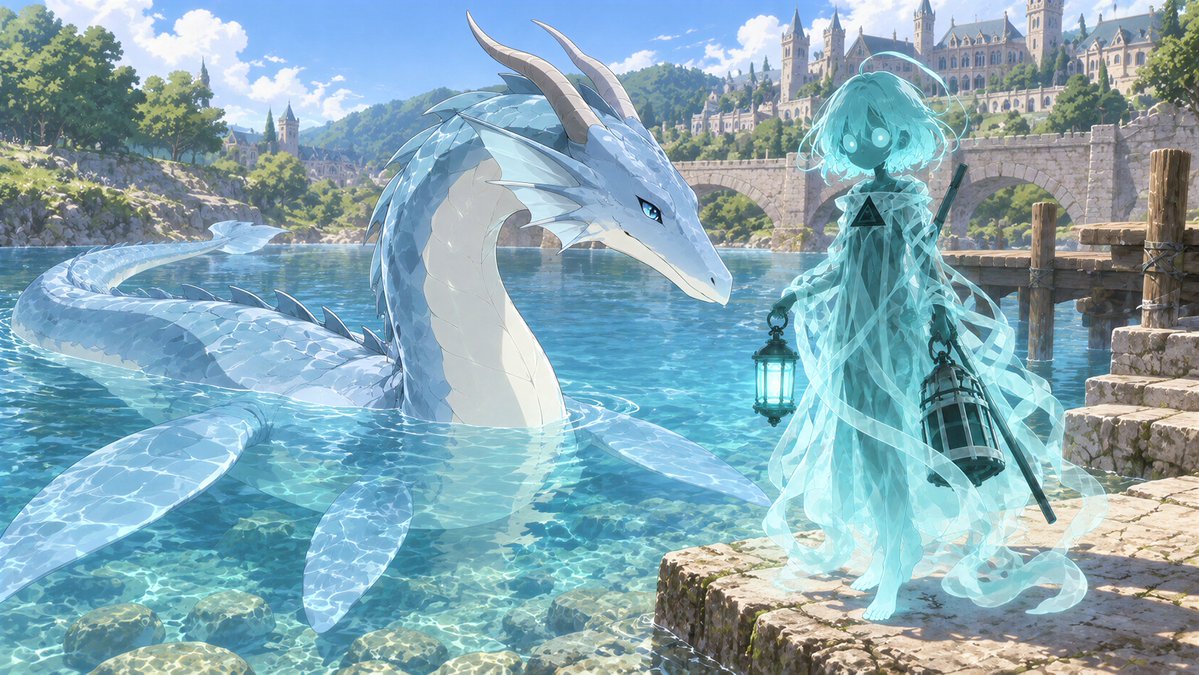
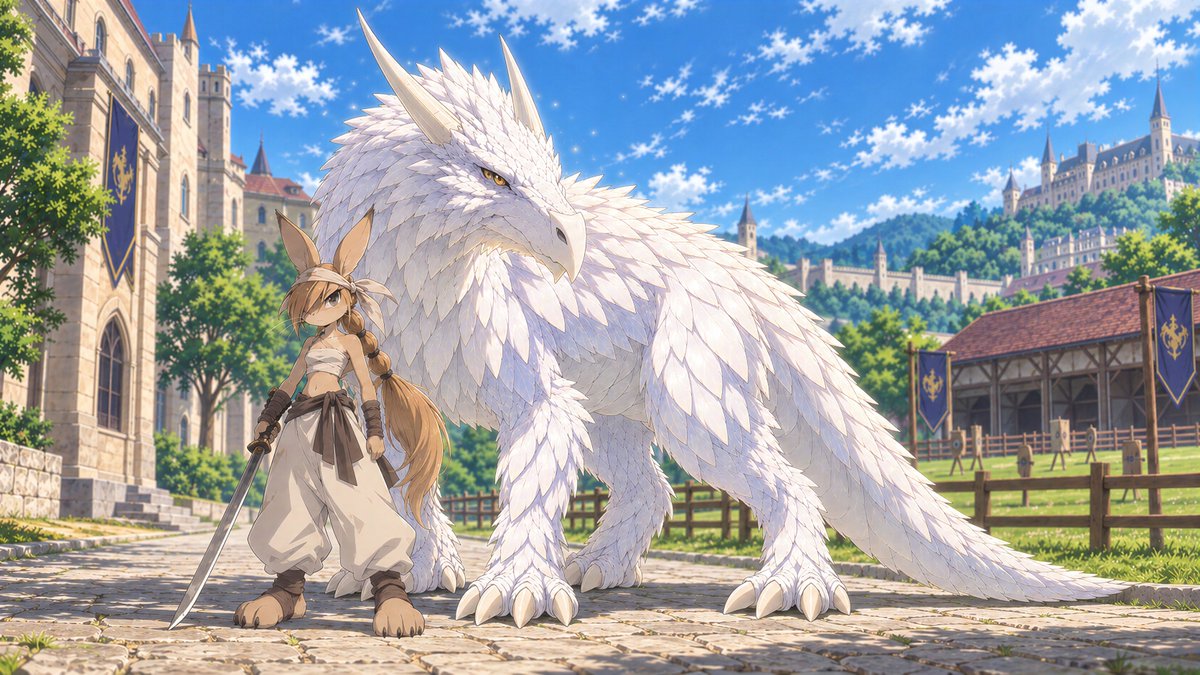
Ejemplos de la fuente

Estas imágenes provienen de la fuente original. DROPIDEA no ha probado estos ejemplos; los resultados dependen del modelo y los ajustes.

Listo para personalizar

Tu prompt

Inglés

Sustituye las variables en rojo por tus datos. Copia el texto completo y úsalo con tu agente preferido.

TXT MD Versión en inglés
Transform the provided reference image into a Seikoku no Dragonar (Dragonar Academy), C-Station 2014 inspired version while retaining the strongest possible likeness and unmistakable core identity.
 Character-Based Dragon Selection: Before composing the image, assess the reference character’s silhouette, posture, expression, clothing, accessories, movement potential, and elemental or occupational motifs. Select exactly one companion type from Asia, Strada, Hydra, or Maestro, choosing the strongest visual and thematic partnership. These matching rules are creative direction for this transformation:
 * Asia — Grounded companionship. Choose for practical travellers, caretakers, craftspeople, dependable protectors, sturdy adventurers, and characters whose design suggests endurance, patience, carrying equipment, or life on established roads. A grounded presence and functional equipment support this choice. * Strada — Mobility and freedom. Choose for agile martial artists, runners, scouts, messengers, acrobats, and adventurous characters. Long flowing scarves, swept silhouettes, light equipment, alert expressions, and energetic poses support this choice. * Hydra — Fluidity and quiet intelligence. Choose for water-associated characters, contemplative scholars, healers, mystics, navigators, and characters whose design suggests fluid movement, tranquillity, or subtle magic. Flowing robes, aquatic motifs, and a composed presence support this choice. An aquatic setting may be introduced to accommodate the companion. * Maestro — Command and exceptional presence. Choose for regal figures, imposing warriors, powerful mages, proud champions, and characters with a commanding or dramatically ceremonial design. Bold silhouettes, confident bearing, elaborate regalia, and a strong sense of authority support this choice. A small character may still suit a Maestro; height does not determine power or presence.
 Evaluate all four options independently. Asia is not the default. Prioritise character role and visual temperament, then silhouette and movement, then motifs. Use colour only as supporting evidence; a blue outfit alone does not require Hydra. When two types fit equally well, choose the type less recently used in the visible conversation. Otherwise, choose the strongest character match rather than rotating arbitrarily. Do not copy the previous image’s dragon, pose, or stable composition. Commit to the selected type’s anatomy, colour, scale, and habitat. 

Do not blend the four types or merely recolour the same dragon body. 
Show the choice through the illustration without adding a written label.
 Pose and Proportions Appealing, readable anime pose with mid-2010s TV proportions and a clear silhouette. Human characters use clean academy-cast construction: large expressive eyes, simplified limbs, stable standing or three-quarter rider poses. Nonhuman characters retain their original species-specific construction. Preserve each subject’s established age, species, anatomy, body type, clothing, accessories, and identity. Keep signature ears, tails, muzzles, markings, hairstyles, and costume shapes intact. Apply the style without replacing the reference character with a canon cast member or automatically dressing them in an academy uniform.
 Let the pose express the chosen partnership: grounded familiarity with Asia, readiness for movement with Strada, quiet connection beside water with Hydra, or composed confidence beneath the imposing presence of Maestro.
 Ordinary dragons retain working-companion scale beside their riders. Maestro bodies read substantially larger. Eco’s human appearance and true form are relevant only if she is explicitly requested; never transfer her traits onto the reference character. Her city-scale true form belongs in a separately requested pass.
 Camera and Composition: 16:9
 Full body or three-quarter figure, with enough room to show the character’s distinctive clothing and the selected dragon’s defining anatomy. Eye-level or slightly low camera, readable face, clear separation between character and companion.
 Choose the location after choosing the dragon:
 * Asia: green training grounds, academy roads, stable courtyards, or timber service bays. * Strada: open flight-training fields, elevated launch terraces, windy academy ramparts, or landing grounds beneath open Lautreamont sky. Leave enough space to read the membrane wings. * Hydra: academy waterfronts, canals, lakeside training platforms, stone quays, or clear-water pools connected to the school. Keep the dragon supported by water, with enough visible body and fins to establish its legless aquatic anatomy. * Maestro: broad ceremonial courts, major dragon-hall approaches, or expansive training grounds. Use architecture and small background students to communicate its greater scale while keeping the reference character prominent.
 Layer stone-and-timber halls, dorm blocks, walls, posts, fences, bridges, stables, and hills as appropriate to the chosen location. Background students may wear academy uniforms. The setting should feel like a functioning school for riders.
 Do not force every pairing into the same grassy stable yard. Saddle and tack must suit the selected anatomy and activity; do not automatically saddle every companion.
 Lighting
 Bright, saturated school-fantasy daylight as the default. Clear sun, clean blue sky, soft cloud fill, and open light on clothing and dragon hide. Gentle cel-style shadows, restrained rim on hair and wing membranes, and warm bounce from stone and grass.
 Adapt reflected light to the location: soft blue water reflections for Hydra, open sky fill across Strada’s wings, warm courtyard bounce beneath Maestro, and grass-and-stone reflections around Asia.
 Indoor scenes use window light through tall academy openings. Avoid grimdark mud, neon, HUD glow, and harsh graphic black. Keep faces, costume colours, and dragon anatomy readable. Style Direction Seikoku no Dragonar, C-Station 2014 inspired anime aesthetic after Kohada Shimesaba designs. Delicate-to-clean digital character linework with crisp restrained cel shading, clear silhouettes, and highly readable expressions. Backgrounds use controlled painterly stone, timber, grass, water, and sky. Dragons use simplified scale-and-leather masses suitable for TV animation. Preserve clear structural differences between the selected types. Beautiful and immediately legible at first glance: bright academy fantasy with warmth between character and companion. Shape Language Favour clean anime masses: rounded heads, large eye shapes, readable hair groupings, coat triangles, bow volumes, skirt bells, boot blocks, and the reference character’s distinctive nonhuman features. Contrast these against rectangular academy architecture: dorm blocks, stable bays, window grids, training fences, bridges, and waterfront platforms. Lock the selected dragon’s silhouette: * Asia: wingless, four-legged olive-brown walker. Solid terrestrial stance. * Strada: two-legged body with membrane wings, olive-tan colouring. Clearly readable flight anatomy. * Hydra: legless pale-blue aquatic body with fins. Fluid elongated silhouette supported by water. * Maestro: oversized upright crimson-red wyvern-drake, pale wing undersides, chest emblem, and two heavy horns. Substantial mass and commanding scale. Do not give Asia wings, turn Strada into a four-legged walker, add legs to Hydra, or shrink Maestro into the same body and scale as Asia. Clothing remains recognisable tailored cloth, wraps, robes, or other materials from the reference. Arks appear only when explicitly requested.
 Colour and Atmosphere
 Preserve the reference character’s established palette first. Apply academy colours to background students and architecture without overwriting the main character’s clothing. Background uniforms: white coats with red-to-burgundy zigzag piping and oversized bows; boys’ dark jackets with gold buttons and yellow-gold ties.
 Use the selected dragon’s own colour register: 

olive-brown Asia, tan-olive Strada, pale-blue Hydra, or crimson-red Maestro. Do not tint every type green or recolour the companion simply to match the character. Living green fields, warm grey-cream stone, saturated blue sky, and clear water where appropriate. Soft aerial falloff on distant halls and hills. Preserve strong colour separation between the character, dragon, and architecture.
 Atmosphere should reflect the pairing: grounded warmth, breezy anticipation, waterside tranquillity, or dignified grandeur.
 Simplification
 Simplify characters strongly for 2014 TV animation. Remove costume micro-seams, pore detail, and tiny wrinkle noise while preserving identity-defining features: face, hair or fur masses, eye colour, markings, ears, tail, signature accessories, and costume silhouette.
 Keep faces extremely clear. Retain important ornaments as simplified readable shapes rather than deleting them.
 Concentrate environmental complexity according to the selected dragon: stable timber and paths for Asia, wing membranes and flight terraces for Strada, fins and water reflections for Hydra, or architectural scale and broad wing masses for Maestro.
 Do not use simplification as a reason to collapse all four dragon types into one generic design.
 Overall Feeling
 A character-specific partnership within a bright, functioning rider academy. The chosen dragon should feel deliberately matched to this individual, with its anatomy, scale, habitat, and interaction shaping the scene.
 The finished image should feel like a frame from the 2014 anime: clean character animation, readable world texture, and a convincing bond between the reference character and their selected companion.
 One reference character, one deliberately selected companion type, one coherent scene. Preserve unmistakable likeness while allowing the dragon choice and setting to change meaningfully between characters.
Ver resultados

Tu prompt

Transform the provided reference image into a Seikoku no Dragonar (Dragonar Academy), C-Station 2014 inspired version while retaining the strongest possible likeness and unmistakable core identity.
 Character-Based Dragon Selection: Before composing the image, assess the reference character’s silhouette, posture, expression, clothing, accessories, movement potential, and elemental or occupational motifs. Select exactly one companion type from Asia, Strada, Hydra, or Maestro, choosing the strongest visual and thematic partnership. These matching rules are creative direction for this transformation:
 * Asia — Grounded companionship. Choose for practical travellers, caretakers, craftspeople, dependable protectors, sturdy adventurers, and characters whose design suggests endurance, patience, carrying equipment, or life on established roads. A grounded presence and functional equipment support this choice. * Strada — Mobility and freedom. Choose for agile martial artists, runners, scouts, messengers, acrobats, and adventurous characters. Long flowing scarves, swept silhouettes, light equipment, alert expressions, and energetic poses support this choice. * Hydra — Fluidity and quiet intelligence. Choose for water-associated characters, contemplative scholars, healers, mystics, navigators, and characters whose design suggests fluid movement, tranquillity, or subtle magic. Flowing robes, aquatic motifs, and a composed presence support this choice. An aquatic setting may be introduced to accommodate the companion. * Maestro — Command and exceptional presence. Choose for regal figures, imposing warriors, powerful mages, proud champions, and characters with a commanding or dramatically ceremonial design. Bold silhouettes, confident bearing, elaborate regalia, and a strong sense of authority support this choice. A small character may still suit a Maestro; height does not determine power or presence.
 Evaluate all four options independently. Asia is not the default. Prioritise character role and visual temperament, then silhouette and movement, then motifs. Use colour only as supporting evidence; a blue outfit alone does not require Hydra. When two types fit equally well, choose the type less recently used in the visible conversation. Otherwise, choose the strongest character match rather than rotating arbitrarily. Do not copy the previous image’s dragon, pose, or stable composition. Commit to the selected type’s anatomy, colour, scale, and habitat. 

Do not blend the four types or merely recolour the same dragon body. 
Show the choice through the illustration without adding a written label.
 Pose and Proportions Appealing, readable anime pose with mid-2010s TV proportions and a clear silhouette. Human characters use clean academy-cast construction: large expressive eyes, simplified limbs, stable standing or three-quarter rider poses. Nonhuman characters retain their original species-specific construction. Preserve each subject’s established age, species, anatomy, body type, clothing, accessories, and identity. Keep signature ears, tails, muzzles, markings, hairstyles, and costume shapes intact. Apply the style without replacing the reference character with a canon cast member or automatically dressing them in an academy uniform.
 Let the pose express the chosen partnership: grounded familiarity with Asia, readiness for movement with Strada, quiet connection beside water with Hydra, or composed confidence beneath the imposing presence of Maestro.
 Ordinary dragons retain working-companion scale beside their riders. Maestro bodies read substantially larger. Eco’s human appearance and true form are relevant only if she is explicitly requested; never transfer her traits onto the reference character. Her city-scale true form belongs in a separately requested pass.
 Camera and Composition: 16:9
 Full body or three-quarter figure, with enough room to show the character’s distinctive clothing and the selected dragon’s defining anatomy. Eye-level or slightly low camera, readable face, clear separation between character and companion.
 Choose the location after choosing the dragon:
 * Asia: green training grounds, academy roads, stable courtyards, or timber service bays. * Strada: open flight-training fields, elevated launch terraces, windy academy ramparts, or landing grounds beneath open Lautreamont sky. Leave enough space to read the membrane wings. * Hydra: academy waterfronts, canals, lakeside training platforms, stone quays, or clear-water pools connected to the school. Keep the dragon supported by water, with enough visible body and fins to establish its legless aquatic anatomy. * Maestro: broad ceremonial courts, major dragon-hall approaches, or expansive training grounds. Use architecture and small background students to communicate its greater scale while keeping the reference character prominent.
 Layer stone-and-timber halls, dorm blocks, walls, posts, fences, bridges, stables, and hills as appropriate to the chosen location. Background students may wear academy uniforms. The setting should feel like a functioning school for riders.
 Do not force every pairing into the same grassy stable yard. Saddle and tack must suit the selected anatomy and activity; do not automatically saddle every companion.
 Lighting
 Bright, saturated school-fantasy daylight as the default. Clear sun, clean blue sky, soft cloud fill, and open light on clothing and dragon hide. Gentle cel-style shadows, restrained rim on hair and wing membranes, and warm bounce from stone and grass.
 Adapt reflected light to the location: soft blue water reflections for Hydra, open sky fill across Strada’s wings, warm courtyard bounce beneath Maestro, and grass-and-stone reflections around Asia.
 Indoor scenes use window light through tall academy openings. Avoid grimdark mud, neon, HUD glow, and harsh graphic black. Keep faces, costume colours, and dragon anatomy readable. Style Direction Seikoku no Dragonar, C-Station 2014 inspired anime aesthetic after Kohada Shimesaba designs. Delicate-to-clean digital character linework with crisp restrained cel shading, clear silhouettes, and highly readable expressions. Backgrounds use controlled painterly stone, timber, grass, water, and sky. Dragons use simplified scale-and-leather masses suitable for TV animation. Preserve clear structural differences between the selected types. Beautiful and immediately legible at first glance: bright academy fantasy with warmth between character and companion. Shape Language Favour clean anime masses: rounded heads, large eye shapes, readable hair groupings, coat triangles, bow volumes, skirt bells, boot blocks, and the reference character’s distinctive nonhuman features. Contrast these against rectangular academy architecture: dorm blocks, stable bays, window grids, training fences, bridges, and waterfront platforms. Lock the selected dragon’s silhouette: * Asia: wingless, four-legged olive-brown walker. Solid terrestrial stance. * Strada: two-legged body with membrane wings, olive-tan colouring. Clearly readable flight anatomy. * Hydra: legless pale-blue aquatic body with fins. Fluid elongated silhouette supported by water. * Maestro: oversized upright crimson-red wyvern-drake, pale wing undersides, chest emblem, and two heavy horns. Substantial mass and commanding scale. Do not give Asia wings, turn Strada into a four-legged walker, add legs to Hydra, or shrink Maestro into the same body and scale as Asia. Clothing remains recognisable tailored cloth, wraps, robes, or other materials from the reference. Arks appear only when explicitly requested.
 Colour and Atmosphere
 Preserve the reference character’s established palette first. Apply academy colours to background students and architecture without overwriting the main character’s clothing. Background uniforms: white coats with red-to-burgundy zigzag piping and oversized bows; boys’ dark jackets with gold buttons and yellow-gold ties.
 Use the selected dragon’s own colour register: 

olive-brown Asia, tan-olive Strada, pale-blue Hydra, or crimson-red Maestro. Do not tint every type green or recolour the companion simply to match the character. Living green fields, warm grey-cream stone, saturated blue sky, and clear water where appropriate. Soft aerial falloff on distant halls and hills. Preserve strong colour separation between the character, dragon, and architecture.
 Atmosphere should reflect the pairing: grounded warmth, breezy anticipation, waterside tranquillity, or dignified grandeur.
 Simplification
 Simplify characters strongly for 2014 TV animation. Remove costume micro-seams, pore detail, and tiny wrinkle noise while preserving identity-defining features: face, hair or fur masses, eye colour, markings, ears, tail, signature accessories, and costume silhouette.
 Keep faces extremely clear. Retain important ornaments as simplified readable shapes rather than deleting them.
 Concentrate environmental complexity according to the selected dragon: stable timber and paths for Asia, wing membranes and flight terraces for Strada, fins and water reflections for Hydra, or architectural scale and broad wing masses for Maestro.
 Do not use simplification as a reason to collapse all four dragon types into one generic design.
 Overall Feeling
 A character-specific partnership within a bright, functioning rider academy. The chosen dragon should feel deliberately matched to this individual, with its anatomy, scale, habitat, and interaction shaping the scene.
 The finished image should feel like a frame from the 2014 anime: clean character animation, readable world texture, and a convincing bond between the reference character and their selected companion.
 One reference character, one deliberately selected companion type, one coherent scene. Preserve unmistakable likeness while allowing the dragon choice and setting to change meaningfully between characters.

Qué obtienes

  • Rediseño fiel de tu personaje al estilo visual del anime Dragonar Academy (C-Station, 2014).
  • Un dragón acompañante único con anatomía, escala y paleta de colores precisas y complementarias.
  • Un escenario escolar detallado (establos, terrazas de vuelo, canales o patios majestuosos) adaptado al dragón.
  • Líneas digitales limpias, sombreado cel nítido e iluminación brillante de fantasía.

Casos de uso

  • Transformar personajes originales (OCs) en jinetes de dragones de academia mágica.
  • Adaptar personajes de videojuegos o fotos reales a la estética anime de mediados de 2010.
  • Crear fondos de pantalla panorámicos e ilustraciones conceptuales de fantasía.

Cómo usarlo

  • Sube la imagen de referencia del personaje que deseas transformar.
  • Pega esta instrucción completa en el generador de imágenes junto con tu imagen de referencia.
  • La IA evaluará los rasgos del personaje y seleccionará el dragón acompañante ideal (Asia, Strada, Hydra o Maestro).
  • Obtén una ilustración nítida en formato 16:9 con la estética clásica de anime de televisión de 2014.

Prompts relacionados