Ir al contenido
ImágenesGratis

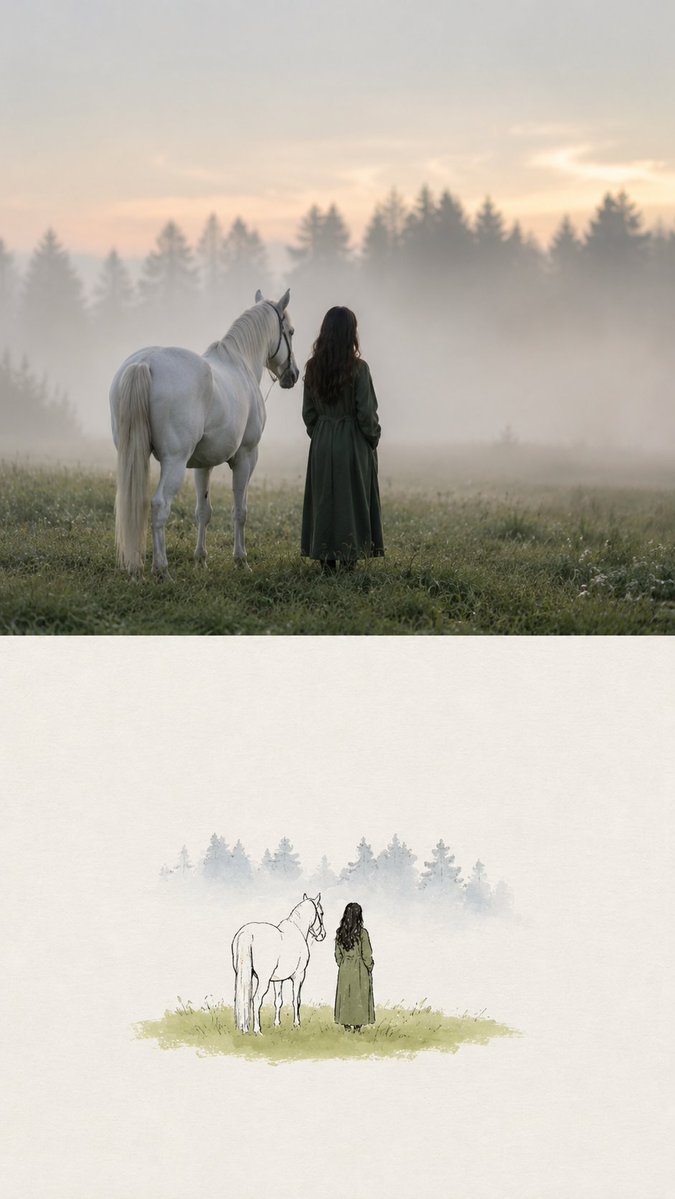
Foto de viaje a ilustración de diario minimalista

Esta plantilla convierte tu foto subida en una ilustración minimalista de libro ilustrado de diario de viaje: líneas finas de pluma, pocos colores planos contenidos, bloques de pincel seco rugoso y amplio espacio negativo sobre fondo de papel cálido, conservando solo la identidad del sujeto y los elementos más reconocibles de la escena. Requiere subir la foto original.

OpenAI

Ejemplos de la fuente

Estas imágenes provienen de la fuente original. DROPIDEA no ha probado estos ejemplos; los resultados dependen del modelo y los ajustes.

Listo para personalizar

Tu prompt

Inglés

Sustituye las variables en rojo por tus datos. Copia el texto completo y úsalo con tu agente preferido.

TXT MD Versión en inglés
Please recreate the uploaded [original photo] as a minimalist travel journal picture book illustration. The focus is not to draw the photo completely, but to greatly distill, simplify, and summarize the photo content, leaving only the visual elements most worth remembering in this moment. Please preserve the core content of the original photo: - The identity characteristics of the main subject - The posture, action, and orientation of the main subject - The positional relationship between subjects - The most recognizable scene elements - The approximate composition and sense of story of the original photo But please actively remove most of the real details; do not redraw the entire photo in full. Picture processing principles Transform the real photo into: Minimalist pen line drawing + journal sketch + light flat color wash + rough dry-brush color blocks + Japanese-style lifestyle picture book feel + a paper-based illustration with lots of negative space. The illustration part must be highly summarized, simple, and restrained, like a small scene quickly recorded in a travel journal on the road. Subject handling - Do not draw people, animals, or subjects very large. - Please clearly shrink the subject, place it in the lower-middle or lower-center of the picture, so that the subject is like a small memory fragment. - Do not finely depict facial features; do not draw beautiful, detailed portrait illustrations of people. - Only preserve recognizability through silhouette, action, hairstyle, clothing, and posture. - Preserve the breed, coat color, posture, and silhouette of animals, but still keep it extremely simplified. Scene handling - Keep only the 1–3 most recognizable elements in the scene. - For example: trees, mountains, grass slopes, sea surface, boats, churches, building silhouettes, clouds, windows, railings, stones, roads, etc. - Do not draw the scene completely and finely; use only a few lines and a few color blocks to summarize. - Do not keep the entire complex background. Line style - Use thin, light, natural black lines with a slight tremor and a handmade feel. - Do not use too many lines; do not make them too dense, not neat, not vector-like, and not comic-inking-like. - Outlines can be broken, loose, and simple. Coloring method - Colors must be very restrained; use only a few representative colors. - For example: - Sky and sea: blue - Grass and trees: green - Buildings and land: beige, ochre, gray-brown - People's clothing: extract 1–2 key colors from the original image - Color expression methods: - Irregular handmade flat coloring + rough dry brush + partial brush-stroke color blocks - Do not fill the color blocks too completely; do not make them too refined; do not pursue realistic shadows and delicate gradations. - It should feel like "a few brush strokes applied." Composition and layout - The background of the picture must be a warm white / off-white / ivory natural paper base color, with slight paper texture. - The illustration subject as a whole only occupies a small area of the picture. - Keep a large amount of negative space around, especially obvious blank space at the top and on the left and right. - The overall layout should resemble a travel picture book, lifestyle journal, or a small art page by an independent illustrator. - If appropriate, a very small English title or year can be automatically added, but the text must be extremely minimal, very small, and very light, and it is not required. Final mood The picture should present: Quiet, light, gentle, restrained, natural, with a sense of breathing, a sense of paper, and a sense of travel record. Not a refined illustration, not a complete scene redraw, but distilling the real scene into a simple visual memory symbol. Strict restrictions - Do not draw people as detailed, aesthetic portrait illustrations. - Do not retain too many facial details. - Do not draw too many clothing wrinkles. - Do not completely redraw the background. - Do not carefully draw all the windows, leaves, buildings, and ground. - Do not ...
Ver resultados

Tu prompt

Please recreate the uploaded [original photo] as a minimalist travel journal picture book illustration. The focus is not to draw the photo completely, but to greatly distill, simplify, and summarize the photo content, leaving only the visual elements most worth remembering in this moment. Please preserve the core content of the original photo: - The identity characteristics of the main subject - The posture, action, and orientation of the main subject - The positional relationship between subjects - The most recognizable scene elements - The approximate composition and sense of story of the original photo But please actively remove most of the real details; do not redraw the entire photo in full. Picture processing principles Transform the real photo into: Minimalist pen line drawing + journal sketch + light flat color wash + rough dry-brush color blocks + Japanese-style lifestyle picture book feel + a paper-based illustration with lots of negative space. The illustration part must be highly summarized, simple, and restrained, like a small scene quickly recorded in a travel journal on the road. Subject handling - Do not draw people, animals, or subjects very large. - Please clearly shrink the subject, place it in the lower-middle or lower-center of the picture, so that the subject is like a small memory fragment. - Do not finely depict facial features; do not draw beautiful, detailed portrait illustrations of people. - Only preserve recognizability through silhouette, action, hairstyle, clothing, and posture. - Preserve the breed, coat color, posture, and silhouette of animals, but still keep it extremely simplified. Scene handling - Keep only the 1–3 most recognizable elements in the scene. - For example: trees, mountains, grass slopes, sea surface, boats, churches, building silhouettes, clouds, windows, railings, stones, roads, etc. - Do not draw the scene completely and finely; use only a few lines and a few color blocks to summarize. - Do not keep the entire complex background. Line style - Use thin, light, natural black lines with a slight tremor and a handmade feel. - Do not use too many lines; do not make them too dense, not neat, not vector-like, and not comic-inking-like. - Outlines can be broken, loose, and simple. Coloring method - Colors must be very restrained; use only a few representative colors. - For example: - Sky and sea: blue - Grass and trees: green - Buildings and land: beige, ochre, gray-brown - People's clothing: extract 1–2 key colors from the original image - Color expression methods: - Irregular handmade flat coloring + rough dry brush + partial brush-stroke color blocks - Do not fill the color blocks too completely; do not make them too refined; do not pursue realistic shadows and delicate gradations. - It should feel like "a few brush strokes applied." Composition and layout - The background of the picture must be a warm white / off-white / ivory natural paper base color, with slight paper texture. - The illustration subject as a whole only occupies a small area of the picture. - Keep a large amount of negative space around, especially obvious blank space at the top and on the left and right. - The overall layout should resemble a travel picture book, lifestyle journal, or a small art page by an independent illustrator. - If appropriate, a very small English title or year can be automatically added, but the text must be extremely minimal, very small, and very light, and it is not required. Final mood The picture should present: Quiet, light, gentle, restrained, natural, with a sense of breathing, a sense of paper, and a sense of travel record. Not a refined illustration, not a complete scene redraw, but distilling the real scene into a simple visual memory symbol. Strict restrictions - Do not draw people as detailed, aesthetic portrait illustrations. - Do not retain too many facial details. - Do not draw too many clothing wrinkles. - Do not completely redraw the background. - Do not carefully draw all the windows, leaves, buildings, and ground. - Do not ...
Guía de variables

[original photo]

La foto original subida

Se adjunta como archivo con el mensaje; se referencia en la primera línea de la plantilla

Valor de ejemplo

Una foto de dos personas en una ladera de hierba junto al mar

Qué obtienes

  • Una ilustración minimalista de libro de viaje sobre fondo de papel cálido
  • Un sujeto principal reducido colocado en la zona inferior central
  • Líneas negras finas y temblorosas con unos bloques de pincel seco rugoso
  • Amplio espacio negativo, sobre todo arriba y a los lados
  • Posiblemente un título en inglés o un año muy pequeño (no garantizado)

Casos de uso

  • Registrar recuerdos de viaje en un diario ilustrado sencillo
  • Crear páginas de diario o álbumes ilustrados de estilo japonés
  • Tarjetas o regalos conmemorativos basados en fotos personales
  • Páginas de scrapbook o láminas con estilo de ilustrador independiente
  • Resumir fotos de eventos como símbolos visuales simples

Cómo usarlo

  • Sube la foto original que deseas transformar y pega esta plantilla en el mensaje
  • Asegúrate de que el sujeto principal (persona o animal) sea claramente visible para mejores resultados
  • Envía la plantilla; el modelo conserva solo el sujeto principal y 1–3 elementos reconocibles de la escena
  • Repite con distintas fotos para crear un conjunto de páginas de diario coherentes
  • Reúne los resultados en un diario de viaje impreso o digital

Prompts relacionados