Ir al contenido
ImágenesGratis

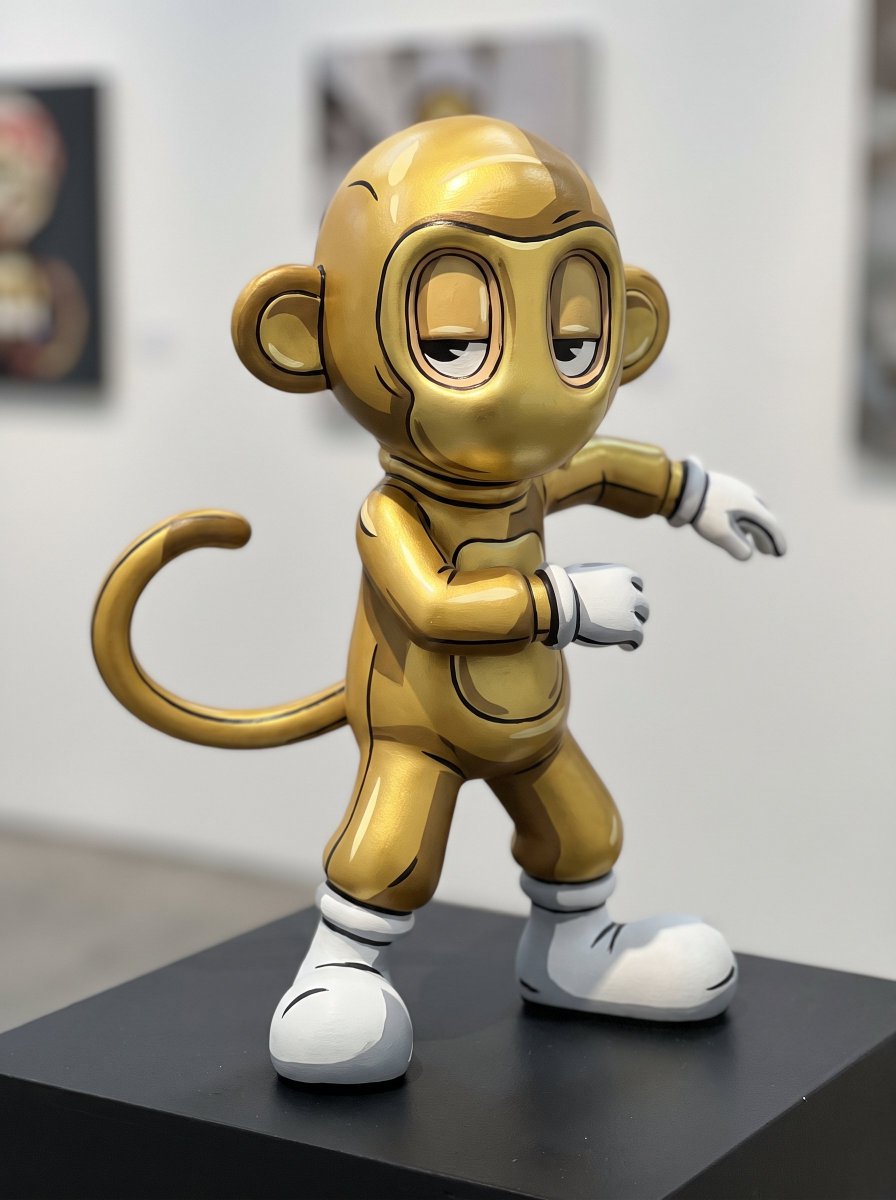
Figura anime premium pintada a mano con sombreado cel

Un prompt que convierte un personaje de referencia subido en una figura 3D premium pintada a mano con sombreado cel, que parece un dibujo de anime o manga 2D convertido en objeto físico, con pose dramática de fotograma clave, iluminación de estudio dirigida y un pedestal oscuro, conservando el parecido exacto y la paleta original del personaje.

Generación de imágenes

Ejemplos de la fuente

Estas imágenes provienen de la fuente original. DROPIDEA no ha probado estos ejemplos; los resultados dependen del modelo y los ajustes.

Listo para personalizar

Tu prompt

Inglés

Sustituye las variables en rojo por tus datos. Copia el texto completo y úsalo con tu agente preferido.

TXT MD Versión en inglés
Prompt Share 🚨 Cell-shaded, hand-painted figurine version of your character. 🎨🗿 @akidcalledbeast #AKCB Prompt 👇 Create a premium hand-painted cel-shaded figurine of the uploaded reference character, designed to look like a 2D anime or manga drawing brought into the physical world. Likeness Integrity Preserve the uploaded character’s exact: head-to-body proportions eye shape and spacing facial structure silhouette anatomy outfit and accessories original color palette material and structural identity Do not humanize, redesign, or add facial features absent from the reference. Preserve the original number and structure of fingers, limbs, ears, horns, or equivalent features exactly. Figurine Construction The character is a genuine sculpted 3D collectible figurine, but every visible surface has been meticulously hand-painted to create an extreme cel-shaded anime illusion. The sculpture must still have real physical depth, edges, curves, and volume. Manga / Anime Repainting Technique Apply the paint treatment directly onto the 3D sculpture using traditional cel-shading logic: large crisp geometric shadow regions absolutely minimal blending hard transitions between light and shadow bold dark ink-like contour lines painted along selected silhouette edges graphic internal linework around clothing folds, joints, hair, armor, or structural features stark painted highlights shaped like deliberate anime highlight marks simplified two-tone or three-tone color blocking exaggerated painted cast shadows that reinforce the illusion of flat illustration selective black shadow shapes beneath forms clean comic-style edge accents The painted shading should feel deliberately artificial and graphic, not physically realistic. When viewed from the chosen camera angle, the figurine should momentarily trick the eye into believing it is a flat manga illustration. Pose Use a dramatic animation-keyframe pose. The character is caught mid-turn with one foot or equivalent lower limb advanced, torso twisted slightly, one arm moving across the silhouette and the other opening away from the body. The pose must create strong overlapping shapes and readable negative spaces, allowing the cel-shaded paint to exaggerate depth. No neutral standing pose. Camera Close 35mm perspective, slightly below the figurine and offset laterally. Use a subtle three-quarter angle so the sculpture’s physical volume is visible, but not so much that the graphic illusion collapses. The head sits near an upper rule-of-thirds point. One limb approaches the foreground and slightly breaks the frame edge. Focus Eyes and face are razor sharp. Upper torso remains within the primary focal plane. Foreground limb slightly softer. Pedestal and background progressively dissolve into shallow depth of field. Lighting Lighting should support the painted illusion rather than replace it. Use one strong directional studio key from upper-left, aligned closely with the painted shadow direction. A restrained rim light separates the silhouette from the background. Avoid complex multi-directional reflections. The real shadows and the painted shadows should almost overlap, creating the surreal impression that the drawn shading has become physically correct. Pedestal & Setting Place the figurine on a simple dark exhibition plinth inside a minimal collector-gallery environment. The background is softly blurred and understated so the graphic figurine dominates. A partially blurred pedestal edge or display-case reflection may intrude into the foreground for depth. Surface Detail At close range, reveal evidence of physical craftsmanship: subtle brush texture tiny irregularities at painted shadow boundaries fine matte resin texture microscopic paint layering slightly raised ink-like contour paint tiny manufacturing details These imperfections should make it clearly hand-painted without reducing its premium quality. Color Treatment Preserve the character’s original palette. Use saturated character colors with deliberately darker painted shadow blocks. Deep ink-black accents. Bright but controlled highlight shapes. Background remains muted and slightly cool. No glossy plastic look. Final Visual Goal The final image should create a visual paradox: a real 3D collectible that looks almost completely 2D from the camera angle, as though a manga drawing has physically stepped off the page. The viewer should need a second look to understand that the flat-looking anime character is actually a sculpted figurine. No soft airbrushed shading. No realistic gradient lighting across painted surfaces. No generic 3D render aesthetic. No anatomy changes. No redesign. No added accessories. No centered symmetry. No full-frame sharpness. No text or logos. ar 1:1
Ver resultados

Tu prompt

Prompt Share 🚨 Cell-shaded, hand-painted figurine version of your character. 🎨🗿 @akidcalledbeast #AKCB Prompt 👇 Create a premium hand-painted cel-shaded figurine of the uploaded reference character, designed to look like a 2D anime or manga drawing brought into the physical world. Likeness Integrity Preserve the uploaded character’s exact: head-to-body proportions eye shape and spacing facial structure silhouette anatomy outfit and accessories original color palette material and structural identity Do not humanize, redesign, or add facial features absent from the reference. Preserve the original number and structure of fingers, limbs, ears, horns, or equivalent features exactly. Figurine Construction The character is a genuine sculpted 3D collectible figurine, but every visible surface has been meticulously hand-painted to create an extreme cel-shaded anime illusion. The sculpture must still have real physical depth, edges, curves, and volume. Manga / Anime Repainting Technique Apply the paint treatment directly onto the 3D sculpture using traditional cel-shading logic: large crisp geometric shadow regions absolutely minimal blending hard transitions between light and shadow bold dark ink-like contour lines painted along selected silhouette edges graphic internal linework around clothing folds, joints, hair, armor, or structural features stark painted highlights shaped like deliberate anime highlight marks simplified two-tone or three-tone color blocking exaggerated painted cast shadows that reinforce the illusion of flat illustration selective black shadow shapes beneath forms clean comic-style edge accents The painted shading should feel deliberately artificial and graphic, not physically realistic. When viewed from the chosen camera angle, the figurine should momentarily trick the eye into believing it is a flat manga illustration. Pose Use a dramatic animation-keyframe pose. The character is caught mid-turn with one foot or equivalent lower limb advanced, torso twisted slightly, one arm moving across the silhouette and the other opening away from the body. The pose must create strong overlapping shapes and readable negative spaces, allowing the cel-shaded paint to exaggerate depth. No neutral standing pose. Camera Close 35mm perspective, slightly below the figurine and offset laterally. Use a subtle three-quarter angle so the sculpture’s physical volume is visible, but not so much that the graphic illusion collapses. The head sits near an upper rule-of-thirds point. One limb approaches the foreground and slightly breaks the frame edge. Focus Eyes and face are razor sharp. Upper torso remains within the primary focal plane. Foreground limb slightly softer. Pedestal and background progressively dissolve into shallow depth of field. Lighting Lighting should support the painted illusion rather than replace it. Use one strong directional studio key from upper-left, aligned closely with the painted shadow direction. A restrained rim light separates the silhouette from the background. Avoid complex multi-directional reflections. The real shadows and the painted shadows should almost overlap, creating the surreal impression that the drawn shading has become physically correct. Pedestal & Setting Place the figurine on a simple dark exhibition plinth inside a minimal collector-gallery environment. The background is softly blurred and understated so the graphic figurine dominates. A partially blurred pedestal edge or display-case reflection may intrude into the foreground for depth. Surface Detail At close range, reveal evidence of physical craftsmanship: subtle brush texture tiny irregularities at painted shadow boundaries fine matte resin texture microscopic paint layering slightly raised ink-like contour paint tiny manufacturing details These imperfections should make it clearly hand-painted without reducing its premium quality. Color Treatment Preserve the character’s original palette. Use saturated character colors with deliberately darker painted shadow blocks. Deep ink-black accents. Bright but controlled highlight shapes. Background remains muted and slightly cool. No glossy plastic look. Final Visual Goal The final image should create a visual paradox: a real 3D collectible that looks almost completely 2D from the camera angle, as though a manga drawing has physically stepped off the page. The viewer should need a second look to understand that the flat-looking anime character is actually a sculpted figurine. No soft airbrushed shading. No realistic gradient lighting across painted surfaces. No generic 3D render aesthetic. No anatomy changes. No redesign. No added accessories. No centered symmetry. No full-frame sharpness. No text or logos. ar 1:1

Guía de variables

ar 1:1

La relación de aspecto de la imagen final; cambia ambos números juntos conservando el formato ar

La última línea de la plantilla, justo después de "No text or logos."

Valor de ejemplo

ar 16:9

35mm

La distancia focal aparente de la lente, que controla lo cercana que se siente la perspectiva

En la sección Camera, dentro de "Close 35mm perspective"

Valor de ejemplo

50mm

upper-left

La dirección de la luz principal fuerte; cámbiala para que coincida con la dirección de la sombra pintada

En la sección Lighting, dentro de "from upper-left"

Valor de ejemplo

upper-right

Qué obtienes

  • Una figura 3D premium pintada a mano con sombreado cel que engaña al ojo haciéndose pasar por un dibujo 2D
  • Una pose dramática de fotograma clave con líneas de tinta audaces, sombras geométricas gráficas y colores saturados
  • Iluminación de estudio dirigida desde arriba a la izquierda con poca profundidad de campo
  • Un pedestal de exposición oscuro en una galería de coleccionista minimalista con detalles sutiles de artesanía física

Casos de uso

  • Convertir tus personajes originales o favoritos en figuras coleccionables virtuales
  • Contenido para redes sociales y difusión de fan art
  • Muestras de diseño de personajes y portafolios
  • Inspiración para diseños de figuras reales imprimibles en 3D

Cómo usarlo

  • Sube una imagen de referencia clara del personaje; la subida es obligatoria porque el prompt se basa por completo en el personaje de referencia subido.
  • Copia el prompt completo y pégalo en tu herramienta de generación de imágenes.
  • Edita opcionalmente los valores modificables: la relación de aspecto "ar 1:1", la lente "35mm" o la dirección de la luz principal "upper-left", manteniendo el resto de instrucciones sin cambios.
  • Conserva intactas todas las instrucciones negativas (sin cambios de anatomía, sin rediseño, sin texto ni logotipos, etc.) para proteger el parecido del personaje.
  • Genera la imagen y compárala con la referencia para verificar proporciones, colores y rasgos, repitiendo si es necesario.

Prompts relacionados