Ir al contenido
ImágenesGratis

Documento de Lore Cinemático de un Archivo Ficticio

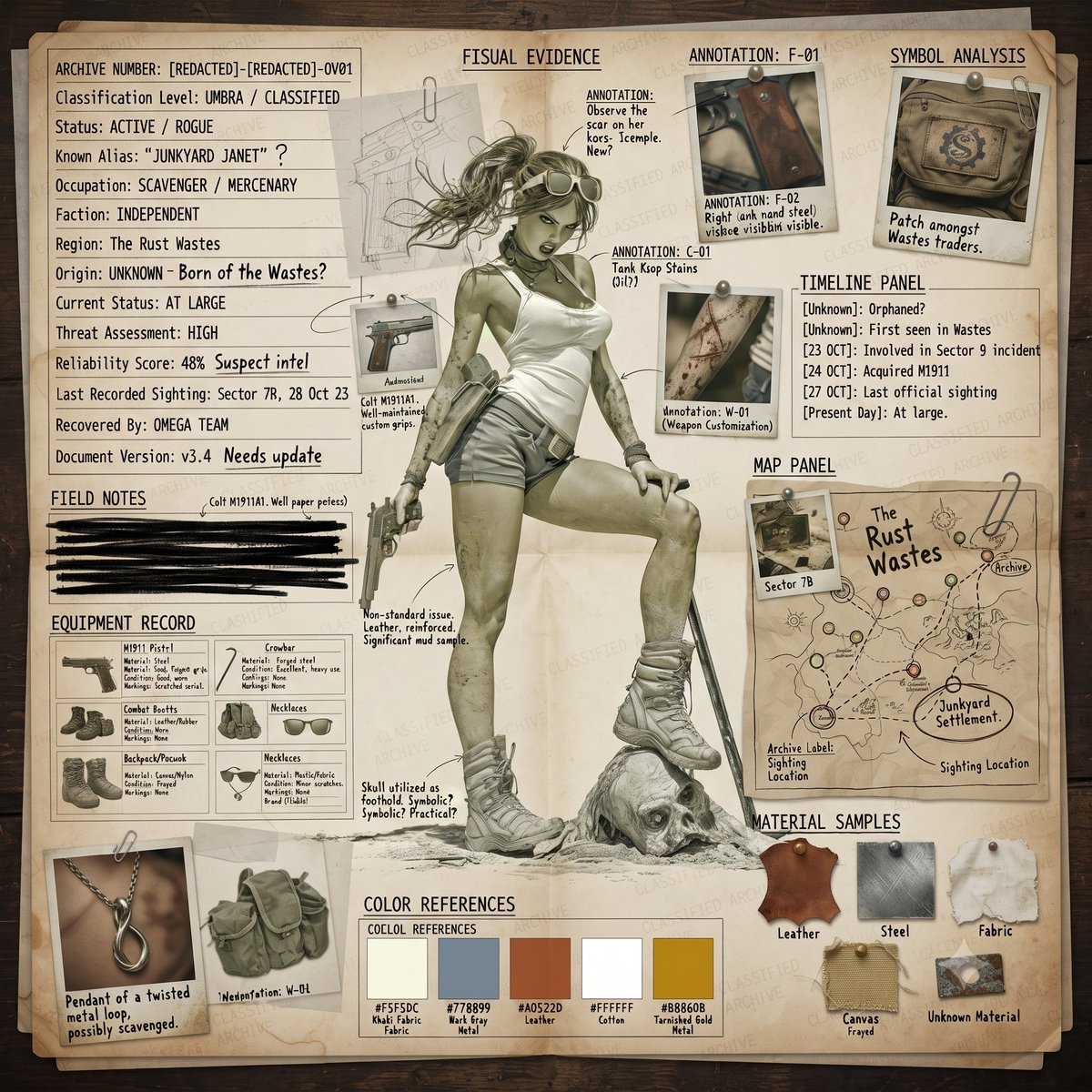
Crea una página de archivo cinematográfica al estilo de archivos de lore de juegos AAA premium, mezclando inteligencia militar y documentación arqueológica, manteniendo el personaje idéntico a la referencia proporcionada.

OpenAI

Ejemplos de la fuente

Estas imágenes provienen de la fuente original. DROPIDEA no ha probado estos ejemplos; los resultados dependen del modelo y los ajustes.

Listo para personalizar

Tu prompt

Inglés

Sustituye las variables en rojo por tus datos. Copia el texto completo y úsalo con tu agente preferido.

TXT MD Versión en inglés
Nano Banana Lite 2 vs GPT Image 2 - Character sheet I think it's time to make a zombie battle scene with Seedance... Prompt Share Create a cinematic "Lore Document" based on the provided character reference. The result should look like a classified archive recovered from a fictional universe, not a poster. The original character must remain visually identical to the reference. The page should resemble a premium AAA game lore file, combining military intelligence, archaeological documentation, and world-building records. LAYOUT A weathered archive page filled with organized information. Large portrait or full-body character positioned prominently. Around the page place multiple documentation sections with handwritten notes, technical annotations, seals, evidence tags, archive numbers, stamps, diagrams, and small supporting illustrations. The composition should feel like an authentic historical record rather than promotional artwork. DOCUMENT SECTIONS ARCHIVE NUMBER Classification Level Status Known Alias Occupation Faction Region Origin Current Status Threat Assessment Reliability Score Last Recorded Sighting Recovered By Document Version VISUAL EVIDENCE Include smaller evidence windows showing close-up crops of important visual elements such as: Face Eyes Mask Weapon Hands Armor Symbols Accessories Scars Clothing details Each evidence image should have its own annotation label. EQUIPMENT RECORD Every visible object receives its own archive card. Include: Object designation Observed material Estimated craftsmanship Condition Visible markings Observed wear Recovery notes FIELD NOTES Several handwritten observation notes scattered around the page. These should read like investigators documenting what they discovered. Example tone: "Observed multiple repair marks." "Material unknown." "Weapon appears ceremonial." "Symbol repeated across equipment." Never reveal supernatural facts as certainty. TIMELINE Small timeline panel containing documented events. Use intentionally incomplete entries. Example: Unknown Unknown First Recorded Missing Records Present Day MAP PANEL Small fictional map showing an approximate region connected to the character. Include pins, circles, route markings, and archive labels. SYMBOL ANALYSIS Display enlarged versions of every visible emblem, crest, rune, logo, engraving, or insignia. Each accompanied by short documentation notes. COLOR REFERENCES Display official color swatches extracted from the character. MATERIAL SAMPLES Display sample chips for every visible material including: Leather Steel Fabric Wood Stone Glass Carbon Fiber Gold Copper Ceramic Unknown Material VISUAL STYLE Premium AAA game lore book Museum archive Military intelligence report Historical manuscript Archaeological research Dark fantasy codex Science fiction database Blueprint annotations Minimal UI overlays Evidence photography Document stamps Aged paper Coffee stains Fold marks Handwritten notes Redacted text Official seals Evidence tags Paper clips Pinned photographs Transparent tracing paper overlays Technical sketches Layered document collage Highly detailed Believable Immersive Every element should reinforce the feeling that this is an authentic document recovered from a living fictional universe.
Ver resultados

Tu prompt

Nano Banana Lite 2 vs GPT Image 2 - Character sheet I think it's time to make a zombie battle scene with Seedance... Prompt Share Create a cinematic "Lore Document" based on the provided character reference. The result should look like a classified archive recovered from a fictional universe, not a poster. The original character must remain visually identical to the reference. The page should resemble a premium AAA game lore file, combining military intelligence, archaeological documentation, and world-building records. LAYOUT A weathered archive page filled with organized information. Large portrait or full-body character positioned prominently. Around the page place multiple documentation sections with handwritten notes, technical annotations, seals, evidence tags, archive numbers, stamps, diagrams, and small supporting illustrations. The composition should feel like an authentic historical record rather than promotional artwork. DOCUMENT SECTIONS ARCHIVE NUMBER Classification Level Status Known Alias Occupation Faction Region Origin Current Status Threat Assessment Reliability Score Last Recorded Sighting Recovered By Document Version VISUAL EVIDENCE Include smaller evidence windows showing close-up crops of important visual elements such as: Face Eyes Mask Weapon Hands Armor Symbols Accessories Scars Clothing details Each evidence image should have its own annotation label. EQUIPMENT RECORD Every visible object receives its own archive card. Include: Object designation Observed material Estimated craftsmanship Condition Visible markings Observed wear Recovery notes FIELD NOTES Several handwritten observation notes scattered around the page. These should read like investigators documenting what they discovered. Example tone: "Observed multiple repair marks." "Material unknown." "Weapon appears ceremonial." "Symbol repeated across equipment." Never reveal supernatural facts as certainty. TIMELINE Small timeline panel containing documented events. Use intentionally incomplete entries. Example: Unknown Unknown First Recorded Missing Records Present Day MAP PANEL Small fictional map showing an approximate region connected to the character. Include pins, circles, route markings, and archive labels. SYMBOL ANALYSIS Display enlarged versions of every visible emblem, crest, rune, logo, engraving, or insignia. Each accompanied by short documentation notes. COLOR REFERENCES Display official color swatches extracted from the character. MATERIAL SAMPLES Display sample chips for every visible material including: Leather Steel Fabric Wood Stone Glass Carbon Fiber Gold Copper Ceramic Unknown Material VISUAL STYLE Premium AAA game lore book Museum archive Military intelligence report Historical manuscript Archaeological research Dark fantasy codex Science fiction database Blueprint annotations Minimal UI overlays Evidence photography Document stamps Aged paper Coffee stains Fold marks Handwritten notes Redacted text Official seals Evidence tags Paper clips Pinned photographs Transparent tracing paper overlays Technical sketches Layered document collage Highly detailed Believable Immersive Every element should reinforce the feeling that this is an authentic document recovered from a living fictional universe.

Qué obtienes

  • Una página de archivo desgastada con estilo de documento de lore cinematográfico de un universo ficticio.
  • Un retrato prominente del personaje rodeado de secciones de documentación como número de archivo, evaluación de amenaza y línea de tiempo.
  • Ventanas de evidencia en primer plano de elementos visuales como rostro, ojos, arma y armadura con etiquetas de anotación.
  • Fichas de archivo para cada pieza de equipo, notas de campo escritas a mano, un mapa ficticio, muestras de color y materiales.

Casos de uso

  • Documentar personajes de juegos o historias con estilo de expediente de inteligencia militar.
  • Crear contenido promocional inmersivo para juegos AAA o mundos de fantasía.
  • Diseñar páginas de lore para libros de reglas o enciclopedias ficticias.
  • Construir material de referencia visual para proyectos de escritura, ilustración y juegos de mesa.

Cómo usarlo

  • Sube una imagen de referencia clara del personaje que deseas documentar, ya que el resultado depende de que el personaje coincida visualmente con la referencia.
  • Copia la plantilla y pégala en una herramienta de generación de imágenes como Nano Banana Lite 2 o GPT Image 2.
  • Para personalizar, edita valores creativos como facción, región o alias sin cambiar las secciones técnicas de la plantilla.
  • Envía la plantilla junto con la imagen de referencia y espera a que se genere la página de archivo completa.
  • Revisa el resultado y verifica que el personaje siga idéntico a la referencia y que aparezcan todas las secciones documentadas.

Prompts relacionados