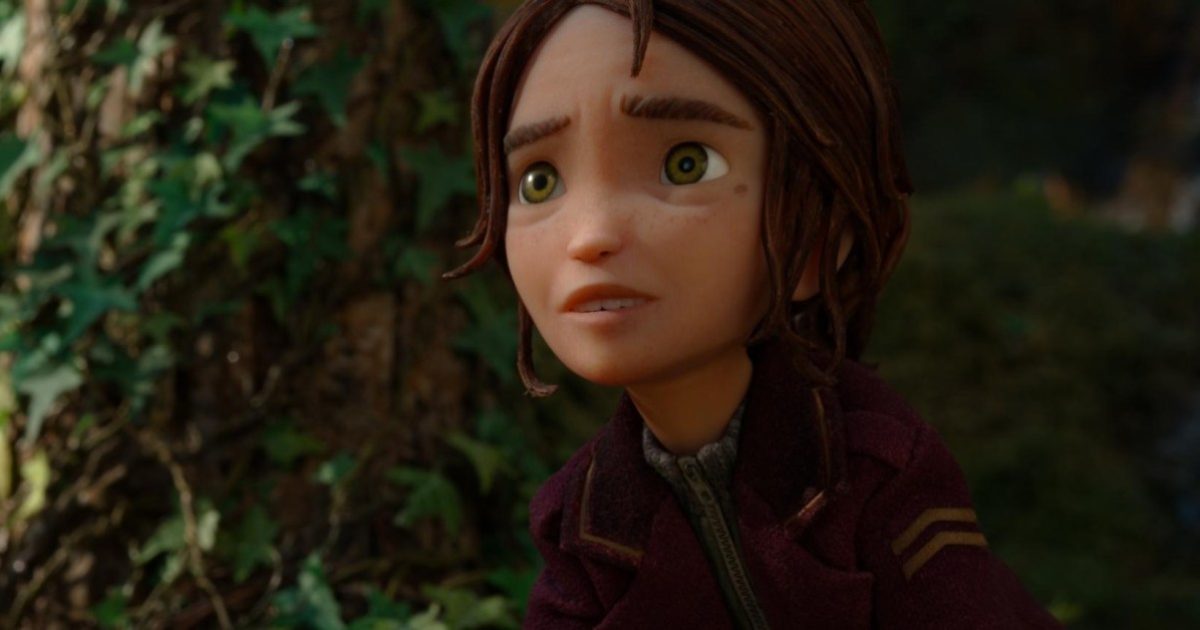
At a time when studios are racing toward fast digital production, choosing to make an entire film using stop-motion animation seems like a decision that swims against the current. Yet the American studio Laika, known for films such as "Coraline," sees this path as a space for experimentation and technical development no less ambitious than that of any tech company. Its new film "Wildwood" is the culmination of some twenty years of building knowledge and tools, not merely a standalone project.
A project that took more than a decade and a half
The story began in 2011, when the studio's CEO, Travis Knight, acquired the rights to adapt the novel "Wildwood" by writer and musician Colin Meloy into a film. But actual production didn't begin until ten years later, while Knight says he worked on the project in one form or another for around 16 years. He described it as a personal project at its core: a tale about love, loss and grief, and about the impossible demands that love places on a person.
The events revolve around a girl named Prue who is forced to enter the "Impassable Wilderness" surrounding the city of Portland in search of her baby brother. There she discovers a fantastical world evoking the atmosphere of "Narnia": spells, talking animals and warring factions.
Numbers that explain the scale of the challenge
"Wildwood" is the largest production in the studio's history, and its figures reveal the nature of the intensive handcrafted work behind it:
- Close to 50 artists specialized in puppet animation.
- More than 200 puppets made specifically for the film.
- A battle scene spanning 12 minutes involving dozens of combatants.
- A chase sequence through the crowded streets of Portland, where a massive flock of crows carries off the heroine's brother.
Even Hollywood veterans were surprised by the sheer level of detail. Cinematographer Caleb Deschanel, who has worked on major films and contributed to scenes in "The Godfather" and "Titanic," says he entered the project expecting one thing and found something else far more complex than he had imagined.
The working philosophy: an old craft with modern techniques
Brad Schiff, head of animation, describes the studio's approach as a blend of "traditional craft and modern technology." The rule is simple: with every project new techniques are developed, and whatever works is pushed to a higher level in the next film.
A clear example came from the film "Missing Link," where the main puppet was fitted with a mechanical "diaphragm"; turning a screw in the puppet's back causes this part to expand or contract, giving a convincing impression of breathing. This solution later became a fixed standard in the studio's puppets.
A library of solutions rather than a single invention
For costume designer Deborah Cook, there wasn't a single innovation in "Wildwood" that outshone the rest, but rather the sheer number of available tools. Over the years a "library of techniques" has accumulated, ready for application. This was essential in a film that combines contemporary urban clothing in the Portland scenes with costumes of a fantastical character inside the forest.
Many of the advances concerned the materials themselves: more flexible fabrics that allow natural movement, and a newly devised process for manufacturing silicone that is lighter in weight and longer lasting. Oliver Jones, head of characters and practical effects, explains that the goal is the gradual elimination of "foam latex," which gives off an unpleasant odor, shrinks over time and crumbles after a few years, noting that rethinking materials that haven't fundamentally changed since the era of "King Kong" brings real benefits.
Management and logistics: the invisible side
The scale of the production also demanded a managerial development that seems simple on the surface but is decisive. Cook admits that puppets have "gone missing" in the past, and that the studio now relies on an advanced tracking system to manage a large number of moving components and stages spread throughout the building. It's a familiar lesson in any technical project: as things grow, data and organization become as important as the tools themselves.
The ultimate goal: the humanity of the puppet
Knight describes the large battle scene as perhaps the most technically difficult in the studio's history, but he stresses that all this technology isn't an end in itself; it's a means of granting the puppets a greater measure of humanity. This is where small details acquire their value: the flow of fabric, or the suggestion of breathing.
He points out that the film contains quiet, intimate scenes with almost no music or sound design, where nothing remains but the performance of these constructions made of steel, silicone and fabric. In those moments, he says, there is nothing to hide behind — and that is the true measure of twenty years of development.
✦ بقلم فريق دروب أيديا
DROPIDEA
We hope this article has added real value to you. At DROPIDEA, we always strive to deliver high-quality content that helps you grow and evolve in the digital space. Follow us for more useful articles and guides.
Tags
Admin
DROPIDEA
Latest Articles

Short Seller Warned About Nvidia CEO's Ties Six Months Before the Scandal
Anthropic Pushes Ahead with IPO Plans Despite Market Turbulence

US Intelligence Memo: Alleged Recruitment Effort Targeting Nvidia's CEO

Independent Investigation at Nvidia into Its CEO's Relationship