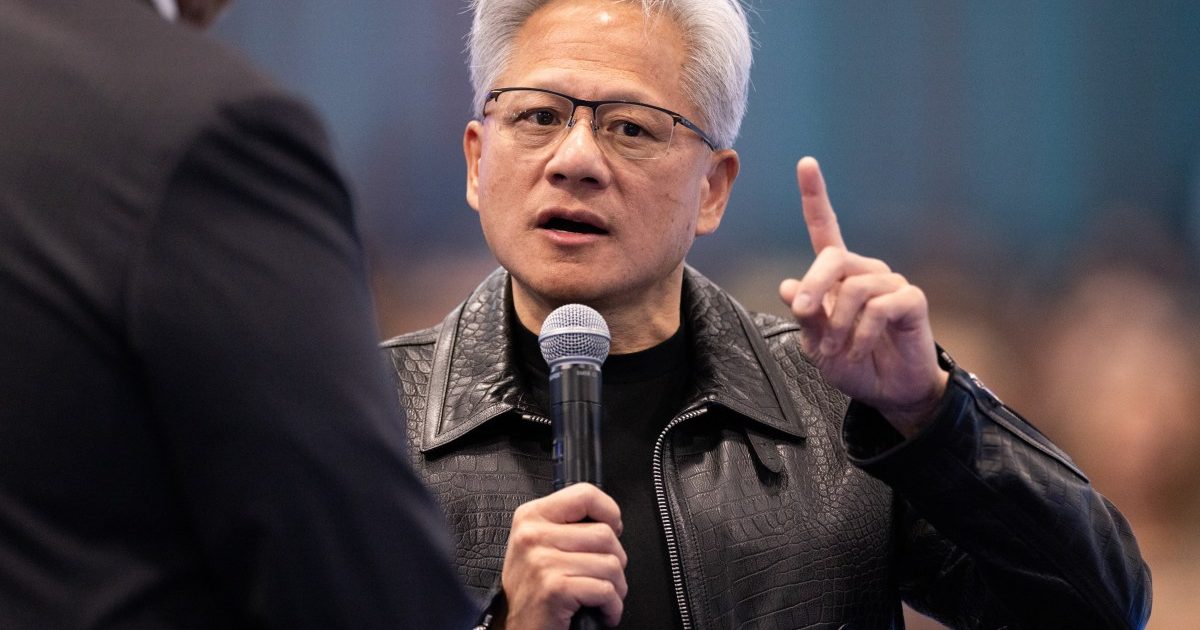
Industrial espionage files are back at the forefront of tech news once again, but this time with one of the most influential names in the global chip industry: Jensen Huang, CEO of Nvidia. American and British press reports have described an intelligence memo circulated earlier this year, alleging that a female executive at a Singapore-based technology company was recruited by a Chinese intelligence entity to gather information about Nvidia's CEO. This information remains within the realm of what has been attributed to sources and media reports, with no independent official confirmation to date.
What the Memo Reportedly Says
The New York Times was the first to reveal the memo's existence, after noting in earlier coverage that Nvidia's CEO had been the target of Chinese intelligence efforts. The Financial Times later added details indicating that the memo — presumably based on US intelligence information — also refers to a personal relationship between Huang and the executive in question, who works at a company known as Megaspeed.
For its part, Nvidia offered a brief response through a spokesperson, who explained that the CEO's dealings with the executive at the Singaporean company were "not unusual," stressing that the company does not share confidential or classified information with its customers.
Why Does Nvidia Attract This Much Attention?
To understand the backdrop of this story, one must consider Nvidia's position in the artificial intelligence supply chain. The graphics processing units the company produces form the backbone of training and running large language models and most advanced AI systems. These chips have become a strategic asset that nations compete over, not merely a commercial electronic component.
In recent years, the United States has imposed a series of restrictions on exporting advanced chips to China, making every transaction, every customer, and every potential intermediary subject to intense scrutiny. In this context, information about production plans, waiting lists, and specifications of next-generation chips acquires a value that extends beyond the commercial dimension into the geopolitical one.
A Parallel Story: A Company at an Empty Address
Alongside the memo story, The New York Times published a separate investigation into a Chinese company known as New Matrix, which obtained a license from the US Department of Commerce permitting it to purchase advanced Nvidia chips. When journalists visited the company's registered address, they found nothing but what they described as an "empty gray shell," raising serious questions about whether the company was operating as a front for an investment firm on US blacklists.
Commenting on this, an Nvidia spokesperson affirmed that the company sells "its technologies first, best, and in the greatest quantity in America," in reference to its commitment to domestic regulatory priorities.
Practical Lessons for Technology Companies
Beyond the details of the story itself, the incident carries important signals for any organization operating in technologically sensitive fields:
- Social engineering targets the top: Information-gathering attempts are no longer limited to breaching systems; they increasingly focus on personal and professional relationships within senior leadership circles.
- Verifying customer identity: Holding a regulatory license is no substitute for genuine due diligence into a customer's nature, ownership structure, and actual operating address.
- Internal information classification: Clearly defining what may be shared with partners and customers, and placing controls on informal conversations that could reveal competitively valuable information.
- The supply chain as extended risk: Intermediaries and distributors in third countries represent a recurring weak point in the export control framework.
A Broader Reading of the Landscape
These developments reveal a fundamental shift in the nature of technological competition: semiconductors are no longer a purely economic matter but have become an arena where business intersects with national security. As the enormous demand for AI computing capacity continues, export control mechanisms are expected to grow stricter, and the verification procedures manufacturers impose on their customers are likely to deepen.
It remains important to treat what these reports contain as allegations attributed to an internal memo that has not been subjected to public verification or judicial proceedings. Nevertheless, the mere circulation of such files reflects the degree of sensitivity surrounding the chip sector, and serves as a reminder to companies operating within it that managing security risks has become an inseparable part of managing the business.
✦ بقلم فريق دروب أيديا
DROPIDEA
We hope this article has added real value to you. At DROPIDEA, we always strive to deliver high-quality content that helps you grow and evolve in the digital space. Follow us for more useful articles and guides.
Tags
Admin
DROPIDEA
Latest Articles
Independent Investigation at Nvidia into Its CEO's Relationship

Meta Lets Users in America Hold Video Chats with Its AI Agent Muse

Airbnb Reveals 2027 Launch Date for Its AI Travel Agent

Retired Aircraft Engines Are Powering AI Data Centres