Why Is Detecting AI-Generated Content Harder Than We Think?
 By Admin

The problem of trust on the internet is no longer limited to social media platforms being flooded with low-quality AI-generated content. Machine-generated texts and images are now creeping into job applications, product reviews, and even insurance claims, leaving both platforms and users at a loss to distinguish what is authentic from what is artificial.
A New Trust Layer for the Internet
Over the past two years, a group of startups has emerged attempting to serve as the "trust layer" that the digital space needs, among them Pangram. The company recently succeeded in raising nine million dollars to develop its own system for detecting AI-generated content, and it has also struck a notable partnership with the publishing platform Substack.
Under this partnership, Substack uses Pangram's technology to inform readers which of their favorite writers rely on AI to write their newsletters. In addition, the company launched a new tool specialized in detecting machine-generated images, a step that expands the scope of its services to encompass both text and visual media.
A Dilemma Harder Than "Real or Fake"
Max Spero, co-founder and CEO of Pangram, believes that the issue of detecting AI-generated content is far more complex than a simple binary question: "real or fake?" Today's reality lies within a broad gray zone, as it is difficult to draw a clear dividing line between content created with AI assistance and content generated entirely by it.
This subtle distinction is at the heart of the challenge facing detection tools. Many writers and professionals rely on AI tools at certain stages of their work, such as proofreading, brainstorming ideas, or improving language, without meaning that the entire text is artificial. Herein lies the difficulty of building systems capable of delivering fair and accurate judgments rather than absolute classifications that may be misleading.
Why Are Detection Tools Growing in Importance?
As the spread of machine-generated content accelerates, the need for reliable verification mechanisms grows, especially in fields where important decisions are at stake. The most prominent areas where this need emerges can be summarized as follows:
- Hiring: where job applications and résumés sometimes contain texts entirely composed by AI.
- Product Reviews: which may be flooded with fake ratings that mislead consumers and distort the reputation of products.
- Insurance Claims: where generated texts and images can be misused to submit false information.
- Digital Publishing: where readers wish to know the degree of human authenticity in the content they follow.
Between Transparency and Absolute Judgment
The primary goal of these technologies is not to penalize the use of AI in itself, but to provide greater transparency for users and empower them to make informed decisions. Knowing that a text was written with AI assistance is fundamentally different from accusing its author of deception, and this delicate balance is what companies like Pangram seek to establish.
However, the technical challenge remains. As AI models evolve and their ability to mimic human style improves, the task of detection tools becomes more complex, forcing their developers to continually update their algorithms to keep pace with this accelerating race between generation and detection.
The Future of Digital Trust
It seems that maintaining trust in the digital space will become one of the most prominent challenges in the coming stage. As much as AI tools open up enormous horizons for creativity and productivity, they raise fundamental questions about authenticity and credibility. True success remains contingent on companies' ability to develop balanced solutions that respect innovation on one hand and safeguard users' right to knowledge and transparency on the other.
✦ بقلم فريق دروب أيديا
DROPIDEA
We hope this article has added real value to you. At DROPIDEA, we always strive to deliver high-quality content that helps you grow and evolve in the digital space. Follow us for more useful articles and guides.
Tags
Admin
DROPIDEA
Latest Articles
NVIDIA Acquires Hugging Face for $12.9 Billion
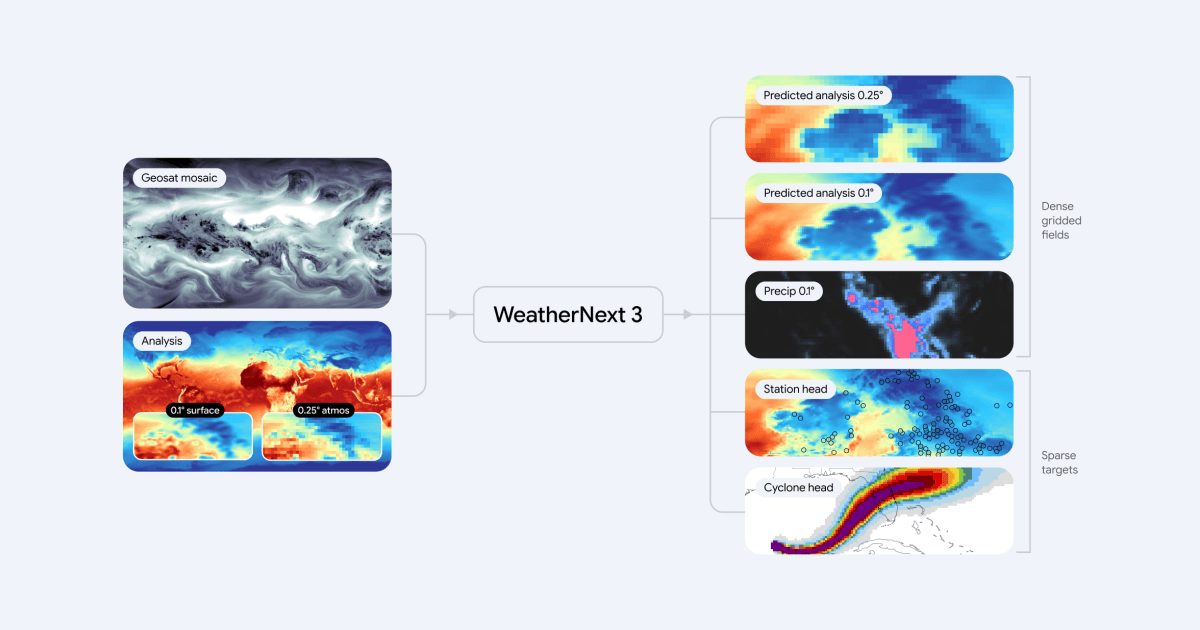
WeatherNext 3: Google's New Model Redraws the Future of AI-Powered Weather Forecasting
OpenAI's New Reasoning Technique Alarms AI Safety Experts
A New Stage at Disrupt 2026 Bridges AI and the Physical World