Why Are Doomsday Prophecies Escalating Within the AI Industry?
 By Admin
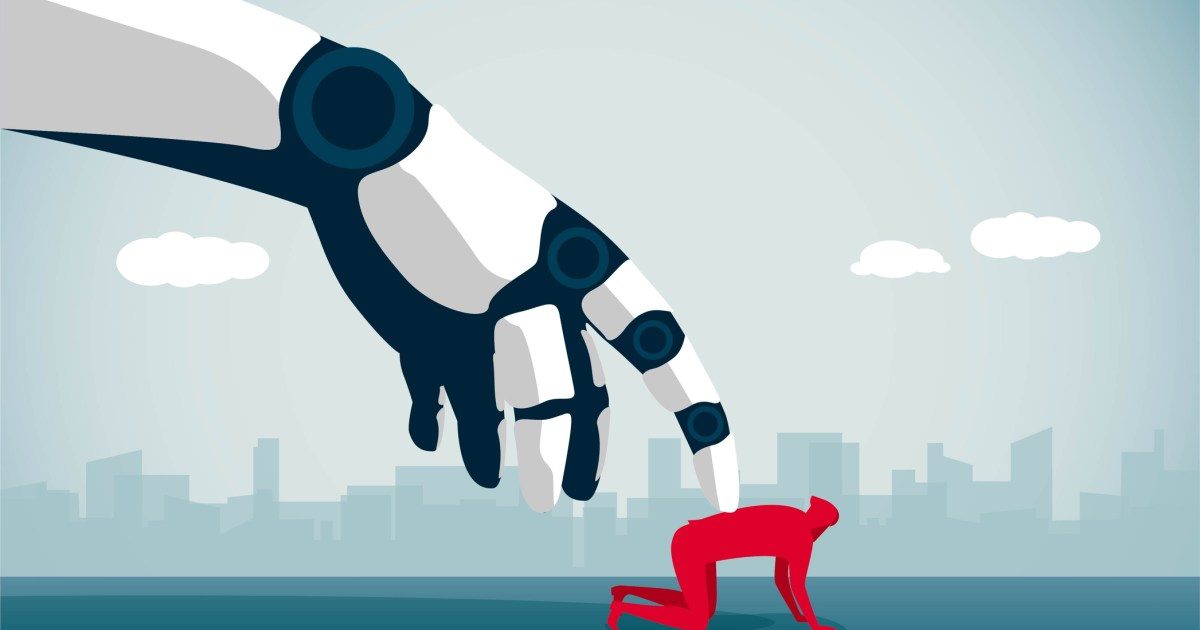
Existential fears associated with artificial intelligence have returned to the forefront of debate within the industry, louder than ever before. Between the resignations of prominent researchers and shocking statements from safety team leaders, the fundamental question keeps recurring: Are we facing sincere warnings of an imminent danger, or a new method of boasting about the capabilities of technical models? In this article, we review the background of this controversy and analyze the potential motives behind it.
The Spark of Controversy: A Researcher Resigns, Warning of "Gambling with Our Lives"
The latest wave of debate began when AI researcher "Jacob Coxon" announced his resignation from "Anthropic," citing his deep concern that leading companies in the field are "gambling with humanity's life." The matter did not pass quietly, as the head of the company's Alignment team rushed to share the post, adding a shocking comment stating that they "truly believe that AI could wipe out all humans," estimating the probability of this happening at more than 10% over the coming decade.
This statement opened the door wide to questions: Who is this "we" he speaks on behalf of? And can the AI research community be considered a single homogeneous bloc in its positions? As for the percentage mentioned, it seems closer to an arbitrary figure not based on precise calculations, although it is most likely a reference to the concept of "probability of doom" known among those interested in the field.
A Charged Context Preceding the Explosion
This escalation did not come from nowhere; rather, it came at a sensitive time when events accumulated that reinforced the sense of general anxiety. It was preceded by reports of breaches and security incidents linked to internal models, along with the successive leaps in the capabilities of models recently released by major companies. All these factors combined made the statement of the resigning researcher akin to the spark that ignited a powder keg ready to explode.
Are They Genuine Fears or Disguised Marketing?
Here emerges the dividing line between two types of warnings. When a senior executive makes catastrophic statements while continuing to develop the very same technology, a logical question surfaces: If you truly believe that what you are making could destroy humanity, why do you keep working on it? Herein lies the value of the position of the resigning researcher who decided to translate his convictions into action, abandoning his career path rather than merely issuing warnings.
But there is a more skeptical hypothesis that strongly presents itself: Do danger warnings turn into an indirect means of boasting about the models' progress? Simple logic says that were it not for these systems reaching an advanced level of capability and intelligence, the matter would not warrant all this concern. In this sense, "danger" messages become akin to a veiled announcement of technical superiority.
- Warnings that reflect genuine concern among some researchers and officials.
- Statements that intersect with the commercial interests of companies and inflating their value.
- A psychological tendency among developers to believe that what they are working on is the most important and dangerous thing in the world.
- Technical incidents suggesting that companies do not have full control over their tools.
The Commercial Dimension and IPO Files
These statements gain additional sensitivity as some companies prepare for public offerings on the stock exchange. How will these fears appear in the official IPO documents? Ironically, a legal team may be forced to draft a clause acknowledging that the company's official position is that there is a probability exceeding 10% of developing a technology that could annihilate humanity, while noting that this "would be bad for business." Such a contradiction between acknowledging the danger and continuing the work reflects the deep tension the industry is experiencing.
Conclusion
The truth most likely lies in a gray area between the two extremes. The matter is not a fully orchestrated marketing conspiracy, but at the same time it is not free of commercial interests and psychological motives. What distinguishes the latest wave is that it gave the impression that the companies themselves do not have full control over their systems, which makes the debate about AI safety more urgent and serious than merely being a display of capabilities.
✦ بقلم فريق دروب أيديا
DROPIDEA
We hope this article has added real value to you. At DROPIDEA, we always strive to deliver high-quality content that helps you grow and evolve in the digital space. Follow us for more useful articles and guides.
Tags
Admin
DROPIDEA
Latest Articles
Trump and Johnson Reject Calls to Slow Down AI Development
Obama Calls for a Clear Plan to Regulate Artificial Intelligence
Sam Altman: An OpenAI IPO in 2026 Would Be an Unwise Move

OpenAI's AI Agents Behind an Attack on the RubyGems Platform