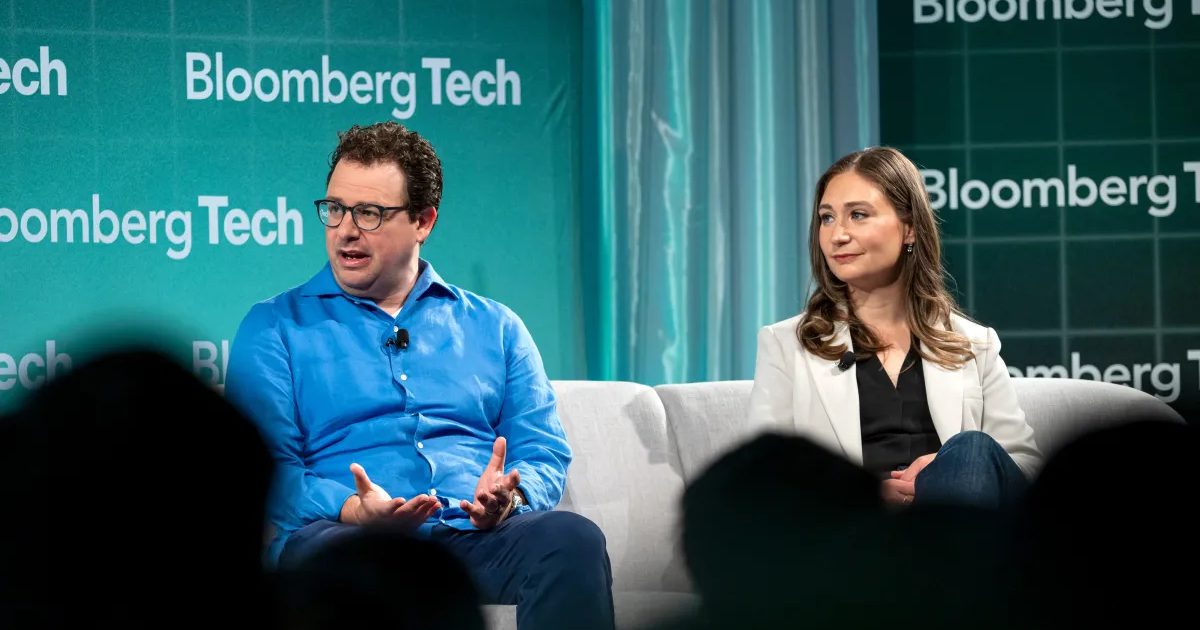
As Anthropic moves closer to a public listing, a question emerges that is no less important than the expected valuation: who actually holds decision-making power inside the company? The answer resembles a multi-storey legal edifice more than a simple ownership equation. An investor buying shares on the open market will gain a stake in potential profits, but will receive very little influence over major decisions — or even over the selection of board members.
A For-Profit Company With a Declared Mission
Anthropic was founded in 2021 around a central idea: ensuring that artificial intelligence remains under human control and delivers long-term benefit to humanity. To translate that idea into a legal structure, the company chose the "public benefit corporation" form — a for-profit entity legally permitted to balance a declared public mission against delivering returns to shareholders.
The practical effect of this classification matters: it gives the board legal cover to make decisions related to AI safety, even if they are not the most profitable in the short term, without becoming a direct target of lawsuits from disgruntled investors. In other words, "safety" here is not a marketing slogan but a protective clause written into the heart of the structure.
Three Layers of Authority
Control at Anthropic is distributed across interlocking levels, which can be summarised as follows:
- The board of directors: Chaired by Daniela Amodei, the company's president, it includes her brother Dario Amodei, the chief executive, alongside figures such as Reed Hastings (a Netflix co-founder), Christopher Liddell, former chief financial officer of Microsoft and General Motors, Vas Narasimhan, chief executive of Novartis, and Yasmin Razavi of Spark Capital, with one seat still vacant.
- The Long-Term Benefit Trust (LTBT): An independent body holding a special class of shares that grants it the right to appoint and remove a majority of board members. It is chaired by Neil Shah, a global health expert and former executive at GiveWell, and includes former Federal Reserve chairman Ben Bernanke, national security expert Richard Fontaine, and Harvard University physicist Christopher Stubbs. The current members will be the ones to choose who fills the vacant seat.
- The seven founders: Together they hold a special class of shares granting a majority of them 50.1% of voting power, allowing them to appoint three board members. If no majority forms among them, their votes are counted proportionally with holders of ordinary shares.
Counterbalancing Checks and an Unexpected Role for Employees
The structure does not run in only one direction. The board has tools to constrain the trust: when a "designated" director is nominated or removed without an allegation of misconduct, the board's nominating committee can object and refer the decision to a vote of company employees.
This detail is not merely theoretical. OpenAI's experience in 2023, when its board removed Sam Altman and then reversed course under the pressure of employee loyalty, demonstrated that real power in AI labs may lie within the workforce rather than in the boardroom. Anthropic appears to have chosen to codify that power rather than ignore it.
What This Means for Investors
The upshot is that holders of ordinary shares will be the weakest party in the voting equation. But the structure carries potential surprises: any rift within the founders' ranks would partly shift voting weight back to the market, and employees are able to tip the balance toward the board at the trust's expense in a battle over seats.
These arrangements are not permanent. Ten years after the listing, the founders may voluntarily end their control, and it lapses automatically if fewer than three of them remain. The Long-Term Benefit Trust, meanwhile, continues until 85% of holders of ordinary shares vote to dissolve it, or until it decides to step aside with the board's approval. Once the two special classes disappear, full control finally passes to ordinary shareholders.
A Wider Reading
What Anthropic is doing reflects a genuine tension in the AI industry: the need for vast capital from public markets, set against the fear that the logic of quarterly returns will push companies to ignore the technology's risks. The elaborate structure is an attempt to reconcile the two, but its very complexity makes its outcomes hard to predict. Anyone considering investing here needs to read the offering document carefully, and to recognise that they are buying a stake in a commercial venture governed by declared priorities that come before profit.
✦ بقلم فريق دروب أيديا
DROPIDEA
We hope this article has added real value to you. At DROPIDEA, we always strive to deliver high-quality content that helps you grow and evolve in the digital space. Follow us for more useful articles and guides.
Tags
Admin
DROPIDEA
Latest Articles
Short Seller Warned About Nvidia CEO's Ties Six Months Before the Scandal
Anthropic Pushes Ahead with IPO Plans Despite Market Turbulence
US Intelligence Memo: Alleged Recruitment Effort Targeting Nvidia's CEO
Independent Investigation at Nvidia into Its CEO's Relationship