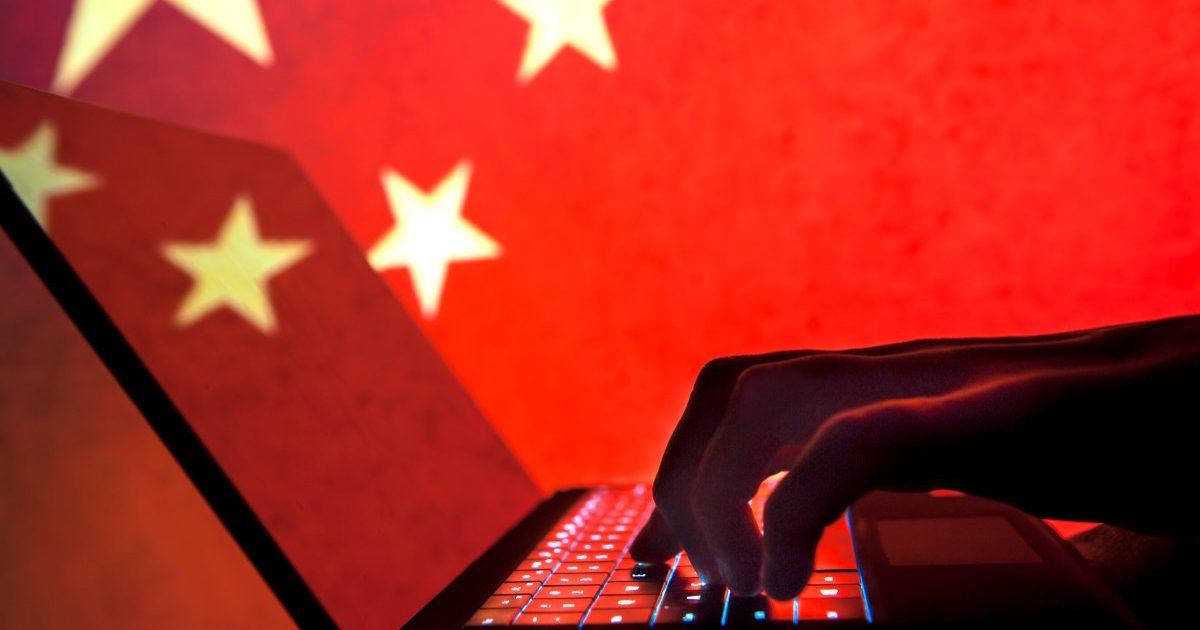
The cybersecurity landscape is witnessing a new chapter of incidents targeting the "middle link" in the technology supply chain, namely the companies that manage other organizations' systems. Investigations conducted by researchers at Microsoft have revealed that a hacking group linked to the Chinese state managed to penetrate the cloud backup service of ConnectWise, one of the largest providers of remote management and IT management solutions, and used that access to spy on thousands of client companies.
How Did the Breach Happen?
The core of the problem was not a vulnerability in the affected companies' own systems, but in the credentials stored with the provider. A backup service requires connection privileges to the client environment in order to pull and archive data. According to reports, the attackers seized the application credentials used to establish these links between ConnectWise and its enterprise clients.
With these keys in hand, the attackers were able to log into client environments hosted on Microsoft services as though they were authorized users, gaining access to emails, files, and internal documents. This type of access is difficult to detect, because the sign-in traffic appears in the logs as legitimate activity originating from a trusted application.
An Attack Speed Beyond Human Defense Capacity
The most striking aspect of this incident is not the breach itself, but its pace. Microsoft indicated that the attackers relied on AI agents to carry out the operation at scale, targeting approximately 2,250 organizations at a rate of around 3,000 login attempts per minute.
In practical terms, these figures mean that security teams had no adequate window for detection and response. The traditional incident response methodology assumes a time gap between the onset of suspicious activity and its expansion; in this case, however, the large-scale breach was complete before monitoring systems issued their alerts and human analysts reviewed them.
Open-Source Tools in the Service of Attack
This speed has been attributed to the use of an open-source AI framework known as ARTEX, originally designed to test the resilience of cyber defenses by subjecting them to automated stress. Notably, the same tool appeared in an earlier incident that targeted financial systems in South Korea, many of which suffered from weak security configurations and a lack of multi-factor authentication.
This revives the dual-use dilemma in security tooling: the very tool that helps defensive teams discover their weak points can be turned toward attack if it falls into malicious hands and is given sufficient computing resources.
The Company's Position and Measures Taken
ConnectWise announced that it had temporarily suspended access to the cloud backup system and that it is investigating the incident, while working to gradually restore the service. Despite its operational cost to clients, this decision is a logical step to sever the access channel before assessing the extent of the damage.
What Should Organizations Do?
The most important lesson is that an organization's trust in its provider is no substitute for oversight. The following are practical measures that should be reviewed immediately:
- Inventory all third-party applications that hold privileges over your email and file environments, and revoke any that no longer serve a genuine need.
- Reduce privileges to the minimum necessary; a backup service does not always need comprehensive read permissions.
- Rotate application secrets and connection keys periodically, and after any incident affecting one of your service providers.
- Enable multi-factor authentication on all accounts without exception, and monitor exemptions granted to applications.
- Configure automated alerts for abnormal patterns such as accelerated login attempts or access from new geographic regions.
- Rely on partially automated response, because countering an attack that moves at machine speed requires a defense that moves at the same speed.
Conclusion
This incident confirms that the software supply chain has become the most attractive target for attackers, because breaching a single provider opens the doors to thousands of clients. And with AI agents now entering the execution chain, the time standard in cybersecurity has shifted: it is no longer a matter of days or hours, but minutes. Organizations must build their security programs on the assumption that a provider may be compromised, and design boundaries and privileges in ways that limit the impact when it happens.
✦ بقلم فريق دروب أيديا
DROPIDEA
We hope this article has added real value to you. At DROPIDEA, we always strive to deliver high-quality content that helps you grow and evolve in the digital space. Follow us for more useful articles and guides.
Tags
Admin
DROPIDEA
Latest Articles

Short Seller Warned About Nvidia CEO's Ties Six Months Before the Scandal

Anthropic Pushes Ahead with IPO Plans Despite Market Turbulence

US Intelligence Memo: Alleged Recruitment Effort Targeting Nvidia's CEO

Independent Investigation at Nvidia into Its CEO's Relationship