TerraPower Bets on Nuclear Energy Storage to Power AI Data Centers
 By Admin
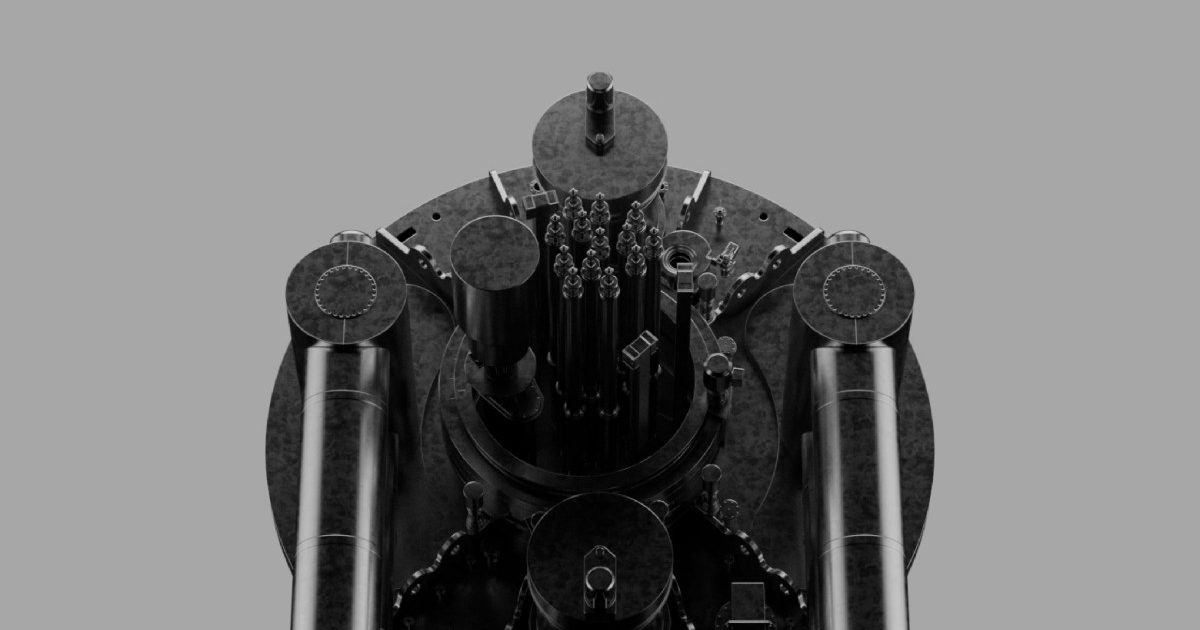
As demand surges for the electrical power needed to run AI data centers, nuclear startups have emerged as a promising solution offering round-the-clock electricity. Among these companies, TerraPower, founded by Bill Gates, is working to cement its presence in this field, following reports of its intention to announce a new data center project this year.
A New Project in the Works
The company has not yet revealed the identity of the client who will benefit from this project, but it had previously announced earlier this year an agreement with Meta to purchase eight power plants of the Natrium model it is developing. Construction of the data center project is expected to begin in 2027, making it the company's second power plant, after its first plant currently being built in the U.S. state of Wyoming.
Not All Reactors Are Suited for the Task
The truth is that not all nuclear reactors are suitable for powering data centers, as the fundamental issue lies in the nature of their operation. Nuclear reactors, including TerraPower's reactors, operate most efficiently when running at full capacity. These reactors boast the highest capacity factor among electricity generation plants, producing maximum power about 92.5% of the time in the United States.
But this advantage carries a limitation within it; existing reactors are relatively slow at increasing or decreasing their output, as their ability to change output does not exceed about 5% of their total capacity per minute. As for the modern small modular reactors that many startups are seeking to develop, they enjoy a faster response of about 10% per minute, yet operating them at reduced capacity remains an unprofitable option.
The Challenge of High Costs
This principle applies to all power plants, but it is more pressing in the case of nuclear power, which tops the list of highest capital costs among generation technologies. Startups are betting that mass manufacturing of small modular reactors will lower these costs, but this has not yet been proven in practice, and even if it succeeds, reaping its benefits may take a decade or more. That is why operating plants at maximum capacity as much as possible makes sense to cover the enormous investments.
Here lies the challenge facing data centers, especially those relying on direct power sources. Their electrical loads may rise and fall very quickly, particularly during AI model training or responding to requests, as the needs of graphics processing units fluctuate suddenly. These fluctuations have reached such intensity that natural gas turbines have failed under the pressure, requiring the use of massive battery arrays that further increase costs.
TerraPower's Secret Weapon: Heat Storage
To overcome these obstacles, TerraPower designed its 345-megawatt molten salt-cooled reactor in an innovative way. One of the most important design considerations was ensuring the reactor's ability to keep pace with intermittent power sources such as wind and solar energy, which requires increasing and decreasing output quickly. Although the company originally designed its plans with renewable energy sources in mind, data centers share the same volatility characteristic with these sources.
The heart of the innovation lies in the fact that the company does not increase or decrease the reactor's power for rapid response, but rather keeps it running continuously, with excess heat stored in a huge tank of molten sodium. When demand for power suddenly rises, the plant draws on this tank to generate additional steam that drives the turbines, allowing the expensive equipment to continue operating even during periods of low demand.
A Flexible Model That Provides a Competitive Edge
This approach combines the best of what nuclear power offers in terms of a high capacity factor, with energy storage technology that allows the company to deal flexibly with electrical grids that rely heavily on renewable sources, or with data centers directly. The most notable advantages of this model can be summarized as follows:
- Operating the reactor at full capacity continuously to maximize return on investment.
- The ability to meet sudden spikes in demand through thermal energy storage.
- Compatibility with grids rich in intermittent renewable energy sources.
- Reducing the need for expensive battery arrays.
With this flexible strategy, TerraPower appears to be in a position that gives it an edge in the accelerating race to provide the power needed to run AI data centers, at a time when demand for reliable and sustainable energy sources is simultaneously increasing.
✦ بقلم فريق دروب أيديا
DROPIDEA
We hope this article has added real value to you. At DROPIDEA, we always strive to deliver high-quality content that helps you grow and evolve in the digital space. Follow us for more useful articles and guides.
Tags
Admin
DROPIDEA
Latest Articles
Why AI Won't Cure Cancer Anytime Soon

Amazon Makes Its AI Assistant Alexa+ Free on Fire TV Devices

Etched Doubles Its Valuation to $21 Billion in a Single Month

OpenAI Tightens Security Measures After a Breach Incident During Model Training