Perceptron: Former Meta Scientists Bring AI Vision to Factories
 By Admin
Despite the profound transformation AI has brought to our lives, until recently it remained confined to the digital realm: texts, images, and conversations taking place behind screens. But a new wave of startups is now seeking to bring this technology out of the virtual space and into the real world, where machines move and deal with complex physical environments. Among the most prominent of these companies is Perceptron, founded by two former researchers at Meta's Fundamental AI Research lab.
From Meta's Labs to the Factory Floor
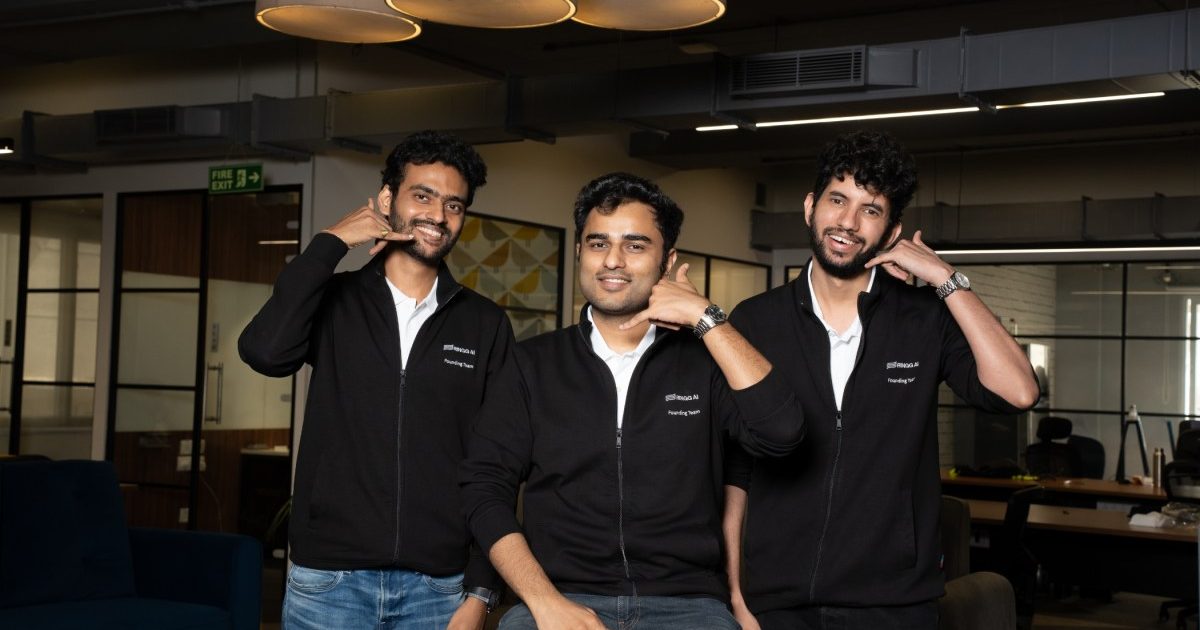
Perceptron was founded in November 2024 by Armen Aghajanyan and Akshat Shrivastava, who previously worked on Meta's FAIR research team. The company's work focuses on developing advanced vision models aimed at enabling machines to interact more efficiently with their physical surroundings, rather than merely processing digital data.
The founders believe that physical AI today suffers from a real dilemma: either general-purpose foundation models that require massive cloud computing resources for each running instance, or narrow specialized models that excel at only one task without combining perception and control together. The company aspires to offer an alternative that balances the two.
The "Isaac 0.5" Model and Its Function
This week the company launched its latest model, called "Isaac 0.5," designed to give machines the ability to "perceive, reason, and act" within industrial environments. This software can help vision-based robots navigate complex environments such as warehouses and production lines, and it also allows companies to extract precise visual information from the video footage those robots record.
Notably, the model was released as "open-weight," meaning its parameters and training materials are available for inspection and review by any interested party, which enhances transparency and opens the door to community-driven improvements.
Flexibility Instead of Narrow Specialization
The founders emphasize that their tool differs from existing models in being multipurpose—that is, not designed for a single repetitive task, but rather capable of adapting to the environment or situation in which it is placed. To illustrate the idea, Shrivastava offered the example of a robot tasked with sorting packages, noting that this seemingly simple task involves multiple steps, including:
- Reading the label written on the package to determine its destination.
- Conducting a spatial analysis to understand the positions of surrounding boxes.
- Deciding which box to pick up first.
- Sequencing the order of lifting boxes when multiple items are involved.
Perceptron's technology aims to accompany the robot flexibly through each step of this process. It's true that the market already includes software that performs most of these tasks, but few have been designed to carry them out in a flexible manner that adapts to changing conditions.
Massive Training Across Millions of Hours
Models like "Isaac 0.5" acquire their operational skills by ingesting vast amounts of video data. The company states that it fed its model one million hours of public video to teach the algorithm to recognize different environments, scenes, and scenarios. It also relied heavily on what is known as "first-person perspective video," typically recorded via a wearable camera from the viewpoint of a person performing a physical task, in addition to clips used to teach systems movements by recording repetitive human actions.
While the company declined to reveal the sources of its training data, Shrivastava explained that it internally built datasets amounting to "petabytes" spanning multiple media—from images, texts, and video to robot motion trajectories.
Broad Sectors Open to Application
The potential benefit of software that helps robots operate efficiently within warehouses appears enormous, and Perceptron believes it is well positioned to lead this wave of automation. The company is prepared to market its software to a diverse range of distributors, allowing the "intelligence layer" it provides to be integrated into numerous industries, including:
- Manufacturing.
- Logistics and warehouse management.
- Security and surveillance.
- Mobility and movement.
- Media and entertainment.
Aghajanyan sums up the company's ambition by saying that what it offers has no real equivalent in the market, expressing great enthusiasm for what lies ahead for this technology. If the founders' predictions hold true, flexible vision models may represent a pivotal step toward a new generation of industrial automation that combines perception and action at once.
✦ بقلم فريق دروب أيديا
DROPIDEA
We hope this article has added real value to you. At DROPIDEA, we always strive to deliver high-quality content that helps you grow and evolve in the digital space. Follow us for more useful articles and guides.
Tags
Admin
DROPIDEA
Latest Articles

Bill Gates Proposes a «Robot Tax» and Jobs «Reserved for Humans» to Address the Risks of Artificial Intelligence
Radar: A Search Engine That Turns Podcasts Into AI-Readable Data
Departure of OpenAI's Data Centers Chief Deepens Wave of Executive Resignations
Robotics Startup Generalist Reaches $3 Billion Valuation