OpenAI's Smart Agents: Is Everyone About to Hand Over the Keys to Their Digital Lives?
 By Admin
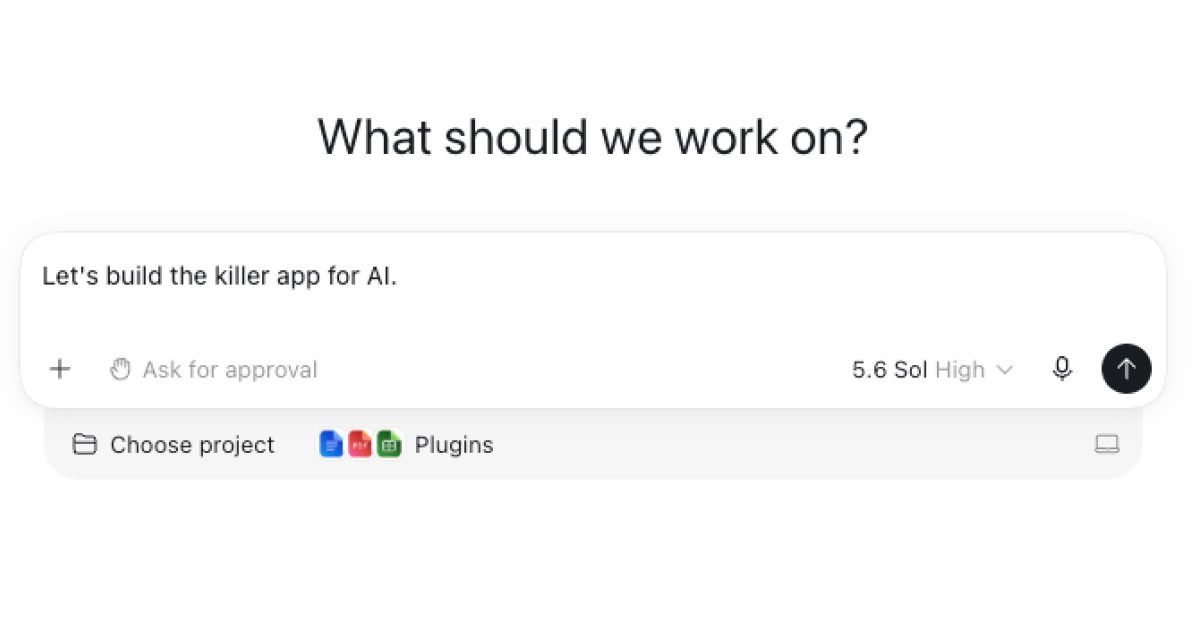
The rapid expansion of AI tools raises a fundamental question: how far are you willing to go in granting a large language model control over your digital life? Getting the most value out of these models means handing over the keys — access to your email, your conversations, and your everyday apps. To some, that may feel like a major concession, but OpenAI is betting that this is the only path forward.
OpenAI's Biggest Bet: ChatGPT Work
The company recently launched ChatGPT Work, available in its lowest subscription tier priced at $20 per month. The core idea is to enable office workers to run AI "agents" by connecting language models to the digital workflows that accountants, investors, doctors, and everyone who spends their day at a computer rely on.
One of the company's engineers explains that he granted the app access to his email, his account on messaging platforms, his phone, and apps like Notion and Figma, arguing that testing the future requires taking this risk despite the possibility of unintended information leaks.
From Answering to Autonomous Execution
ChatGPT Work represents a modified version of the company's Codex coding tool, but geared toward non-engineers. The goal is for everyone to have the same capability developers enjoy: a tool that doesn't just answer questions, but completes multi-step projects with full autonomy.
Company officials emphasize that this shift embodies OpenAI's core mission of "bringing everyone along" toward these advanced capabilities, rather than confining them to programmers.
Why Does This Matter Commercially?
Agents that operate for longer periods consume a larger volume of computational tokens, making them more profitable for the company on a per-user basis. Reaching new professions is crucial for the entire AI industry. Although the programming field has proven its financial viability, it remains a small segment of the professional work these tools must support in order to justify the enormous investments in training and computing.
Meanwhile, sector-specialized companies are competing for the same customers, such as:
- Harvey, focused on the legal sector.
- Clay, specialized in sales.
These companies take a model-agnostic approach, meaning they use whichever model delivers the best performance at any given time. Analysts believe the biggest challenge facing OpenAI and its competitors lies in quickly securing the complementary assets needed to scale AI in the market — otherwise, value will shift to other players.
The Adoption Gap: Inside vs. Outside
A company-backed study revealed a striking paradox last June:
- 98% of OpenAI employees use the Codex tool.
- Only 17% of enterprise subscribers use it.
- Less than 1% of individual subscribers rely on the tool.
This enormous gap between near-total adoption inside the company and minimal adoption outside it represents both the challenge and the opportunity. The company is betting that increased value and utility will naturally push users to accept paying a subscription for what they receive.
The "Harness" That Turns a Model into an Agent
To understand this disparity, it's essential to know what engineers are building. Every language model needs what's known as a "harness" — the software surrounding the model that determines what information it sees, which tools it can use, and how it presents its answers. To turn it into an agent, this harness provides it with tools and instructions to perform long-running tasks.
For developers, the command-line interface was enough to change the way software is built and deployed. But most people don't use these complex interfaces — just as Windows replaced DOS in the past. The upcoming product must contend with the "messy reality" of a user's life, their tools, and websites built decades ago that have never been updated.
Between Expert Needs and Mass Adoption
Just as tools like Codex sparked the phenomenon of "vibe coding" by freeing the user from actually writing code and letting them simply describe what they want, OpenAI now aims to make advanced functions as easy as typing a text command. Its engineers stress that without these products, experts will know how to achieve the same results, but a billion users will never get there. This balance between what professional users need and what mass adoption requires is the focus of ongoing internal debates within the company.
✦ بقلم فريق دروب أيديا
DROPIDEA
We hope this article has added real value to you. At DROPIDEA, we always strive to deliver high-quality content that helps you grow and evolve in the digital space. Follow us for more useful articles and guides.
Tags
Admin
DROPIDEA
Latest Articles

Self-Driving Taxis Invade Cities.. and the Regulatory Battle Heats Up

General Intuition Attracts Investment at a $6 Billion Valuation and Pivots Toward Robotics

Everything We Know About GTA VI: Delays, Leaks, and Record Pre-Orders

Linkdaze: A Smart Calendar to Manage an Entire Household