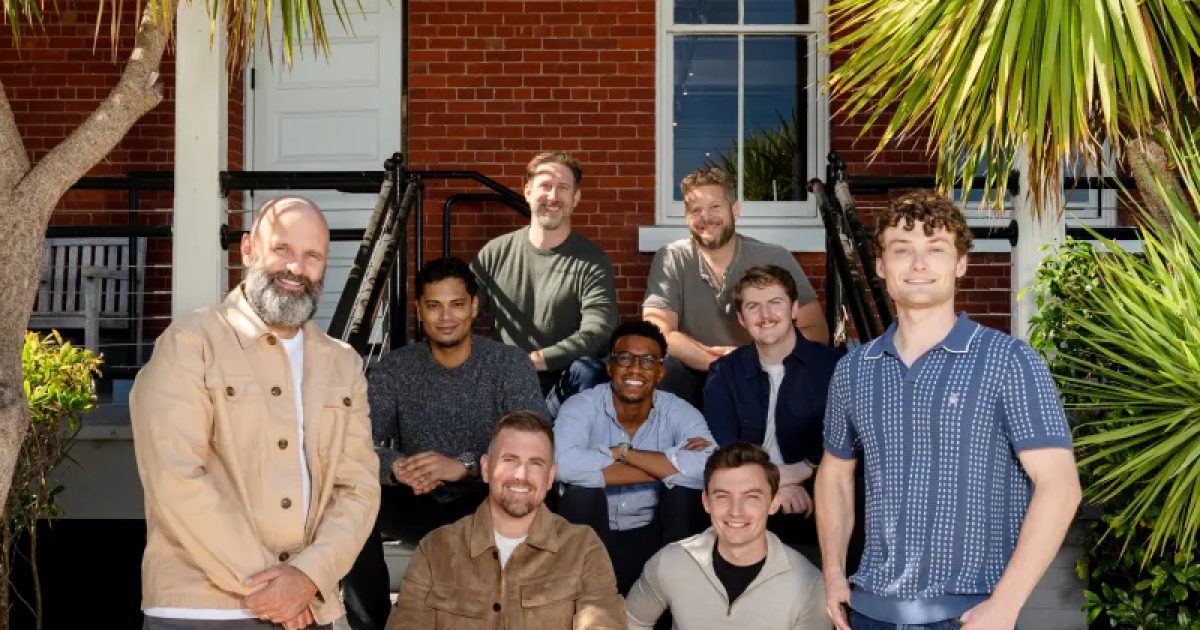
At a time when global computing capacity is under mounting pressure from unprecedented demand for artificial intelligence, Nvidia has made a notable move: backing a startup that specializes in software helping organizations run AI models more efficiently and, in some cases, with fewer GPUs. The investment came as part of a $14 million funding round for the Indian company Simplismart, which is headquartered in Bengaluru.
Details of the Funding Round
Dallas Venture Capital led the Series B round, with participation from Nvidia, Accel, Shastra VC, and Micromax. All the capital in this round is fresh primary funding entering the company's treasury, lifting the valuation of the four-year-old company to roughly $100 million post-money.
The announcement follows Indian press reports pointing to negotiations to raise between $40 million and $50 million at a valuation ranging from $300 million to $400 million — something co-founder and CEO Amritanshu Jain declined to comment on, stressing that the current round has closed and will not be extended.
What Problem Is the Company Trying to Solve?
Companies today spend enormous sums on GPUs to power AI applications, but the real challenge begins after the hardware is purchased: how do you run models reliably and economically at scale? Every workload imposes different trade-offs between speed, cost, and performance, and actual deployment often requires complex technical adjustments that teams find difficult to manage manually.
Jain sums up the company's philosophy bluntly: nobody actually needs "the fastest" or "the cheapest" inference in absolute terms — they need to run models at a speed and cost that make sense for the specific application being served.
How Does the Software Layer Work?
Simplismart's platform sits between the models and the computing infrastructure they run on, automatically tuning how a model is deployed and managed to match the customer's requirements. The factors it optimizes for include:
- Model response speed (latency).
- The number of requests that can be processed simultaneously.
- The amount of compute capacity consumed per operation.
In addition, the platform allows models to be deployed on its own infrastructure or inside the customer's cloud or on-premises environment, and it provides tools for fine-tuning models, automatically scaling resources as demand shifts, and monitoring performance. Cloud service providers can also use the software to build their own inference services on top of their GPU infrastructure.
Results and Customers
The company says it helped video generation platform InVideo cut its GPU operating costs by 56%. Its customers include AI video companies such as HeyGen and Higgsfield, enterprise AI solutions provider Ema, and Indian cloud provider Yotta, which relies on its technology to run a serverless inference service within its platform.
According to Jain, annual recurring revenue has grown 14-fold over six months to reach an eight-figure number, with the caveat that the figure is based on actual customer usage rather than recurring contracts, and excludes revenue passed through to infrastructure providers. Although most customers are in India, more than half of revenue comes from the United States.
The Paradox of Nvidia's Investment
At first glance it seems odd for the largest supplier of AI chips to back software that could reduce the number of GPUs required. But the commercial logic is clear: improving inference efficiency makes Nvidia's hardware more economically attractive and encourages broader adoption of AI applications — which ultimately means greater, not smaller, demand. Alongside the investment, Nvidia is working on technical integrations with the company, including an integration with its Dynamo inference software involving engineers from both sides, and it has also helped introduce the company to potential customers and partners.
A Crowded Market and a Competitive Position
Simplismart operates in a fiercely competitive market that includes Nvidia itself, cloud computing giants such as Amazon Web Services, Google Cloud, and Microsoft Azure, along with a growing number of startups. Jain believes their edge shows up with customers facing strict service-level agreements and tight constraints on total cost of ownership, since the platform seeks to strike a custom balance for each case rather than offering off-the-shelf options.
The company was founded in 2022 by Amritanshu Jain, a former Oracle engineer, and Devansh Ghatak, a former Google engineer, who met while studying at BITS Pilani. It now employs 58 people and plans to use the new funding to expand in the US market, grow the team, and further develop its inference software.
✦ بقلم فريق دروب أيديا
DROPIDEA
We hope this article has added real value to you. At DROPIDEA, we always strive to deliver high-quality content that helps you grow and evolve in the digital space. Follow us for more useful articles and guides.
Tags
Admin
DROPIDEA
Latest Articles

Jassy: AWS Heading Toward $1 Trillion in Revenue — But Spending Comes First

A Religious Exemption from Using AI — Without Believing in God
Microsoft Rakes in $10 Billion from Its OpenAI Relationship in a Single Quarter

Google Expands AI Search Ads Globally as Traditional Ad Growth Slows