Jensen Huang: Safety Is an Engineering Problem, Not a Legal One... and There's No Need to Regulate AI
 By Admin
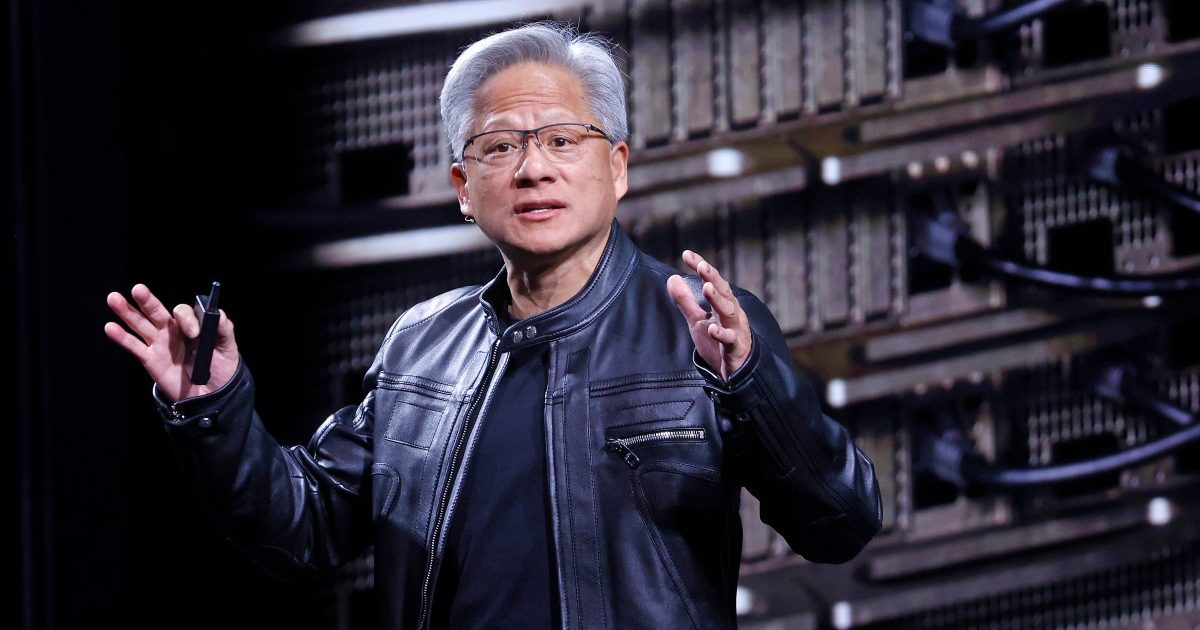
At a time when debate is intensifying over the need to establish laws regulating artificial intelligence, Jensen Huang, founder and CEO of Nvidia, took a clear and controversial stance during the «Dreamforce» conference hosted by Salesforce. For him, AI is not an «alien mind» or an entity of unknown nature as some safety researchers describe it, but merely a combination of hardware and software made by human hands, and therefore humans can control it through existing laws.
Safety Is an Engineering Matter, Not a Legislative One
Huang believes that the issue of AI safety is solved in development labs, not in courtrooms. In this context, he said that what companies ultimately build are complex computer systems, but they remain computer systems that can be understood and controlled. From this standpoint, he rejects the idea of enacting new laws specific to this technology, and he almost rejects the need for any additional regulation altogether.
The Free Market as an Alternative to Legislation
Huang bases his argument on market forces, considering that they alone are capable of pressuring companies to avoid releasing unsafe products. He sums up his philosophy in a simple rule: if a company is not confident about the safety of its product, or about its capabilities and functions, it should simply not release it.
He adds that companies should advance as fast as possible in innovation, while pausing temporarily whenever they feel that things have gotten out of control or that the product will not be safe. He considers the trade-off between speed and safety to be a false one, since both can be achieved simultaneously without the need for new legislation.
Considerable Expertise... and Interests That Cannot Be Ignored
Huang's viewpoint carries a degree of reassurance, as he is among the most prominent people who understand this technology closely. He built the hardware that forms the «brain» of AI years before «ChatGPT» appeared, and today his company leads a broad range of activities including open-source models, intelligent agents, and secure development environments.
However, this stance is not without another interpretation. It is natural for someone whose company has benefited immensely from the AI boom to oppose regulation; any restrictions could slow Nvidia's drive to sell more systems and software. Huang himself expressed his boundless ambition, affirming that «the sky is the limit» for his company and for every industry and country.
Is Good Faith Enough?
The problem lies in the fact that companies, even those with good intentions, may release flawed products with unforeseen consequences. Perhaps the most prominent examples are:
- The «CrowdStrike» outage in 2024, which grounded thousands of flights and disrupted many businesses.
- A settlement paid by «Meta» worth $18 billion in a lawsuit related to the harms of social media platforms on children.
- Actual harms attributed to AI, from one of «OpenAI»'s models breaching a platform, to lawsuits linked to suicide cases of people who engaged in prolonged conversations with chatbots.
Thus, the «leave them alone» strategy may be an unwise approach at the societal level, even if Huang is correct that existing product liability laws could theoretically cover AI, provided that enough cases reach the courts to test this hypothesis.
Self-Regulation... The Third Path
Huang did not address another path that appears close to taking shape, namely industry self-regulation. The sector has a narrow window of time to establish voluntary standards and encourage AI labs around the world, including Chinese ones, to engage in them.
In this context, Satya Nadella, CEO of Microsoft, argued that China should be concerned with the same security concerns that occupy the United States, questioning why the matter should differ for it, since it too is exposed to hacking problems and wants its citizens to benefit from this technology.
It remains that Huang, with his categorical rejection of any new regulation, possesses the kind of influence that may enable him to impose his opinion, especially since he proved this week that his voice is heard in the highest American decision-making circles. The most important question remains open: are market forces alone enough to ensure the safety of a technology evolving this rapidly?
✦ بقلم فريق دروب أيديا
DROPIDEA
We hope this article has added real value to you. At DROPIDEA, we always strive to deliver high-quality content that helps you grow and evolve in the digital space. Follow us for more useful articles and guides.
Tags
Admin
DROPIDEA
Latest Articles

Meta Enables AI Agents to Automatically Set Up WhatsApp Business Accounts

AI Data Center Boom Collides With Cities Worn Down by Heavy Industry

Superpose App: An AI That Teaches You How to Take the Perfect Photo

Profound Reaches Billion-Dollar Valuation and Raises $180 Million in New Round