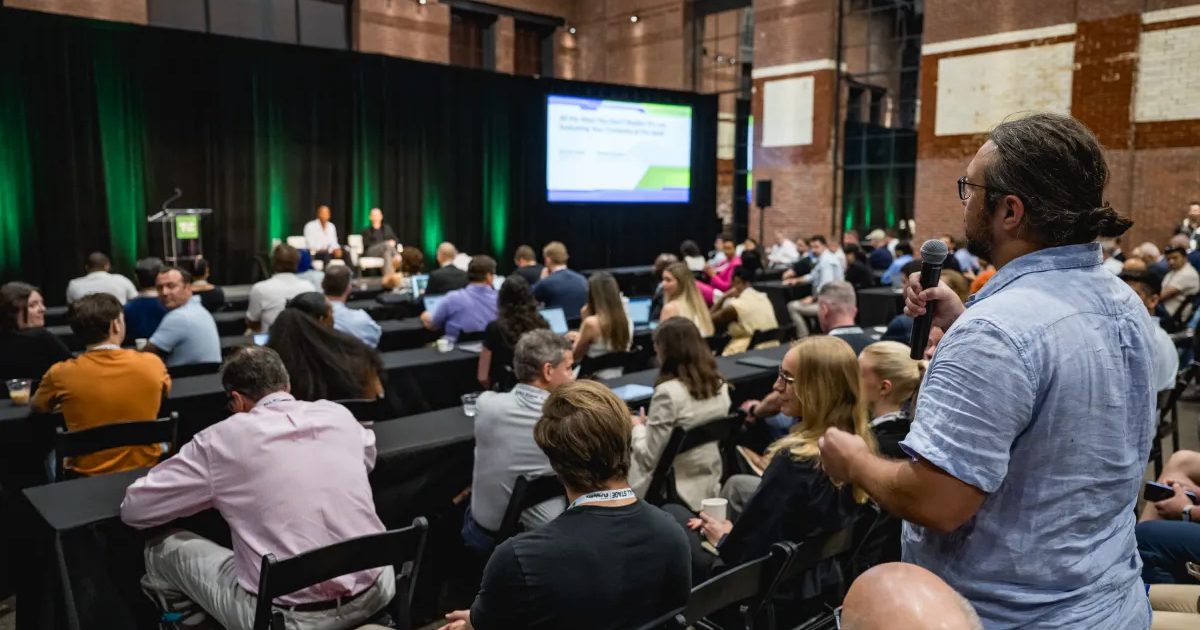
In the startup world, founders are asked to make make-or-break decisions before they have all the information. When do you start scaling? How can you be certain your product has truly found its market? What does it take to win over a major enterprise customer? And how do you build a team capable of executing the vision? These questions form the heart of the program that TechCrunch Founder Summit 2026 is preparing to tackle on November 4 at the SoWa Power Station in Boston.
An Event That Goes Beyond Funding and AI
The event is organized by TechCrunch in partnership with Fidelity Private Shares and runs for a full day. What sets this year's agenda apart is that it doesn't stop at the two most talked-about topics in tech circles — raising capital and artificial intelligence — but expands to cover the day-to-day operational challenges: acquiring your first customers, assembling teams, crafting the pitch deck, developing the founder's leadership skills, and growing a company both inside and outside traditional tech hubs.
A Lesson from Toast: A Company That Keeps Reinventing Itself
Steve Fredette, President and Co-Founder of Toast, takes the Impact Stage to discuss "building a company that keeps reinventing itself." Toast's story makes for a valuable case study: spotting a real customer problem, then achieving product-market fit, then growing from a Boston startup into a publicly listed company.
But the most important takeaway from his session is that reaching scale isn't the finish line. Companies must continuously evolve as customer expectations, technologies, and market conditions shift — without losing touch with the original need they were built to address.
Product-Market Fit Before Scaling
Kent Bennett, Partner at Bessemer Venture Partners, leads a session devoted to a critical question: are your customers actually telling you that you're ready to grow? The session invites founders to take a more critical read of the real signals before adding headcount, increasing spend, or accelerating marketing and sales efforts — a counterpoint to the culture of excessive speed that pervades the startup environment.
This idea is complemented by a session from Rudina Seseri, Founder and Managing Partner at Glasswing Ventures, titled "When to Scale and When to Hit the Brakes." Founders are constantly balancing growth against financial discipline, and knowing when to pause can be just as important as knowing when to push.
Companies Built on AI from Day One
Lior Div, CEO and Co-Founder of 7AI, addresses a fundamental distinction that is often overlooked: adding AI to an existing process is entirely different from building a company around the technology from the start. The session encourages founders to think of AI not as a product feature, but as a force that shapes the entire company's technical architecture and operating model.
Boston as an Alternative to Silicon Valley
Chase Garbarino, CEO and Co-Founder of HqO, presents "The Boston Founder's Playbook," in which he discusses building and growing a company from within the city. Together with Toast's story, a clear local thread emerges in this year's program: it is possible to build ambitious companies in Boston without replicating the Silicon Valley model, with a distinct perspective on talent, customers, capital, and the tech community across New England and the East Coast.
The Investor Pitch: Aiming for the Next Conversation, Not the Close
Dave Balter, Partner at True Ventures and CEO of Edisyl, argues that a pitch isn't supposed to close the deal — it's supposed to make the other side want a second conversation. It's an important distinction between knowing your company's details and having the skill to communicate its story.
In the afternoon, these ideas are put into practice during the "So You Think You Can Pitch?" session, where founders present their stories live on the Build Stage before a panel of investors including Chirag Shah of Define Ventures and Simran Suri of Maveron. This is among the program's most interactive segments, as it reveals investors' real-time reactions to pitches that land and those that leave questions hanging.
Other Topics on the Agenda
- Hunter Worland of NEA: why distribution channels may become startups' next competitive advantage.
- Vineet Edupuganti, Co-Founder and CEO of Cogent Security: how to build high-performing teams.
- Tina Tosukhowong of TDK Ventures: the hidden signals that reveal category-leading companies.
- Kristen Craft of Fidelity Private Shares: current fundraising trends.
- Evan Schneidman: building relationships with enterprise customers.
Takeaway
The Founder Summit 2026 agenda is built around a clear message: it isn't just about the next funding round or catching the latest wave in AI — it's about building a company that can last. The event remains a practical opportunity for founders to hear real experiences from both sides of the investment table.
✦ بقلم فريق دروب أيديا
DROPIDEA
We hope this article has added real value to you. At DROPIDEA, we always strive to deliver high-quality content that helps you grow and evolve in the digital space. Follow us for more useful articles and guides.
Tags
Admin
DROPIDEA
Latest Articles
Short Seller Warned About Nvidia CEO's Ties Six Months Before the Scandal
Anthropic Pushes Ahead with IPO Plans Despite Market Turbulence
US Intelligence Memo: Alleged Recruitment Effort Targeting Nvidia's CEO
Independent Investigation at Nvidia into Its CEO's Relationship