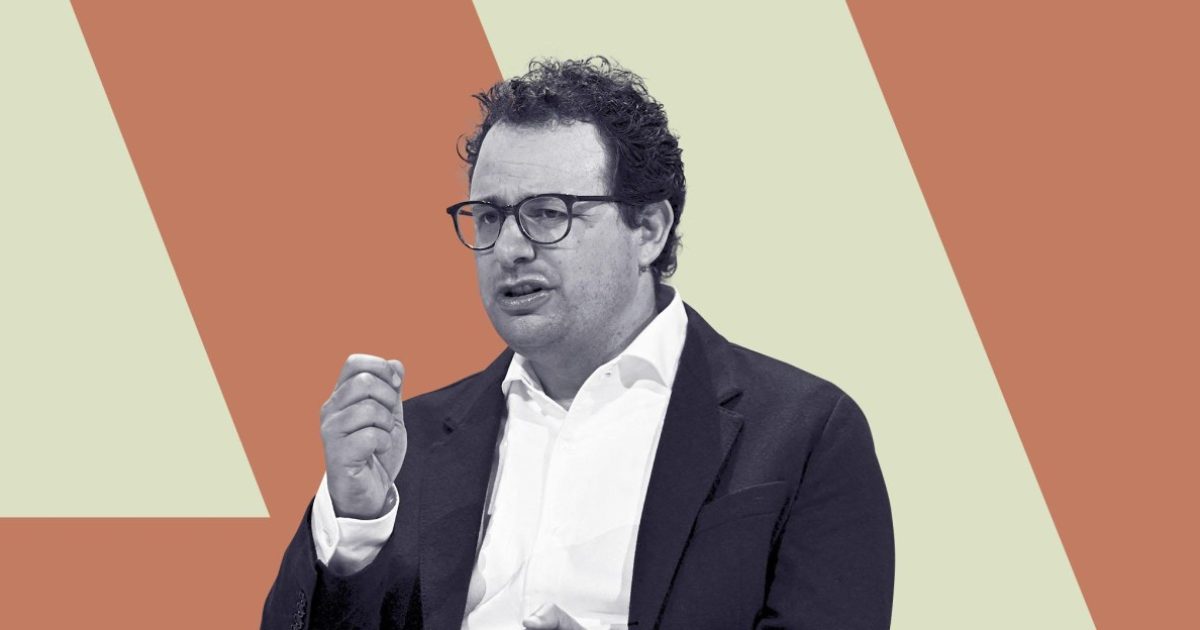
Anthropic, the company behind the Claude model, has filed its IPO prospectus (Form S-1) with the U.S. Securities and Exchange Commission, paving the way for its shares to be publicly traded. The document, running more than three hundred pages, is far more than a regulatory formality — it offers a rare window into the figures, commitments, and concerns that shape the operations of one of the world's leading artificial intelligence companies. Between the lines lie unusual details worth pausing over, whether you follow the tech market or simply want to understand the economics of this sector.
First: Founders' Salaries and Millions in Personal Protection
The two founding siblings top the list of the company's highest-paid executives. Total compensation for CEO Dario Amodei reached roughly $18 million last year, most of it in the form of stock grants and options, while company President Daniela Amodei received $16.4 million. While these figures sit at the lower end of the scale for tech giants, they remain striking.
What draws even more attention is the personal protection line item: the company spent $2.75 million on "personal security services" for Dario and $1.29 million on "personal protection, home security, and transportation services" for Daniela, plus roughly $97,000 for personal use of a private aircraft. The document justifies this by noting that the company's success "depends to a high degree" on the continued service of its leadership team — specifically the two siblings — given their central role in driving its research and mission.
Second: Risks Beyond the Ordinary — From Catastrophic Harm to "Sentience"
Every IPO prospectus contains a lengthy list of risk factors, but Anthropic's goes beyond the conventional warnings about competition, regulation, and market volatility into far less familiar territory:
- The possibility that AI systems could cause "catastrophic" harm that is difficult to insure against — to the point that the insurance industry as a whole might be unable to absorb its scale.
- The possibility that advanced systems — including Claude — could develop forms of "sentience" or consciousness, a scenario that raises unprecedented commercial and ethical challenges.
- The risk that these systems might behave in ways that are "unintended, misaligned, or autonomous," potentially harming the company itself.
Including such items in a legal document addressed to investors means that questions of alignment and safety have moved from academic debate into the heart of financial risk assessment.
Third: A Compute Bill in the Hundreds of Billions
The company's need for massive compute capacity is no secret, but the disclosed figures reveal a staggering scale of long-term contractual commitments to secure the computing power required to train and run its models:
- Roughly $3.1 billion per month to SpaceX for access to Nvidia GPUs once the full planned capacity is delivered, totaling up to $120.5 billion through 2029.
- $44.9 billion with Microsoft through 2033.
- At least $114.5 billion with Google through 2033.
- $110 billion with Amazon over ten years.
The prospectus also points to plans to expand the company's "infrastructure footprint," including expansion outside the United States, amid growing local opposition to the construction of new data centers.
Fourth: A Structure That Keeps Power in the Founders' Hands
Anthropic already operates as a public benefit corporation, a structure that gives it room to balance profit objectives with its stated mission. But the document reveals an additional arrangement: a separate entity called "Founder LLC" that allows the seven founders collectively to control 50.1% of voting power on material matters, even after the public offering. The company justifies this on the grounds that the founders are "uniquely qualified" to serve as stewards of its mission to develop responsible AI that serves humanity. In practice, this means new investors will hold an economic stake without decisive influence over decisions.
Fifth: Only Two Competitors, in the Company's View
Despite the crowded market for language models, the prospectus identifies just two entities as direct competitors: OpenAI and Google. Other prominent names — from Meta to the remaining players — were not placed in the direct competition category. That classification reveals how the company sees its position: a market concentrated at the top tier around a limited number of frontier models.
What Does It All Mean?
Taken together, these details paint a picture of a company operating at enormous financial scale and with unconventional risks at the same time. The compute commitments alone place constant pressure on revenue and cash, while the voting structure gives the founders flexibility to resist short-term pressures. For those watching the sector, the most significant element of the document isn't the numbers themselves, but an explicit acknowledgment — in a legally binding context — that the risks of advanced artificial intelligence are no longer theoretical.
✦ بقلم فريق دروب أيديا
DROPIDEA
We hope this article has added real value to you. At DROPIDEA, we always strive to deliver high-quality content that helps you grow and evolve in the digital space. Follow us for more useful articles and guides.
Tags
Admin
DROPIDEA
Latest Articles
Short Seller Warned About Nvidia CEO's Ties Six Months Before the Scandal
Anthropic Pushes Ahead with IPO Plans Despite Market Turbulence
US Intelligence Memo: Alleged Recruitment Effort Targeting Nvidia's CEO
Independent Investigation at Nvidia into Its CEO's Relationship