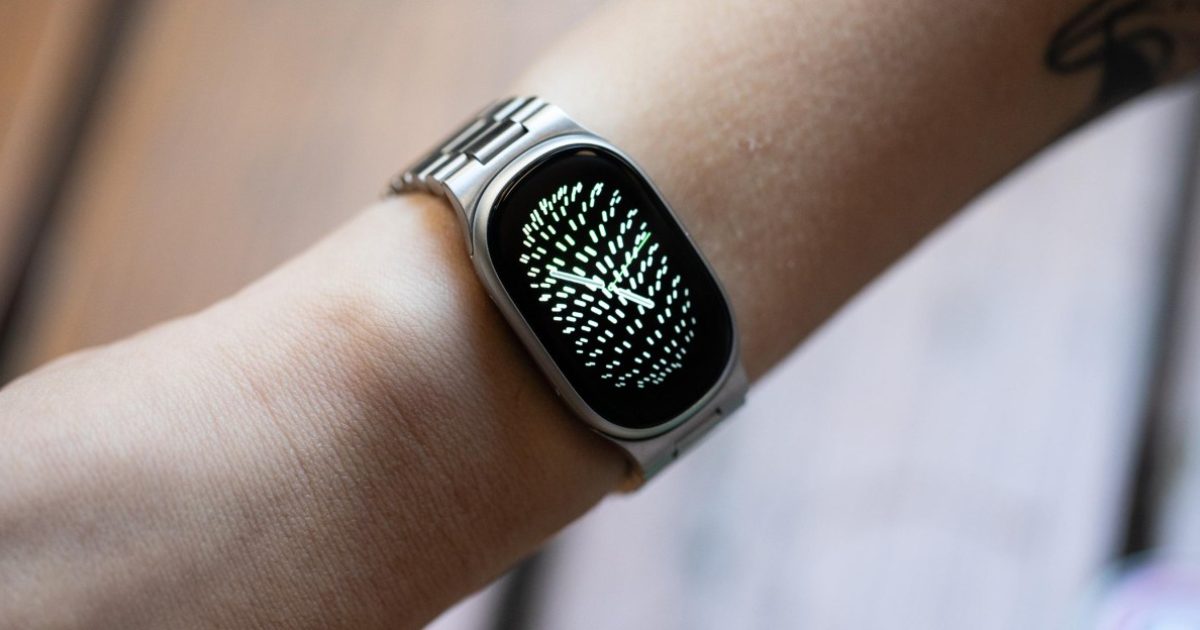
After years of trying to turn fitness bands into miniature smartwatches, Google — through its Fitbit brand — appears to be returning to square one. The new Fitbit Edge, launching at $179.99, isn't an attempt to reinvent the category so much as an elegant reworking of what the Charge, Alta, and Inspire bands were doing between 2014 and 2020 — only this time with a layer of artificial intelligence in the software.
Softer Design and an Improved Wearing Experience
What sets the Edge apart most from its predecessor, the Charge 6, is the shift from a sharp, boxy form to a fully rounded body, giving it more the presence of an accessory than an athletic tool. The band is swappable via a button-release system that's simpler than previous designs, and several options are available:
- A metal link bracelet for $150 — roughly the price of the device itself.
- A magnetic band for $60 that mimics the look of genuine leather despite being made of silicone.
- The standard rubber band included with the device.
On the interface side, the widgets borrow heavily from the "Material 3 Expressive" identity that debuted in the Pixel Watch update. It's worth clarifying, however, that the Edge runs Fitbit's own operating system rather than Wear OS. Some of the watch faces are genuinely elegant, while others only highlight the thick black bezels surrounding the display — a long-standing issue that still hasn't been resolved.
Battery Life Depends on Your Choices
The company claims a full week of use per charge, and that figure holds up under typical usage. But enabling the always-on display option slashes that span dramatically to about a day and a half, presenting users with a clear trade-off between visual convenience and independence from the charger.
What You Gain… and What You Lose
Functionally, the Edge takes a step beyond the Fitbit Air by adding built-in GPS, meaning you can track walks and runs without carrying your phone. It also supports alarms, notification display, and music playback controls, along with an altimeter.
On the other hand, the device drops features that were present in the Charge series:
- No speaker and no microphone, meaning no ability to take calls from your wrist.
- No support for contactless payments.
According to statements from the product lead at Google Health, fewer than 1% of Charge 6 owners used the payment feature, so resources were instead channeled toward a slimmer design and longer battery life. You could view that as a step backward, but it also clearly redefines the device's identity: this is a fitness tracker, not a smartwatch in disguise.
The Google Health App and the AI Coach
The biggest change isn't in the hardware but in the software. The traditional Fitbit app has become part of Google Health, with an AI coach available via an annual subscription (three months free with purchase, then roughly $10 per month).
One of the most notable improvements is automatic activity tracking. In hands-on testing during a 2.4-mile run that included a walking warm-up and cool-down, the device pinpointed the transition from walking to running with impressive accuracy and estimated the distance at 2.55 miles. It fell somewhat short on pace, however, logging 10:49 per mile versus 11:38 on the reference measurement. The takeaway: the feature is useful for "logging the accomplishment" if you forget to start a workout manually — not as a source of professional-grade measurement.
As for the AI coach, it's rather talkative and requires weekly follow-up to get real value from it. It's also noticeable that the new app is more cluttered, and it can be harder to find information that was previously straightforward, such as your past workout history. Even so, it's a solid option for beginners looking for a personalized plan that's easy to stick with. A practical tip: be careful about what you share with the coach early on, because it builds its recommendations on that information and keeps bringing it up for a long while afterward.
Health Features Still in the Pipeline
Edge users are expected to receive the "Health Guardian" features, which allow non-invasive monitoring of insulin resistance indicators and blood pressure trends. These capabilities, however, require an initial data-collection period before results appear, making any judgment on them premature.
The Final Verdict
The Fitbit Edge isn't a revolutionary device — and that's precisely its strength. It's aimed at anyone who wants a light, simple tracker that shows steps, heart rate, and sleep, and lasts a week without a charger, far from the complexity of smartwatches and their app ecosystems. As the saying goes: everything old comes back new again — only this time with a prettier interface and artificial intelligence running in the background.
✦ بقلم فريق دروب أيديا
DROPIDEA
We hope this article has added real value to you. At DROPIDEA, we always strive to deliver high-quality content that helps you grow and evolve in the digital space. Follow us for more useful articles and guides.
Tags
Admin
DROPIDEA
Latest Articles
Short Seller Warned About Nvidia CEO's Ties Six Months Before the Scandal

Anthropic Pushes Ahead with IPO Plans Despite Market Turbulence

US Intelligence Memo: Alleged Recruitment Effort Targeting Nvidia's CEO

Independent Investigation at Nvidia into Its CEO's Relationship