A Startup Cuts Nuclear Fusion Fuel Manufacturing From Days to Minutes
 By Admin
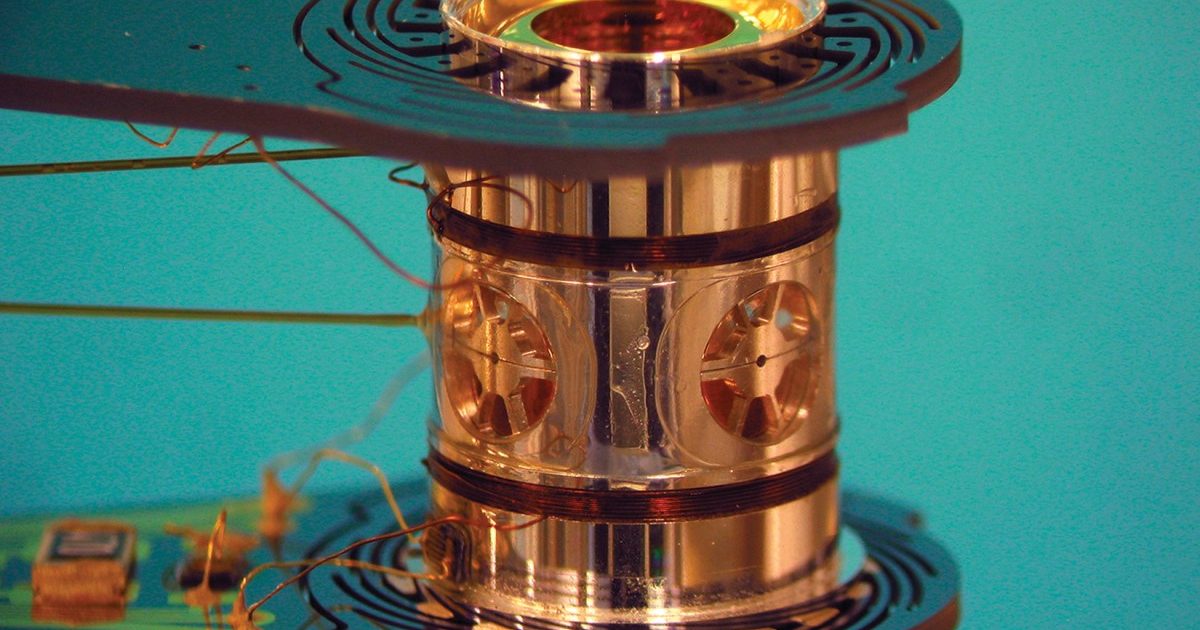
Nuclear fusion represents one of the world's most promising energy sources, yet it has remained confined to laboratories for decades due to its enormous complexities and exorbitant costs. Today, the startup «Inertia» announces a breakthrough that may bring it one step closer to transforming this technology from a precise scientific experiment into a commercially producible product, after succeeding in shortening the manufacturing time of fuel pellets from days to just a few minutes.
From Prototype to Industrial Production
The company's idea relies on commercializing the technology developed at the «National Ignition Facility» (NIF) at Lawrence Livermore National Laboratory, a massive research facility that requires exceptional precision in operation. At this facility, manufacturing a single fuel pellet may take an entire week or more, at a very high cost, which is utterly incompatible with any profit-seeking commercial venture.
Jeff Lawson, co-founder and CEO of the company, says the research facility produced only a handful of these pellets annually, and that his commercial perspective made him realize that what is made there is nothing more than «prototypes». From here, the «Inertia» team set out to transform these prototypes into a product that can be manufactured in huge quantities, enlisting industrial engineers from major companies like «Apple» to find ways to produce it on a large scale.
A Complex Composition Requiring Extreme Precision
A fuel pellet is not a simple product at all, but rather a precise multi-layered structure requiring strict specifications. It consists of:
- A spherical outer shell made of diamond.
- A thin frozen layer of deuterium and tritium, two isotopes of hydrogen suitable as fuel for fusion.
- A gaseous mixture of deuterium and tritium in the inner core.
Each solid layer must be as close to perfectly spherical as possible. Afterward, these pellets are enclosed in gold casings known as «hohlraums», which convert laser energy into X-rays that compress the pellet intensely, causing the atoms to fuse and release energy. However, any slight defect in the spherical shape may disrupt the ignition process and prevent the reaction from reaching its full potential.
How the Company Succeeded in Accelerating the Process
The biggest challenge facing «Inertia» was accelerating production without deviating from the physical foundations proven by the research facility. The team had an important advantage in the presence of Annie Kritcher, co-founder and chief scientist, who designed the first fusion experiment at the facility to produce more energy than it consumed.
After multiple rounds of development, the company managed to grow the crystals in about 30 minutes only, compared to an entire week at the research facility. Overall, it became possible to manufacture a single fuel pellet within two to three hours, with the ability to scale production to the industrial level, as part of a public-private partnership with Lawrence Livermore Laboratory.
«Inertia» possesses an additional advantage that the research facility lacks, as it plans to use a laser four times more powerful than the current one, giving it a greater margin of tolerance for defects in fuel pellets, which in turn helped accelerate the manufacturing process. The company summarizes its strategy as «scaling up the power source» to provide great flexibility in the rest of the system's components.
A Compounded Impact on Cost and Safety
The impact of reducing fuel loading time is not limited to speed alone, but extends to lowering the amount of tritium the company needs to keep on hand. Tritium is a radioactive material that requires utmost care in handling, and it is also extremely expensive, with a single gram costing around 30 thousand dollars, while the global stockpile does not exceed approximately 25 kilograms.
Like many startups in this field, «Inertia» intends to produce its own tritium from fusion reactions themselves, but it needs an initial stockpile to get started. Therefore, reducing manufacturing time helps keep the stockpile small and safe. The company expects its full commercial plant to consume ten fuel pellets per second.
Lawson concludes that shortening the time of this step makes the facility smaller in size, and the entire process faster and more efficient, reflecting the importance of this advancement in the journey of transforming nuclear fusion into a realistic commercial energy source.
✦ بقلم فريق دروب أيديا
DROPIDEA
We hope this article has added real value to you. At DROPIDEA, we always strive to deliver high-quality content that helps you grow and evolve in the digital space. Follow us for more useful articles and guides.
Tags
Admin
DROPIDEA
Latest Articles

Meta Launches Pocket App for AI Game Development in the US

Ramp Launches Router Service for AI Model Routing

Cognition Denies SpaceX Acquisition Attempt Amid AI Race

OpenAI Launches 'Private Safety Processing' System to Protect Customer Privacy