Skip to content
ImagesFree

One thing I find interesting about @idolly_AI is that it doesn’t treat AI image generation as just a prompt box. From the interfac

One thing I find interesting about @idolly_AI is that it doesn’t treat AI image generation as just a prompt box. From the interfac

Image generation

Source previews

These example images come from the original source. DROPIDEA has not independently tested these examples; results depend on the model and settings.

Ready to personalize

Your prompt

Source text

Replace the red variables with your information. Copy the full prompt and use it with your preferred agent.

TXT MD English version
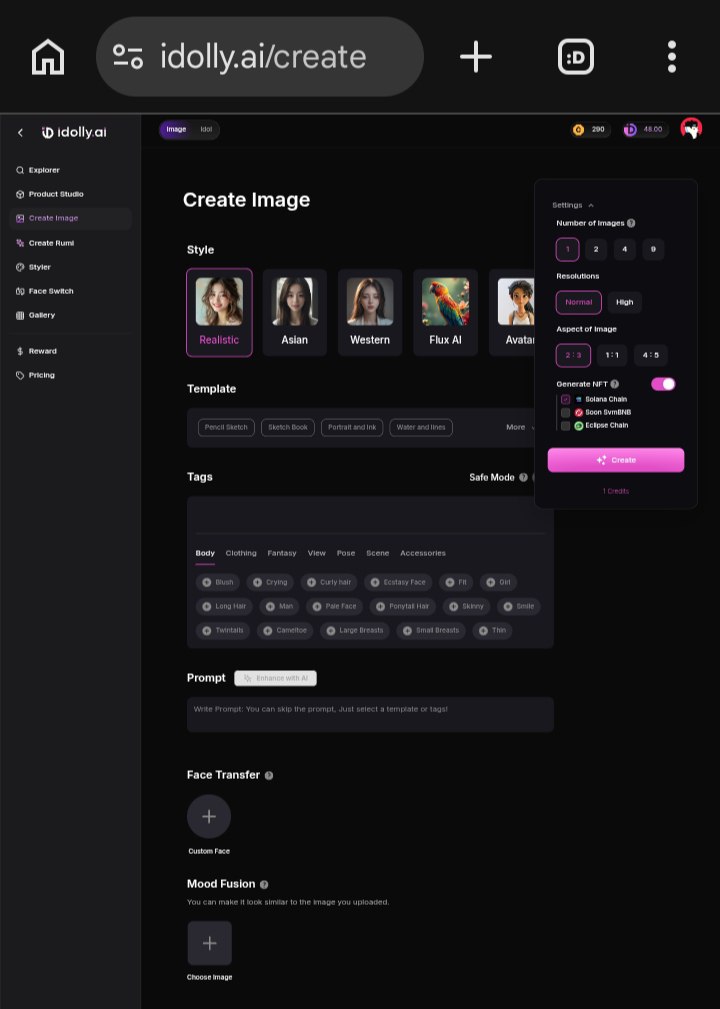
One thing I find interesting about @idolly_AI is that it doesn’t treat AI image generation as just a prompt box. From the interface alone, you can see that the platform is trying to build a structured creative pipeline, where users move from idea → generation → customization → ownership in a much more guided way. A few parts of the system stand out. First is the multi-style generation layer. Instead of relying on a single general-purpose model, the platform separates generation styles such as Realistic, Asian, Western, Flux AI, and Avatar. This might seem like a simple UI feature, but it actually reflects a deeper technical idea: style-specialized model behavior. In generative AI, one of the biggest problems is inconsistency. A generic model often struggles to maintain a coherent aesthetic. By guiding the generation through specific style domains, the system can push the model toward more predictable visual outputs. Second is the template-based prompt system. Templates like Pencil Sketch, Portrait and Ink, or Water and Ink act as pre-built creative frameworks. Instead of forcing users to understand complex prompt engineering, the platform embeds style instructions directly into the generation pipeline. Technically, this means the model already receives structured information about things like: • drawing style • lighting characteristics • texture behavior • composition patterns This makes AI creation more accessible without sacrificing control, which is something many AI tools still struggle to balance. Another interesting component is the tag-based attribute system. Rather than writing long prompts, users can define visual attributes such as body type, hairstyle, pose, or accessories through selectable tags. Behind the scenes, these tags likely correspond to semantic tokens or weighted prompts within the model. The benefit is that it reduces prompt complexity while improving consistency in character generation, which is extremely useful for creators who want to maintain a recognizable visual identity. Then there’s the Face Transfer feature, which hints at identity preservation technology. This likely combines facial embedding models with image-to-image generation so that a specific face can be recreated across different scenes and styles. For creators building AI personas, virtual influencers, or recurring characters, this kind of system makes it possible to maintain character continuity without manual editing. Another layer is the Mood Fusion feature, which allows users to upload reference images. Reference-based generation is powerful because prompts alone often struggle to capture subtle elements like color atmosphere, emotional tone, or lighting dynamics. By feeding a reference image into the model, the AI can extract visual cues and apply them to the generated result. In practice, this means creators can control not just what the image shows, but also how it feels visually. Finally, one detail that shouldn’t be overlooked is the multi-chain NFT integration. The interface suggests support for networks like Solana, BNB Chain, and Eclipse. That indicates the platform isn’t only designed for image generation, but also for direct digital asset ownership workflows. Instead of generating an image and then moving to another platform to mint it, creators can potentially go from creation to on-chain asset in a single pipeline. When you step back and look at the whole system, the interesting part isn’t just the AI models themselves. It’s the attempt to build a complete creative infrastructure around them. AI idea → structured generation → identity control → style control → digital ownership. And if generative AI keeps expanding into creator economies, tools that simplify this entire pipeline may end up becoming far more important than the models alone.
Preview results

Your prompt

One thing I find interesting about @idolly_AI is that it doesn’t treat AI image generation as just a prompt box. From the interface alone, you can see that the platform is trying to build a structured creative pipeline, where users move from idea → generation → customization → ownership in a much more guided way. A few parts of the system stand out. First is the multi-style generation layer. Instead of relying on a single general-purpose model, the platform separates generation styles such as Realistic, Asian, Western, Flux AI, and Avatar. This might seem like a simple UI feature, but it actually reflects a deeper technical idea: style-specialized model behavior. In generative AI, one of the biggest problems is inconsistency. A generic model often struggles to maintain a coherent aesthetic. By guiding the generation through specific style domains, the system can push the model toward more predictable visual outputs. Second is the template-based prompt system. Templates like Pencil Sketch, Portrait and Ink, or Water and Ink act as pre-built creative frameworks. Instead of forcing users to understand complex prompt engineering, the platform embeds style instructions directly into the generation pipeline. Technically, this means the model already receives structured information about things like: • drawing style • lighting characteristics • texture behavior • composition patterns This makes AI creation more accessible without sacrificing control, which is something many AI tools still struggle to balance. Another interesting component is the tag-based attribute system. Rather than writing long prompts, users can define visual attributes such as body type, hairstyle, pose, or accessories through selectable tags. Behind the scenes, these tags likely correspond to semantic tokens or weighted prompts within the model. The benefit is that it reduces prompt complexity while improving consistency in character generation, which is extremely useful for creators who want to maintain a recognizable visual identity. Then there’s the Face Transfer feature, which hints at identity preservation technology. This likely combines facial embedding models with image-to-image generation so that a specific face can be recreated across different scenes and styles. For creators building AI personas, virtual influencers, or recurring characters, this kind of system makes it possible to maintain character continuity without manual editing. Another layer is the Mood Fusion feature, which allows users to upload reference images. Reference-based generation is powerful because prompts alone often struggle to capture subtle elements like color atmosphere, emotional tone, or lighting dynamics. By feeding a reference image into the model, the AI can extract visual cues and apply them to the generated result. In practice, this means creators can control not just what the image shows, but also how it feels visually. Finally, one detail that shouldn’t be overlooked is the multi-chain NFT integration. The interface suggests support for networks like Solana, BNB Chain, and Eclipse. That indicates the platform isn’t only designed for image generation, but also for direct digital asset ownership workflows. Instead of generating an image and then moving to another platform to mint it, creators can potentially go from creation to on-chain asset in a single pipeline. When you step back and look at the whole system, the interesting part isn’t just the AI models themselves. It’s the attempt to build a complete creative infrastructure around them. AI idea → structured generation → identity control → style control → digital ownership. And if generative AI keeps expanding into creator economies, tools that simplify this entire pipeline may end up becoming far more important than the models alone.

Related prompts