Maven Robotics Emerges from Stealth with $100 Million in Funding to Automate Warehouses
 By Admin
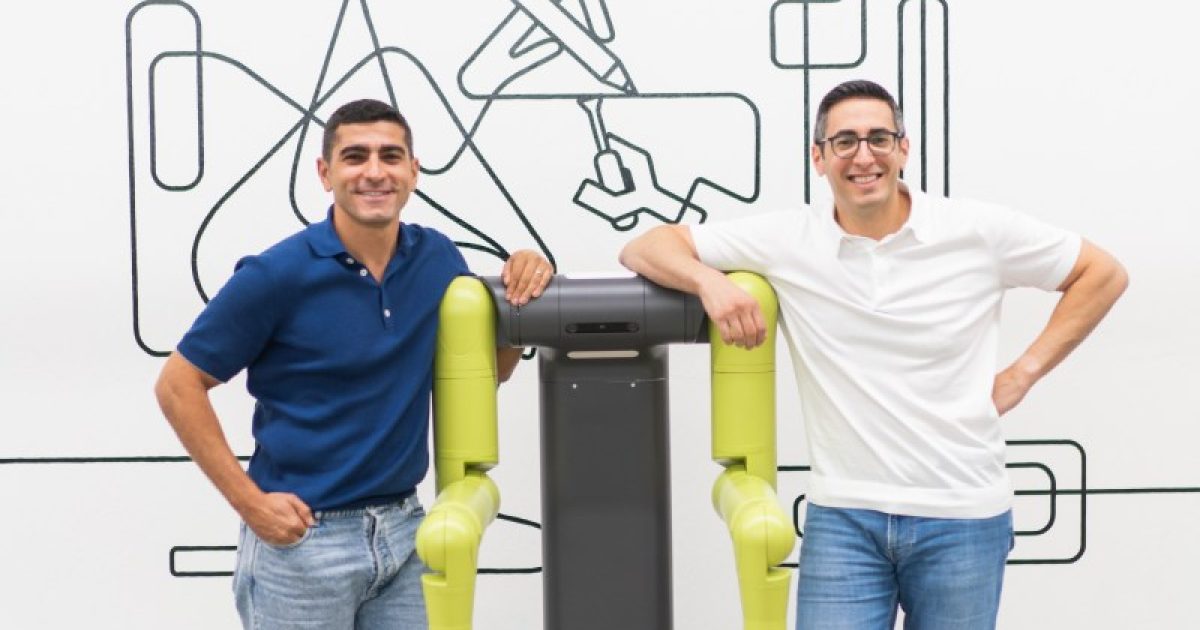
In a world crowded with robotics companies promising an imminent industrial revolution, the startup "Maven Robotics" is choosing a different path—one built on solving real-world problems inside warehouses and distribution centers, one task at a time, rather than engaging in a race to develop the most advanced models. The company recently announced its emergence from stealth mode after raising $100 million in funding, revealing a practical strategy that prioritizes return on investment above all else.
From a Cartoon Drawing to a Real Deal
Hamza Darbes, the CEO and co-founder of the company, recalls that in 2024 Maven had nothing but "a cartoon drawing of a robot and a team of people." Nevertheless, when he learned that a major consumer goods company was seeking automation solutions and holding meetings with four competing firms, he managed to secure a meeting with them. But instead of talking about his vision for robots, he asked to visit the company's factories and warehouses.
After observing how the employees worked, his team focused on the tasks where they could add immediate value, presenting a different approach that didn't seek to solve a single-robot problem but rather to take on the entire task end-to-end—from connecting to the warehouse management system all the way to loading products onto trucks. With this approach, Maven won the deal, outperforming companies that already had ready-made robots.
Robots Working 16 Hours a Day
After two years of working with that client and other partners, the company says it has up to eight robots operating 16 hours a day at an uptime rate of 99% or more. These robots rely on wheeled bases that move at speeds of up to 16 kilometers per hour, equipped with two arms capable of lifting weights of up to 30 kilograms.
The primary task of these robots is what is known as "mixed palletizing"—reassembling goods arriving from multiple factories onto new wooden pallets containing a mix of products designated for each store. This task is currently performed entirely by hand, with workers moving around the warehouse to pick up an item here and another there according to orders that change based on real-time demand.
An Industrial, Not Research, Background
Darbes has a background in automotive engineering with a focus on electric vehicles, and he spent nine years at Apple's Special Projects Group, which is widely believed to have been working on a self-driving car before it was dissolved in 2024. He founded the company with his brother Khaled, who serves as chief financial officer.
Like other "physical AI" companies, Maven relies on experts in the field of autonomous vehicles, given their development of the most advanced methods for training autonomous hardware from real-world data. This requires data pipelines that feed information back from the working robots within minutes or hours, followed by retraining, evaluation, weight tuning, and redeployment in a repeated loop.
What Sets It Apart from Competitors
Jack Pearson, an investor at "Robostrategy," believes that what distinguishes the company is its background in industrial systems, far from a research culture geared toward learning or reliant on a specific architecture. "Agility," which is set to go public this fall in a $2.5 billion deal, may be the closest positioned competitor in the market. But Darbes criticizes its robots' reliance on two legs, considering it a choice that unnecessarily increases complexity, unreliability, and cost, emphasizing that return on investment is the essence of the game.
Future Steps
The company plans to build 250 robots of its third generation and begin designing a fourth platform. Its upcoming efforts focus on gathering more data and training its robots to handle materials, then moving toward automation and manufacturing. Its tools include the following:
- Relying on its own systems alongside third-party data providers.
- Gloves equipped with grippers that mimic the shape of the required clamps, enabling humans to generate training data.
- Targeting massive markets by addressing each task individually.
Although the palletizing market alone may be estimated at around $80 billion, the next tasks the company is targeting will require robotic handling capabilities that have not yet been developed. Darbes sums up the company's philosophy by saying it is grounded in solving one customer problem at a time, affirming that it is not in the model race but rather in the race to solve the industrial labor dilemma at the scale the world needs.
✦ بقلم فريق دروب أيديا
DROPIDEA
We hope this article has added real value to you. At DROPIDEA, we always strive to deliver high-quality content that helps you grow and evolve in the digital space. Follow us for more useful articles and guides.
Tags
Admin
DROPIDEA
Latest Articles

Apple's New Watch Normalizes the Idea That Our Devices Are Always Listening

AI Agents Flood Public Services with Citizen Requests

Massachusetts Requires Data Centers to Use Clean Energy

OpenAI Adds Prominent Researcher Concerned About AI Risks to Its Board