Skip to content
ImagesFree

Turn Your Logo into a Colossal Architectural Monument

Transforms an uploaded 2D logo into a 15–30-story freestanding architectural sculpture at the center of a premium city roundabout, preserving the original silhouette and identity, shot cinematically from inside a luxury vehicle with golden hour lighting and an ultra-photorealistic result.

OpenAI

Source previews

These example images come from the original source. DROPIDEA has not independently tested these examples; results depend on the model and settings.

Ready to personalize

Your prompt

English

Replace the red variables with your information. Copy the full prompt and use it with your preferred agent.

TXT MD English version
Transform the uploaded 2D logo into a colossal, freestanding architectural sculpture that serves as the unmistakable hero of the scene. The logo itself must become the monument-do not reinterpret, redesign, or transform it into a bottle, can, product, building, mascot, abstract form, icon, or any other object. Preserve the exact original silhouette, proportions, curves, typography, spacing, and visual identity of the uploaded logo, simply scaling it into a monumental 15–30-story sculptural landmark constructed from premium architectural materials. The monument must stand independently in the roundabout as a giant public art installation, not as an occupiable building or attached structure. Automatically analyze the logo to determine its industry, brand personality, visual identity, products/services, and overall aesthetic, then generate an environment that naturally reflects the brand. The logo should be engineered as a permanent architectural structure, approximately 15-30 stories tall, placed at the center of a premium modern city roundabout. It must dominate the composition while remaining physically believable and seamlessly integrated into the environment. Design the surrounding city to match the brand's industry, using appropriate architecture, vehicles, businesses, people, signage, landscaping, and urban elements. Everything should feel authentic, premium, and contextually accurate, with no random or unrelated objects. Capture the scene from inside a luxury vehicle through the windshield, as if the viewer is approaching the monument. Use a wide cinematic perspective with the logo perfectly centered. Keep the windshield framing subtle, with minimal interior visible. The city should feature wide roads, realistic traffic, pedestrians, street lighting, road markings, trees, flowers, benches, and refined urban landscaping. Maintain a clean, premium atmosphere. Leave open sky directly behind the logo with natural clouds, atmospheric depth, and sunlight. Buildings should remain only around the distant city perimeter so the logo's silhouette stays completely unobstructed. Automatically select the most appropriate premium construction materials for the monument, such as brushed metal, glass, chrome, polished stone, concrete, carbon fiber, aluminum, or illuminated architectural surfaces, ensuring they complement the brand identity. Lighting should be cinematic golden hour with soft volumetric light, realistic HDR sky, ray-traced global illumination, accurate reflections, ambient occlusion, contact shadows, balanced exposure, and natural atmospheric perspective. The final image must be ultra-photorealistic, physically accurate, and indistinguishable from a real-world architectural photograph. Maintain a minimal, luxury composition with strong negative space and no visual clutter. Place the original uploaded 2D logo in the top-left corner exactly as provided—small, flat, with no background, border, shadow, or effects. Avoid text, captions, slogans, watermarks, extra logos, fantasy architecture, floating objects, unrealistic proportions, oversaturated colors, low-quality CGI, clutter, or any element that distracts from the hero logo. Style: Premium architectural visualization, luxury commercial advertising, cinematic realism, museum-quality composition. Output: 4:5 aspect ratio, Ultra HDR, 8K, hyper-realistic, IMAX-quality, physically based rendering with ray tracing and path tracing.
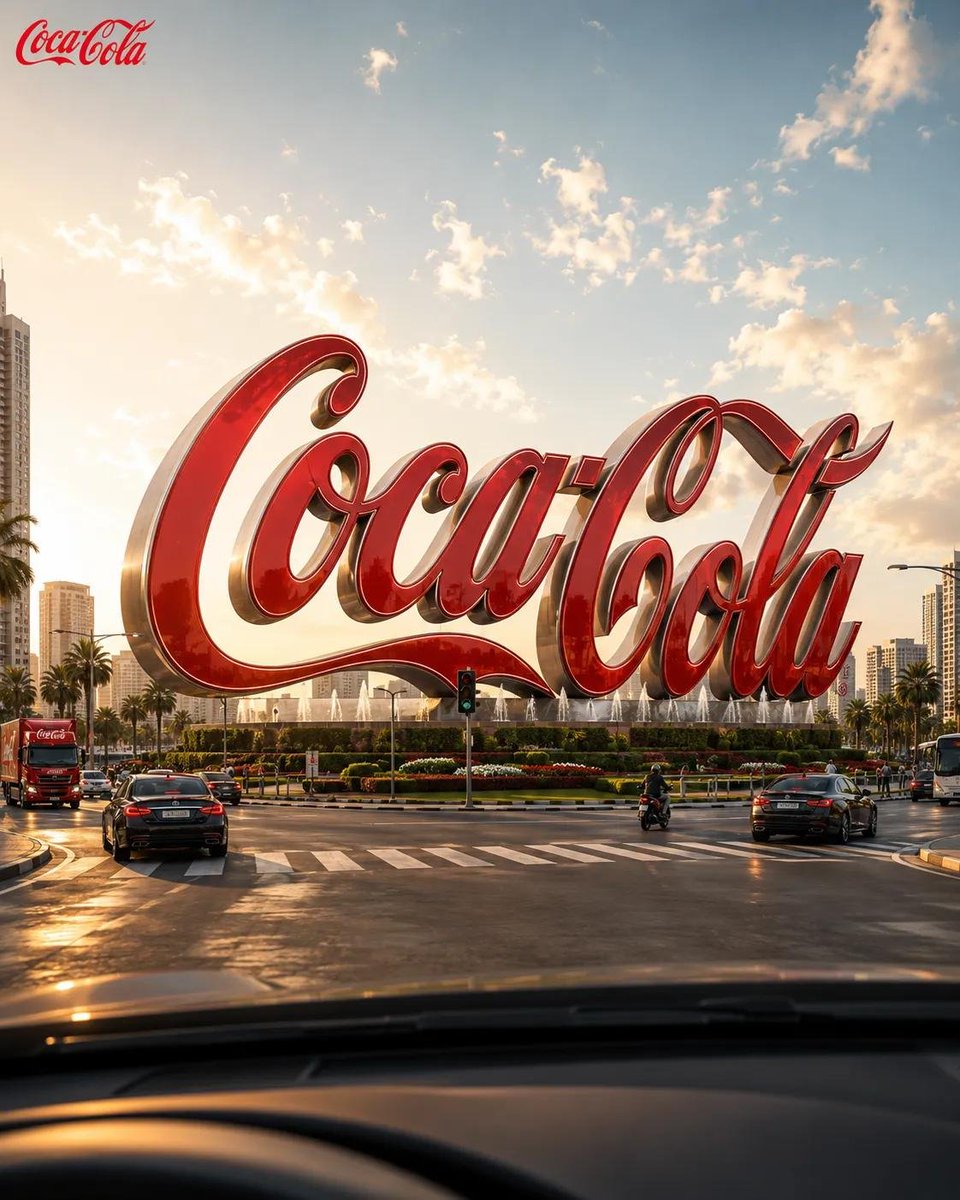
Preview results

Your prompt

Transform the uploaded 2D logo into a colossal, freestanding architectural sculpture that serves as the unmistakable hero of the scene. The logo itself must become the monument-do not reinterpret, redesign, or transform it into a bottle, can, product, building, mascot, abstract form, icon, or any other object. Preserve the exact original silhouette, proportions, curves, typography, spacing, and visual identity of the uploaded logo, simply scaling it into a monumental 15–30-story sculptural landmark constructed from premium architectural materials. The monument must stand independently in the roundabout as a giant public art installation, not as an occupiable building or attached structure. Automatically analyze the logo to determine its industry, brand personality, visual identity, products/services, and overall aesthetic, then generate an environment that naturally reflects the brand. The logo should be engineered as a permanent architectural structure, approximately 15-30 stories tall, placed at the center of a premium modern city roundabout. It must dominate the composition while remaining physically believable and seamlessly integrated into the environment. Design the surrounding city to match the brand's industry, using appropriate architecture, vehicles, businesses, people, signage, landscaping, and urban elements. Everything should feel authentic, premium, and contextually accurate, with no random or unrelated objects. Capture the scene from inside a luxury vehicle through the windshield, as if the viewer is approaching the monument. Use a wide cinematic perspective with the logo perfectly centered. Keep the windshield framing subtle, with minimal interior visible. The city should feature wide roads, realistic traffic, pedestrians, street lighting, road markings, trees, flowers, benches, and refined urban landscaping. Maintain a clean, premium atmosphere. Leave open sky directly behind the logo with natural clouds, atmospheric depth, and sunlight. Buildings should remain only around the distant city perimeter so the logo's silhouette stays completely unobstructed. Automatically select the most appropriate premium construction materials for the monument, such as brushed metal, glass, chrome, polished stone, concrete, carbon fiber, aluminum, or illuminated architectural surfaces, ensuring they complement the brand identity. Lighting should be cinematic golden hour with soft volumetric light, realistic HDR sky, ray-traced global illumination, accurate reflections, ambient occlusion, contact shadows, balanced exposure, and natural atmospheric perspective. The final image must be ultra-photorealistic, physically accurate, and indistinguishable from a real-world architectural photograph. Maintain a minimal, luxury composition with strong negative space and no visual clutter. Place the original uploaded 2D logo in the top-left corner exactly as provided—small, flat, with no background, border, shadow, or effects. Avoid text, captions, slogans, watermarks, extra logos, fantasy architecture, floating objects, unrealistic proportions, oversaturated colors, low-quality CGI, clutter, or any element that distracts from the hero logo. Style: Premium architectural visualization, luxury commercial advertising, cinematic realism, museum-quality composition. Output: 4:5 aspect ratio, Ultra HDR, 8K, hyper-realistic, IMAX-quality, physically based rendering with ray tracing and path tracing.

What you get

  • A colossal 15–30-story architectural monument preserving your logo's exact original silhouette.
  • A premium city environment automatically matched to the brand's industry and personality.
  • A cinematic shot from inside a luxury vehicle through the windshield with golden hour lighting.
  • A small, flat copy of the original logo in the top-left corner.
  • An ultra-photorealistic final image at a 4:5 aspect ratio up to 8K quality.

Use cases

  • Luxury brand advertising campaigns.
  • Brand identity presentations and brand boards.
  • Social media marketing content.
  • Architectural visualizations and brand monuments.
  • Advertising artwork and product launch campaigns.

How to use

  • Upload a high-quality 2D logo with a clean background for the best result.
  • Paste the template as-is into an image generation tool that supports image references.
  • Optionally adjust the city environment sentence to steer the urban style toward your brand's industry.
  • Generate and review the result, then rerun with material or lighting tweaks if needed.
  • Use the output in ad campaigns, presentations, or social media.

Related prompts