Skip to content
ImagesFree

Premium Vertical Travel-Memory Collage Poster

A 3:4 vertical poster template combining a cinematic realistic travel photo in the top half with a handmade gouache cut-paper illustration plus 6 travel-journal stickers in the bottom half, anchored by the landmark's silhouette and only 3 keywords.

OpenAI

Source previews

These example images come from the original source. DROPIDEA has not independently tested these examples; results depend on the model and settings.
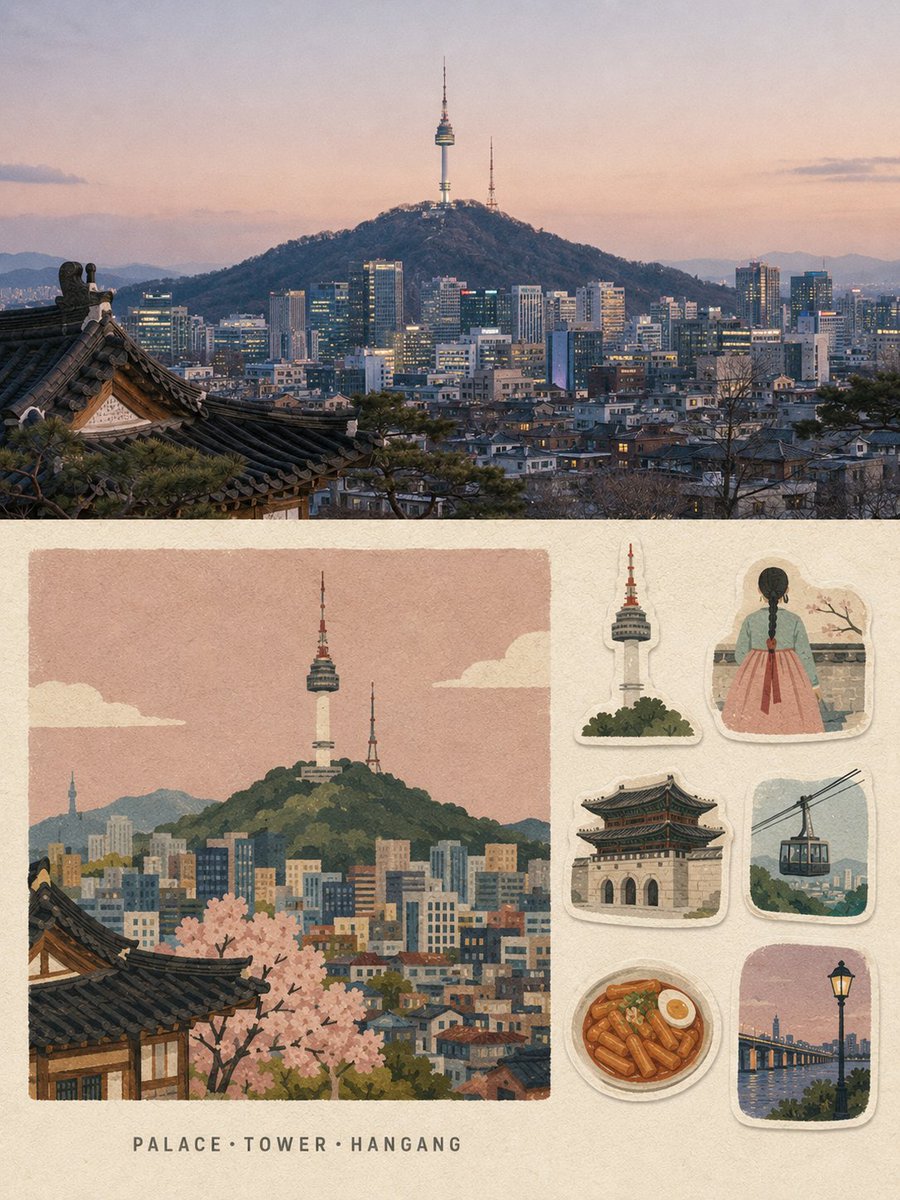
Ready to personalize

Your prompt

English

Replace the red variables with your information. Copy the full prompt and use it with your preferred agent.

TXT MD English version
Create a strict 3:4 vertical travel-memory collage poster based entirely on the written description of [LOCATION]. Divide the poster into two horizontal halves. TOP HALF - ~50%: Create a premium travel photograph-style scene of [LOCATION], showing its most recognizable landmark, environment, atmosphere, architecture, and local character. Make the scene realistic, cinematic, naturally composed, and geographically recognizable. BOTTOM HALF — ~50%: Create a handmade travel-memory illustration of the same location on warm off-white uncoated paper, with a continuous 4–5% blank margin. On the left 66–68%, place one large, near-square, borderless illustration featuring the main recognizable landmark or subject. Below it, leave a pale paper strip and center exactly 3 short English keywords in the format “Keyword1·Keyword2·Keyword3”. On the right 30–32%, arrange exactly 6 separate travel-journal stickers inspired by authentic visual elements of [LOCATION]: landmark detail, person/animal variation, environment, architecture/structure, functional object, and atmosphere/scale element. Give each sticker a slightly irregular warm-white hand-cut border and subtle paper shadow. Use a unified matte gouache + cut-paper + risograph/screen-print aesthetic with coarse grain, slightly rough edges, subtle print-registration shifts, generous negative space, and only 5–8 low-saturation colors. Reduce the scene into large clean shapes, calm color fields, grouped vegetation, flat architectural forms, and simple faceless silhouettes. Keep the most recognizable landmark of [LOCATION] as the Identification Anchor, preserving its distinctive silhouette, proportions, and signature colors. Fully redraw everything in the same flat, grainy medium. Include only the 3 keywords and, if essential, one landmark word. No other readable text, titles, dates, captions, addresses, prices, watermarks, or signatures. Avoid gradients, 3D effects, anime, polished vector art, clip-art, watercolor bloom, wet-marker texture, photographic rendering in the illustration half, or unrelated elements. The final design should feel quiet, restrained, vintage, handmade, tactile, and premium - a travel postcard combined with a collectible sticker sheet.
Preview results

Your prompt

Create a strict 3:4 vertical travel-memory collage poster based entirely on the written description of [LOCATION]. Divide the poster into two horizontal halves. TOP HALF - ~50%: Create a premium travel photograph-style scene of [LOCATION], showing its most recognizable landmark, environment, atmosphere, architecture, and local character. Make the scene realistic, cinematic, naturally composed, and geographically recognizable. BOTTOM HALF — ~50%: Create a handmade travel-memory illustration of the same location on warm off-white uncoated paper, with a continuous 4–5% blank margin. On the left 66–68%, place one large, near-square, borderless illustration featuring the main recognizable landmark or subject. Below it, leave a pale paper strip and center exactly 3 short English keywords in the format “Keyword1·Keyword2·Keyword3”. On the right 30–32%, arrange exactly 6 separate travel-journal stickers inspired by authentic visual elements of [LOCATION]: landmark detail, person/animal variation, environment, architecture/structure, functional object, and atmosphere/scale element. Give each sticker a slightly irregular warm-white hand-cut border and subtle paper shadow. Use a unified matte gouache + cut-paper + risograph/screen-print aesthetic with coarse grain, slightly rough edges, subtle print-registration shifts, generous negative space, and only 5–8 low-saturation colors. Reduce the scene into large clean shapes, calm color fields, grouped vegetation, flat architectural forms, and simple faceless silhouettes. Keep the most recognizable landmark of [LOCATION] as the Identification Anchor, preserving its distinctive silhouette, proportions, and signature colors. Fully redraw everything in the same flat, grainy medium. Include only the 3 keywords and, if essential, one landmark word. No other readable text, titles, dates, captions, addresses, prices, watermarks, or signatures. Avoid gradients, 3D effects, anime, polished vector art, clip-art, watercolor bloom, wet-marker texture, photographic rendering in the illustration half, or unrelated elements. The final design should feel quiet, restrained, vintage, handmade, tactile, and premium - a travel postcard combined with a collectible sticker sheet.

Variable guide

[LOCATION]

The place or travel destination the whole poster is based on

Replace [LOCATION] in all four occurrences: the opening line, the top-half paragraph, the six-sticker paragraph, and the identification-anchor paragraph

Example value

Kyoto

What you get

  • A strict 3:4 vertical poster split into two ~50% horizontal halves
  • A top half in premium realistic cinematic travel-photography style, geographically recognizable
  • A bottom half on warm off-white paper with one large near-square illustration and 3 keywords
  • 6 separate travel-journal stickers with irregular hand-cut borders and subtle paper shadows
  • A unified matte gouache, cut-paper, and risograph aesthetic limited to 5–8 low-saturation colors

Use cases

  • Souvenir postcards or travel art prints
  • Handmade memory-style wall decor for homes and hotels
  • Destination keepsake designs sold as collectibles
  • Marketing content for travel and hospitality brands
  • Personalized gifts based on a written description of a place

How to use

  • Replace [LOCATION] with your destination name in all four occurrences, changing nothing else
  • Pick one recognizable landmark for the destination to serve as the identification anchor in both halves
  • Choose 3 short English keywords that capture the place to appear on the paper strip below the illustration
  • Run the template and let the model generate the full composition: a realistic top half and a handmade lower half with 6 stickers
  • Review results for the strict ratios, continuous blank margin, and 5–8 color limit, regenerating if needed
  • Export the final 3:4 vertical design for print or sharing

Related prompts