Skip to content
ImagesFree

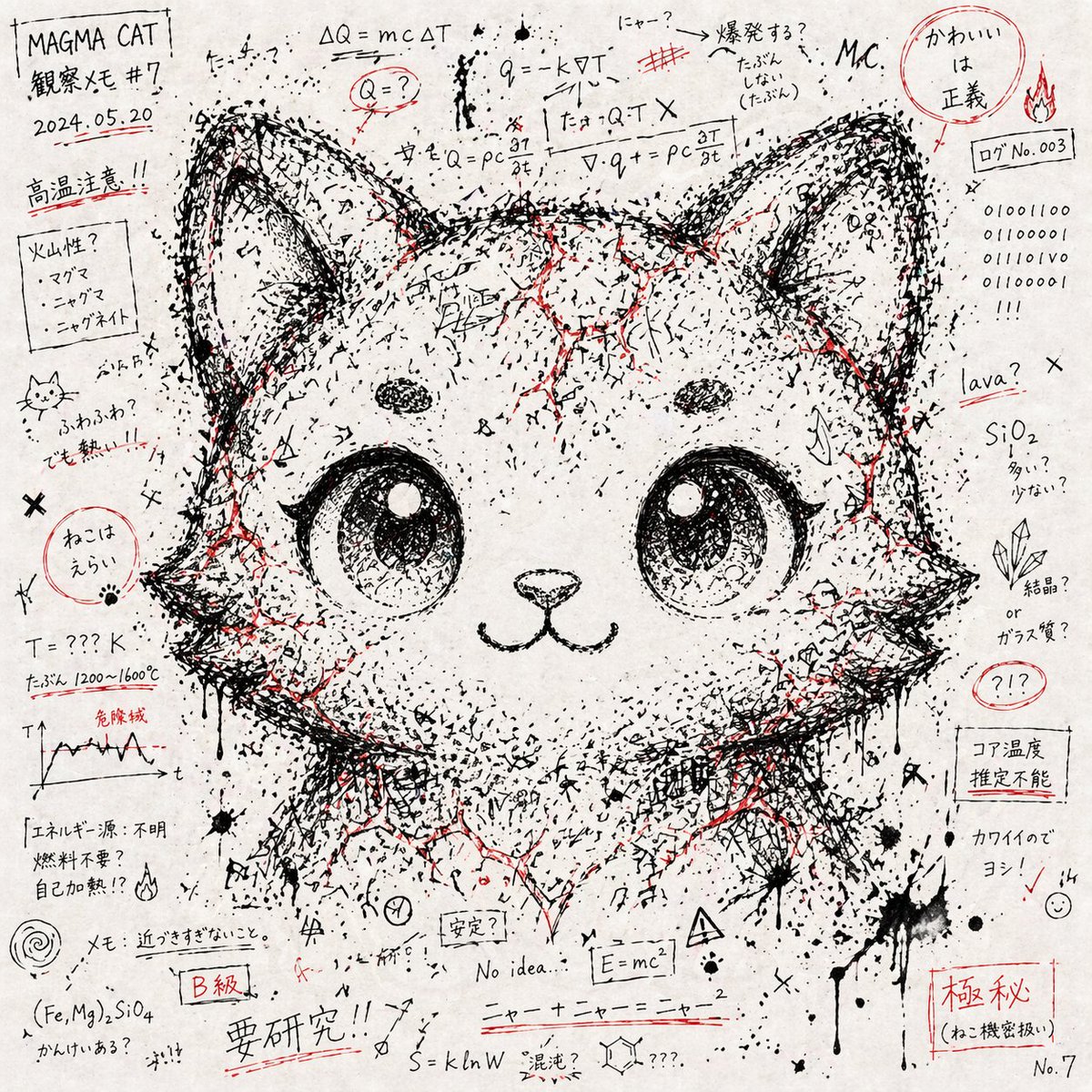
Character Face Emerging from Chaotic Notebook Scribbles

An image generation prompt that turns a notebook page of dense ink notes, formulas and symbols into organized chaos from which a given character's face emerges via density, gaps and contrast, in an analog black-ink paper style with red accents.

OpenAI

Source previews

These example images come from the original source. DROPIDEA has not independently tested these examples; results depend on the model and settings.

Ready to personalize

Your prompt

English

Replace the red variables with your information. Copy the full prompt and use it with your preferred agent.

TXT MD English version
https://t.co/Cu9G1BE6JL prompt: # Character Face Emerging from Chaotic Handwritten Notes and Symbols --- Style - Create the image on a white paper background covered with dense black-ink handwriting, loose formulas, symbols, marks, and random linework. - Make the page feel like frantic notebook scribbles spread across the entire surface. - Add occasional red-ink emphasis, such as marker blocks, underline strokes, filled patches, and small highlighted areas. - Preserve an analog paper-and-ink texture, like a hand-drawn notebook page rather than a digital pattern. --- Composition - Let random notes, symbols, and marks fill the whole canvas. - Increase the density of black ink, letters, and line fragments around the area where the character's face should appear. - Use the arrangement, clustering, gaps, and tonal contrast of the chaotic marks to reveal the faint silhouette and expression of the given character's face. - Do not draw a normal realistic face. The face must feel assembled from fragments of the surrounding chaos. --- Color - Use a mostly monochrome palette of black ink and white paper. - Use red only as a scattered accent color. - Keep saturation restrained and focus on the tactile feeling of real paper and ink. --- Expressive Details - Include text-like strings that seem almost readable but are not fully legible, mixing Japanese characters, English letters, and numbers. - Add math symbols, arrows, dots, slashes, crosses, ink drips, splatter marks, and rough strokes. - Shape the character's eyes, hair contour, and facial structure through negative space, ink density, and the placement of notes and symbols. --- Avoid - Do not directly paint a realistic portrait or clearly outline the face. - Do not make clean, orderly, digital geometric patterns. - Do not use colorful or oversaturated styling. - Do not include logos, watermarks, or an artificial CG look. --- Definition of Done - The overall image reads first as a chaotic mass of handwritten notes, formulas, symbols, and ink marks. - The given character's face naturally emerges from the density, spacing, and arrangement of that chaos. - The color scheme stays black and white with red accents only. - The final image keeps a handmade paper-and-ink notebook texture. #AIart #GPTImage2
Preview results

Your prompt

https://t.co/Cu9G1BE6JL prompt: # Character Face Emerging from Chaotic Handwritten Notes and Symbols --- Style - Create the image on a white paper background covered with dense black-ink handwriting, loose formulas, symbols, marks, and random linework. - Make the page feel like frantic notebook scribbles spread across the entire surface. - Add occasional red-ink emphasis, such as marker blocks, underline strokes, filled patches, and small highlighted areas. - Preserve an analog paper-and-ink texture, like a hand-drawn notebook page rather than a digital pattern. --- Composition - Let random notes, symbols, and marks fill the whole canvas. - Increase the density of black ink, letters, and line fragments around the area where the character's face should appear. - Use the arrangement, clustering, gaps, and tonal contrast of the chaotic marks to reveal the faint silhouette and expression of the given character's face. - Do not draw a normal realistic face. The face must feel assembled from fragments of the surrounding chaos. --- Color - Use a mostly monochrome palette of black ink and white paper. - Use red only as a scattered accent color. - Keep saturation restrained and focus on the tactile feeling of real paper and ink. --- Expressive Details - Include text-like strings that seem almost readable but are not fully legible, mixing Japanese characters, English letters, and numbers. - Add math symbols, arrows, dots, slashes, crosses, ink drips, splatter marks, and rough strokes. - Shape the character's eyes, hair contour, and facial structure through negative space, ink density, and the placement of notes and symbols. --- Avoid - Do not directly paint a realistic portrait or clearly outline the face. - Do not make clean, orderly, digital geometric patterns. - Do not use colorful or oversaturated styling. - Do not include logos, watermarks, or an artificial CG look. --- Definition of Done - The overall image reads first as a chaotic mass of handwritten notes, formulas, symbols, and ink marks. - The given character's face naturally emerges from the density, spacing, and arrangement of that chaos. - The color scheme stays black and white with red accents only. - The final image keeps a handmade paper-and-ink notebook texture. #AIart #GPTImage2

Variable guide

the given character's face

The character whose face emerges from the chaos; replace the generic phrase with a concrete description.

In the Composition, Expressive Details and Definition of Done sections; replace "the given character's face" with your description.

Example value

an anime girl's face with short dark hair and wide eyes

red

The single accent color over the monochrome base; it must remain one scattered color.

In the Style and Color sections; replace every mention of red with your new accent color.

Example value

blue

What you get

  • An analog notebook page on white paper covered with dense black-ink handwriting.
  • Scattered red accents such as marker blocks, underlines and filled patches.
  • The character's face faintly emerging from ink density, gaps and contrast, not a direct realistic drawing.
  • Math symbols, arrows, ink drips and semi-readable strings mixing Japanese characters, English letters and numbers.

Use cases

  • Artistic posters and cards in a hand-drawn notebook style.
  • Song covers or album artwork with a frantic academic mood.
  • Artistic social media posts with a limited black/white/red palette.
  • Character illustrations for stories or presentations in a handmade style.

How to use

  • Copy the full template, keeping the link on the first line if you want to trace the original.
  • Replace "the given character's face" with a concrete name or short description of the character whose face should emerge.
  • Optionally change the red accent color, keeping it a single scattered accent only.
  • Paste the template into your image generator and run it without altering the Avoid section constraints.
  • Compare the result with the Definition of Done section and regenerate until the face emerges from the chaos rather than being directly drawn.
  • Run multiple generations; results are stochastic and images will not be identical.

Related prompts