Skip to content
ImagesFree

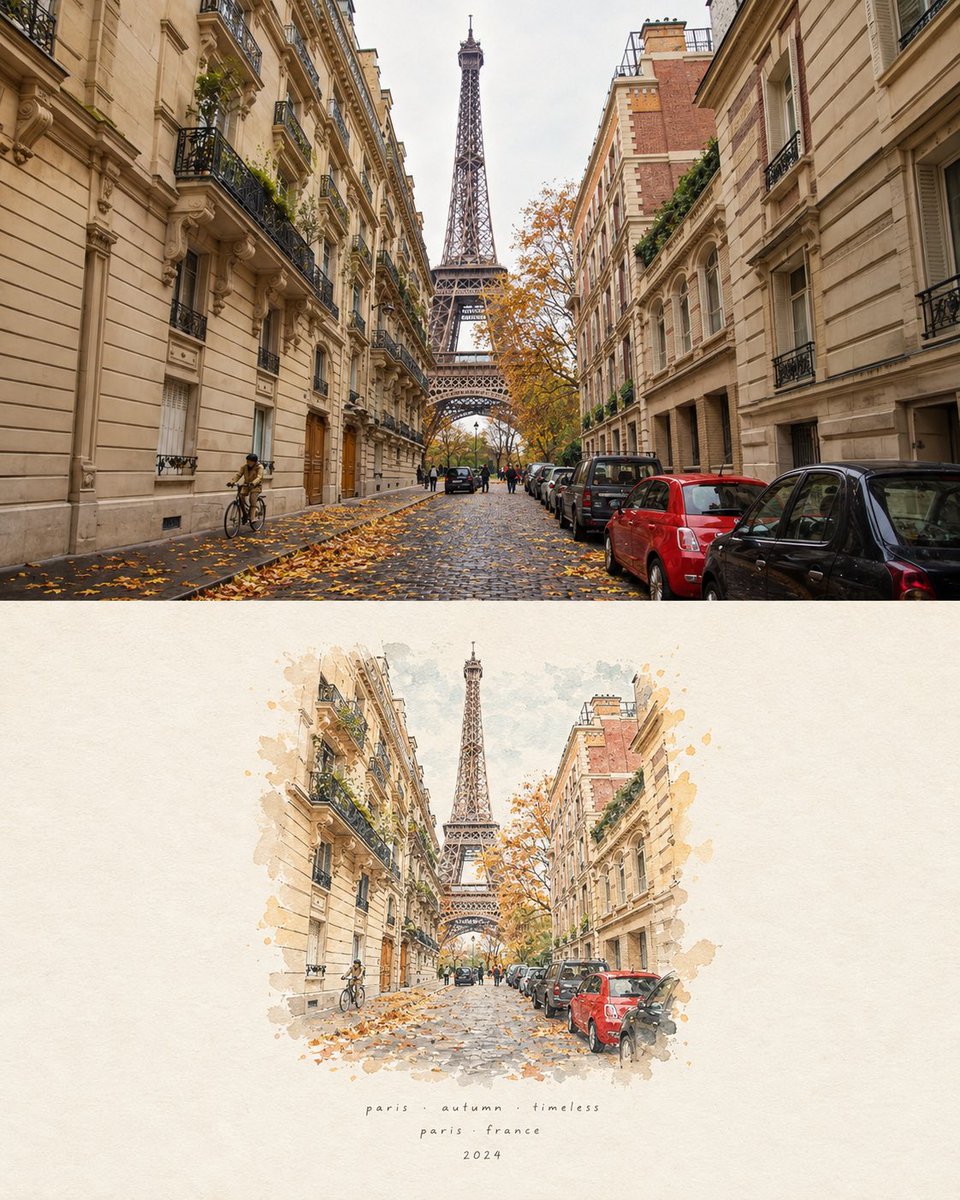
Editorial Travel Poster Combining Real Photo and Watercolor

A sophisticated minimalist poster prompt combining a real reference photo on top with an evocative watercolor sketch and typography below.

OpenAI

Source previews

These example images come from the original source. DROPIDEA has not independently tested these examples; results depend on the model and settings.
Ready to personalize

Your prompt

English

Replace the red variables with your information. Copy the full prompt and use it with your preferred agent.

TXT MD English version
Create a sophisticated minimalist editorial travel-art poster based on the provided reference photograph of [LANDMARK / COUNTRY ]. TOP SECTION — REAL PHOTOGRAPH: Preserve the original photograph as faithfully as possible. Keep the exact subject, recognizable architecture or facial features, proportions, pose, clothing, surroundings, perspective, lighting, and important environmental details. Enhance it with a cinematic yet natural color grade, atmospheric depth, subtle film grain, and beautiful soft lighting. The photograph should feel authentic, premium, calm, and emotionally evocative. BOTTOM SECTION — HAND-PAINTED MEMORY: Recreate the same subject and scene as a delicate handcrafted watercolor and ink illustration. Preserve the recognizable silhouette, composition, proportions, and defining details, but simplify them into elegant artistic brushwork. Use loose watercolor washes, fine ink outlines, subtle paper texture, soft bleeding pigments, imperfect hand-painted edges, and minimal architectural/environmental details. The illustrated version should feel like a beautiful travel sketch painted from memory, not a completely different scene. Keep the main subject immediately recognizable. COMPOSITION: Use a clean vertical 4:5 poster format with the realistic photograph occupying the upper portion and the watercolor interpretation occupying the lower portion. Separate the two sections with a subtle clean transition and generous warm ivory/off-white negative space. BACKGROUND: Warm textured handmade paper, subtle natural grain, minimal and uncluttered. Use a restrained color palette derived from the original photograph and the location. TYPOGRAPHY: Add small elegant handwritten/editorial typography beneath the illustration: [SHORT PHRASE / POETIC LINE] [CITY / COUNTRY / PERSON / PLACE] [YEAR / COORDINATES / SHORT DESCRIPTION] Typography should be tiny, refined, widely spaced, understated, and slightly imperfect like handwritten travel-journal lettering. AESTHETIC: Recreate the landmark as a delicate architectural watercolor sketch, preserving its exact silhouette, proportions, distinctive structural details, surrounding landscape, and recognizable character.
Preview results

Your prompt

Create a sophisticated minimalist editorial travel-art poster based on the provided reference photograph of [LANDMARK / COUNTRY ]. TOP SECTION — REAL PHOTOGRAPH: Preserve the original photograph as faithfully as possible. Keep the exact subject, recognizable architecture or facial features, proportions, pose, clothing, surroundings, perspective, lighting, and important environmental details. Enhance it with a cinematic yet natural color grade, atmospheric depth, subtle film grain, and beautiful soft lighting. The photograph should feel authentic, premium, calm, and emotionally evocative. BOTTOM SECTION — HAND-PAINTED MEMORY: Recreate the same subject and scene as a delicate handcrafted watercolor and ink illustration. Preserve the recognizable silhouette, composition, proportions, and defining details, but simplify them into elegant artistic brushwork. Use loose watercolor washes, fine ink outlines, subtle paper texture, soft bleeding pigments, imperfect hand-painted edges, and minimal architectural/environmental details. The illustrated version should feel like a beautiful travel sketch painted from memory, not a completely different scene. Keep the main subject immediately recognizable. COMPOSITION: Use a clean vertical 4:5 poster format with the realistic photograph occupying the upper portion and the watercolor interpretation occupying the lower portion. Separate the two sections with a subtle clean transition and generous warm ivory/off-white negative space. BACKGROUND: Warm textured handmade paper, subtle natural grain, minimal and uncluttered. Use a restrained color palette derived from the original photograph and the location. TYPOGRAPHY: Add small elegant handwritten/editorial typography beneath the illustration: [SHORT PHRASE / POETIC LINE] [CITY / COUNTRY / PERSON / PLACE] [YEAR / COORDINATES / SHORT DESCRIPTION] Typography should be tiny, refined, widely spaced, understated, and slightly imperfect like handwritten travel-journal lettering. AESTHETIC: Recreate the landmark as a delicate architectural watercolor sketch, preserving its exact silhouette, proportions, distinctive structural details, surrounding landscape, and recognizable character.

Variable guide

[LANDMARK / COUNTRY ]

The name of the landmark and country shown in the reference photo

First line after 'reference photograph of'

Example value

Eiffel Tower / France

[SHORT PHRASE / POETIC LINE]

A poetic line or short phrase summarizing the mood

First typography line under the illustration

Example value

Mornings in Paris

[CITY / COUNTRY / PERSON / PLACE]

City, country, or specific place name

Second typography line under the illustration

Example value

Paris, France

[YEAR / COORDINATES / SHORT DESCRIPTION]

Year, GPS coordinates, or brief description

Third typography line under the illustration

Example value

48.8584° N, 2.2945° E • Autumn 2023

What you get

  • A dual-split 4:5 editorial travel poster.
  • A cinematic, true-to-life photograph occupying the upper half.
  • A delicate watercolor memory sketch on warm paper texture with subtle typography at the bottom.

Use cases

  • Personal travel memory art prints and gallery walls.
  • Boutique travel agency branding and editorial promotional posters.
  • Artistic postcards and coffee table book covers.

How to use

  • Upload your reference photograph of the chosen landmark or landscape.
  • Replace the placeholder [LANDMARK / COUNTRY ] with the actual subject.
  • Customize the bottom three text lines with a poetic phrase, location, and year or coordinates.
  • Run the generation in a vertical 4:5 aspect ratio.

Related prompts