Skip to content
ImagesFree

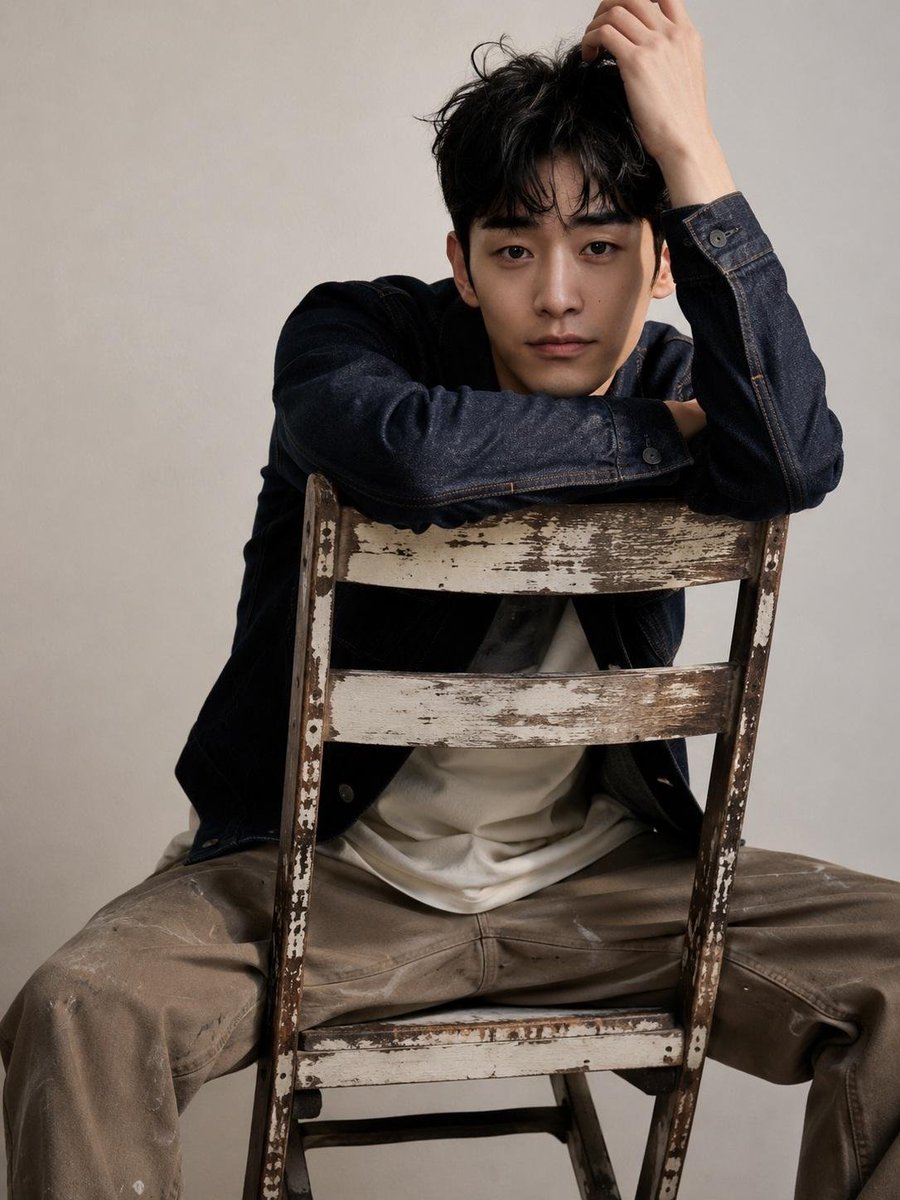
Restrained Studio Fashion Portrait, Precise Vertical Crop

A vertical 736:981 studio fashion portrait of an adult subject seated behind a worn wooden folding chair that obscures the torso, lit by one camera-right directional light with deep shadows, defined body proportions, and exact pose coordinates with the raised hand and feet cropped at the edges.

OpenAI

Source previews

These example images come from the original source. DROPIDEA has not independently tested these examples; results depend on the model and settings.
Ready to personalize

Your prompt

English

Replace the red variables with your information. Copy the full prompt and use it with your preferred agent.

TXT MD English version
Create a restrained studio fashion portrait with an exact vertical aspect ratio of 736:981 in a full-body vertical crop. The raised hand above the head is physically cropped by the top edge with 0% headroom, and both feet are cropped by the bottom edge. Position the subject slightly right of center, occupying approximately 83% of the frame. Leave the largest negative space as a warm off-white wall covering about 24% of the frame from the upper-left to middle-left. Place a worn wooden folding chair in the center foreground, vertically dividing the composition and partially obscuring the torso and pelvis. Use a camera positioned approximately at eye level with a 3–5° downward tilt. The torso angles diagonally away from the camera while the face turns back toward the lens. The subject looks directly into the camera beneath low, heavy eyelids. Use a medium camera distance with a mild telephoto portrait-lens perspective. Avoid wide-angle distortion, oversized head perspective, and noticeable camera roll. Pose: The subject sits behind the chair, leaning deeply over the chair back. The shoulder line descends diagonally toward the lower right. One elbow presses firmly on the top rail of the chair back for support, with the forearm crossing beneath the face. The opposite arm bends upward, with the palm gripping the hair above the crown. The pelvis sits low behind the chair. Both knees are spread wide and cropped by the bottom of the frame. Weight is naturally supported through the chair, the supporting elbow, and the seated pelvis, maintaining realistic spinal and wrist alignment. Use one old wooden folding chair with chipped white paint, dark brown wood, two horizontal back slats, and a visible seat. Approximate placement: x23–66, y39–96, occupying about 31% of the frame. The chair remains in front of the subject, obscuring the center torso and pelvis. Pose anchors: head center x48 y16; raised hand x43 y2 (cropped by top edge); elbow touching chair back x37 y36; wrist beneath face x48 y30; left knee x16 y76; right knee x84 y78; both feet cropped. Depth order: foreground—chair and arms; focus plane—face, upper torso, chair back; mid-ground—spread thighs; background—plain warm gray off-white studio wall. Use an adult editorial long-line silhouette with visible proportions of approximately 18% head width, 19% head height, and 52% shoulder width. The neck remains visible but partially compressed by the folded posture. Maintain a relatively small head, mature skeletal structure, long forearms, high natural waist and pelvis, and long thighs. The lower body is partially hidden by the chair and crop. Never invent unseen calves or feet. If the target image lacks body information, use these adult proportions. Never produce infantilized proportions, oversized heads, short legs, or unusually small hands or feet. Illuminate the scene with one directional studio light from camera-right. Brightest areas are the right side of the face, right ridge of the nose, upper forehead, and the chipped white paint on the chair's right side. Preserve deep shadows around the left eye socket, left temple, and lower left face. Maintain warm beige skin tones with cool indigo clothing and cool gray-brown shadows. Bloom is essentially zero. Keep the image sharp with no meaningful blur. Do not introduce motion smear, double edges, optical defocus, or halation. Exposure behaves like a spatial mask: the wall at x0–30 remains high-key warm off-white; the left half of the face (x39–48) stays in shadow; the right cheekbone and forehead (x50–61) receive localized highlights. Dark clothing remains at least two tonal stops darker than
Preview results

Your prompt

Create a restrained studio fashion portrait with an exact vertical aspect ratio of 736:981 in a full-body vertical crop. The raised hand above the head is physically cropped by the top edge with 0% headroom, and both feet are cropped by the bottom edge. Position the subject slightly right of center, occupying approximately 83% of the frame. Leave the largest negative space as a warm off-white wall covering about 24% of the frame from the upper-left to middle-left. Place a worn wooden folding chair in the center foreground, vertically dividing the composition and partially obscuring the torso and pelvis. Use a camera positioned approximately at eye level with a 3–5° downward tilt. The torso angles diagonally away from the camera while the face turns back toward the lens. The subject looks directly into the camera beneath low, heavy eyelids. Use a medium camera distance with a mild telephoto portrait-lens perspective. Avoid wide-angle distortion, oversized head perspective, and noticeable camera roll. Pose: The subject sits behind the chair, leaning deeply over the chair back. The shoulder line descends diagonally toward the lower right. One elbow presses firmly on the top rail of the chair back for support, with the forearm crossing beneath the face. The opposite arm bends upward, with the palm gripping the hair above the crown. The pelvis sits low behind the chair. Both knees are spread wide and cropped by the bottom of the frame. Weight is naturally supported through the chair, the supporting elbow, and the seated pelvis, maintaining realistic spinal and wrist alignment. Use one old wooden folding chair with chipped white paint, dark brown wood, two horizontal back slats, and a visible seat. Approximate placement: x23–66, y39–96, occupying about 31% of the frame. The chair remains in front of the subject, obscuring the center torso and pelvis. Pose anchors: head center x48 y16; raised hand x43 y2 (cropped by top edge); elbow touching chair back x37 y36; wrist beneath face x48 y30; left knee x16 y76; right knee x84 y78; both feet cropped. Depth order: foreground—chair and arms; focus plane—face, upper torso, chair back; mid-ground—spread thighs; background—plain warm gray off-white studio wall. Use an adult editorial long-line silhouette with visible proportions of approximately 18% head width, 19% head height, and 52% shoulder width. The neck remains visible but partially compressed by the folded posture. Maintain a relatively small head, mature skeletal structure, long forearms, high natural waist and pelvis, and long thighs. The lower body is partially hidden by the chair and crop. Never invent unseen calves or feet. If the target image lacks body information, use these adult proportions. Never produce infantilized proportions, oversized heads, short legs, or unusually small hands or feet. Illuminate the scene with one directional studio light from camera-right. Brightest areas are the right side of the face, right ridge of the nose, upper forehead, and the chipped white paint on the chair's right side. Preserve deep shadows around the left eye socket, left temple, and lower left face. Maintain warm beige skin tones with cool indigo clothing and cool gray-brown shadows. Bloom is essentially zero. Keep the image sharp with no meaningful blur. Do not introduce motion smear, double edges, optical defocus, or halation. Exposure behaves like a spatial mask: the wall at x0–30 remains high-key warm off-white; the left half of the face (x39–48) stays in shadow; the right cheekbone and forehead (x50–61) receive localized highlights. Dark clothing remains at least two tonal stops darker than

Variable guide

old wooden folding chair with chipped white paint, dark brown wood, two horizontal back slats, and a visible seat

Description of the chair acting as the foreground element obscuring the torso; edit it to change the chair type while keeping its placement x23–66, y39–96.

Third paragraph, the sentence beginning "Use one old wooden folding chair..." — replace the full description between "one" and the period.

Example value

an industrial folding metal chair with chipped gray paint, a single horizontal back slat, and a visible seat

warm off-white wall

Color of the studio wall filling the largest negative space; it is also mentioned in the depth order and the exposure paragraph, so update all three occurrences together.

First paragraph, the sentence "Leave the largest negative space as a warm off-white wall...", plus the matching wall mentions in the third and final paragraphs.

Example value

warm light-gray wall

cool indigo clothing

Cool clothing color contrasted against warm beige skin tones.

Lighting paragraph, the phrase "cool indigo clothing".

Example value

dark olive-green clothing

What you get

  • A vertical 736:981 fashion portrait with a full-body crop
  • An adult subject seated behind a wooden folding chair that splits the composition and obscures the torso and pelvis
  • One camera-right directional studio light with deep shadows on the left side
  • A warm negative space on the upper left and long-line adult body proportions
  • A sharp image with no blur, bloom, motion smear, or double edges

Use cases

  • Editorial fashion imagery for magazines and lookbooks
  • Pose and lighting references for photography and illustration
  • Visual content for fashion brands and social media

How to use

  • Copy the full English prompt into an image-generation tool that supports aspect-ratio and coordinate adherence.
  • If you want changes, edit only the creative editable values (chair description, wall color, clothing color) and keep every number and technical setting unchanged.
  • If your tool uses a reference image of the subject, upload one showing body and clothing; when body information is absent, the prompt falls back to its defined adult proportions.
  • After generation, verify that the raised hand and both feet are cropped at the top and bottom edges and that the chair still covers the torso before accepting the result.

Related prompts