Skip to content
ImagesFree

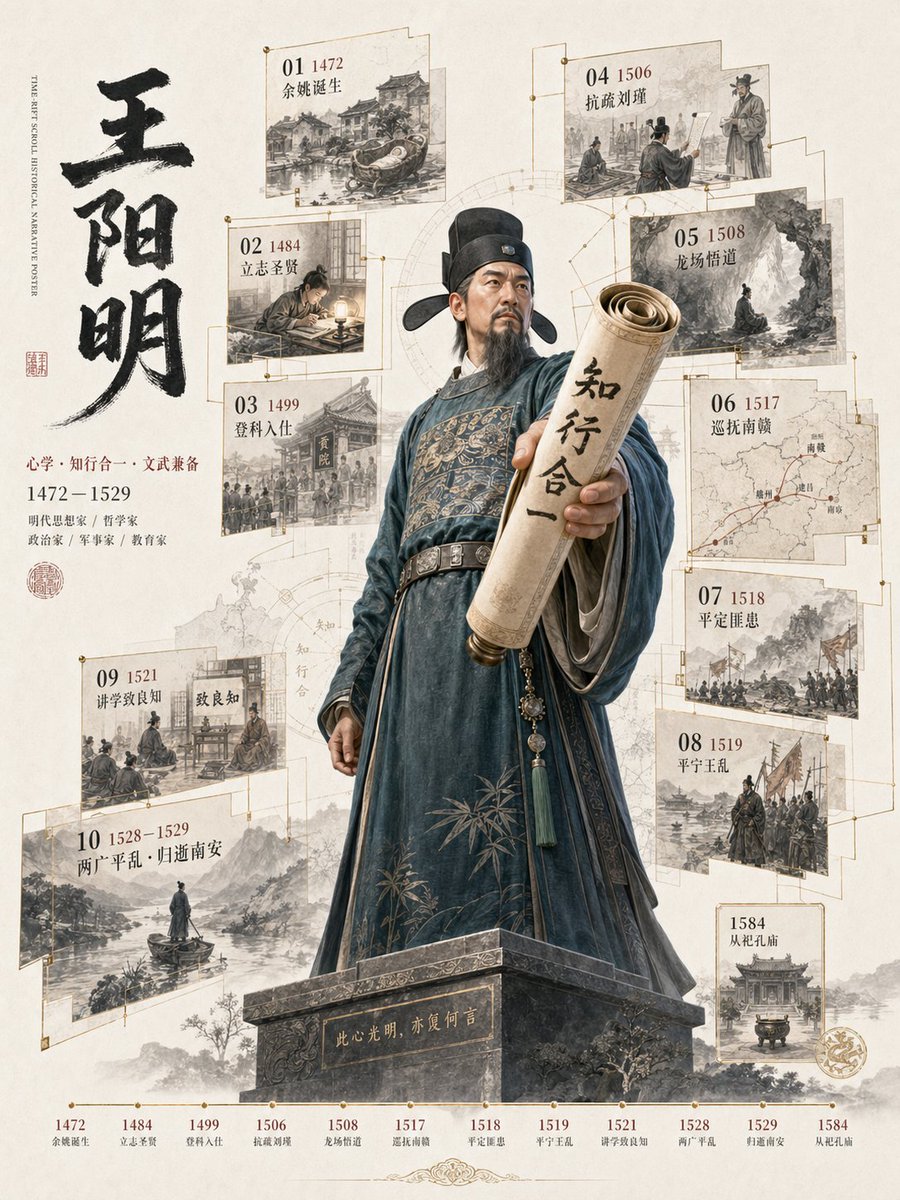
Full prompt: https://t.co/dyRG88qbyl Generate a detailed "3D Historical Figure Breakout Biography Poster" with cinematic depth and

Full prompt: https://t.co/dyRG88qbyl Generate a detailed "3D Historical Figure Breakout Biography Poster" with cinematic depth and

OpenAI

Source previews

These example images come from the original source. DROPIDEA has not independently tested these examples; results depend on the model and settings.

Ready to personalize

Your prompt

Source text

Replace the red variables with your information. Copy the full prompt and use it with your preferred agent.

TXT MD English version
Full prompt: https://t.co/dyRG88qbyl Generate a detailed "3D Historical Figure Breakout Biography Poster" with cinematic depth and archival richness. [User Inputs] Subject: [PERSON NAME] Role: [Emperor / General / Statesman / Philosopher / Writer / Reformer / Military Strategist, etc.] Time Period: [Dynasty / Historical Era] Core themes: [Unification / Reform / Loyalty / Mind Philosophy / Northern Expedition / Institution / Golden Age, etc.] Color scheme: [Black-gold-red / cyan-blue-gray-gold / dark red and ink gold / iron-blue, etc.] Aspect ratio: [3:4 vertical] At the center of the composition, place a complete, full-body 3D historical figure — the dominant visual element — with strong sculptural volume, cinematic weight, and historical gravitas. Clothing, headwear, armor, patterns, belt, and accessories must match their era and identity. The figure stands on a minimal monument-style pedestal that anchors without overwhelming. The figure must perform a clear "breakout-forward action": hands, arms, or a signature prop (jade seal, imperial edict, scroll, spear, sword, military tally, court tablet, map, or book scroll) must thrust toward the viewer, creating powerful foreshortening and 3D frame-breaking impact. The extended prop must be fully visible and unmistakable — not cropped. Surround the figure with 6–10 key historical event nodes arranged as lightweight, floating, multi-angled, semi-transparent clusters. Each node contains 2–4 fragments: number, year, event title, brief annotation, a small historical scene, plus fine gold connector lines, open frames, and node dots. These clusters should feel like dissected time slices drifting around the figure in an airy archival style — never heavy info-card blocks. Vary the orientation and depth of each cluster: some tilted left, some right, some angled inward or outward, at different heights, with slight overlaps from the figure's arms, robes, or weapon to enhance spatial depth. Give them a glass/acrylic look with faintly glowing edges, incomplete frames, and subtle layering — rich in information, light in visual weight. On the left side, place a large title with [PERSON NAME] in a font with oriental historical character — calligraphic, stele-carved, or ink-brushed. Add birth/death years, identity tags, keyword summary, and a sweeping subtitle. Keep the title area stable, clean, and uncluttered. Along the bottom, add a slim horizontal timeline connecting major life events, using thin gold lines, small dots, clean year labels, and minimal annotation. Style it like a museum time ruler or curatorial guide — not a thick info bar. Use a cream-white, antique paper, or light archival-wall texture as the background. Keep overall saturation low and restrained. Optionally include faint map textures, ancient architecture silhouettes, seal motifs, gold connector lines, or territorial outlines to evoke a historical exhibition atmosphere. Visual hierarchy rules: Central figure: heavy, realistic, three-dimensional, strong chiaroscuro. Historical event clusters: thin, transparent, floating, faintly glowing. Figure's gesture: breaking forward, full spatial impact. Bottom timeline: light, clean, informational only. Priority order if elements conflict: 1. Full-body central figure must be complete. 2. Forward-extending prop must be fully visible with strong 3D impact. 3. Event clusters must feel light and floating, not solid cards. 4. Figure stays visually heavy; information system stays visually light. 5. Timeline stays minimal and unobtrusive. If precise small text is difficult, prioritize legibility for the person's name, years, numbers, and event titles — brief descriptions may be simplified. #AIart #GPTImage2
Preview results

Your prompt

Full prompt: https://t.co/dyRG88qbyl Generate a detailed "3D Historical Figure Breakout Biography Poster" with cinematic depth and archival richness. [User Inputs] Subject: [PERSON NAME] Role: [Emperor / General / Statesman / Philosopher / Writer / Reformer / Military Strategist, etc.] Time Period: [Dynasty / Historical Era] Core themes: [Unification / Reform / Loyalty / Mind Philosophy / Northern Expedition / Institution / Golden Age, etc.] Color scheme: [Black-gold-red / cyan-blue-gray-gold / dark red and ink gold / iron-blue, etc.] Aspect ratio: [3:4 vertical] At the center of the composition, place a complete, full-body 3D historical figure — the dominant visual element — with strong sculptural volume, cinematic weight, and historical gravitas. Clothing, headwear, armor, patterns, belt, and accessories must match their era and identity. The figure stands on a minimal monument-style pedestal that anchors without overwhelming. The figure must perform a clear "breakout-forward action": hands, arms, or a signature prop (jade seal, imperial edict, scroll, spear, sword, military tally, court tablet, map, or book scroll) must thrust toward the viewer, creating powerful foreshortening and 3D frame-breaking impact. The extended prop must be fully visible and unmistakable — not cropped. Surround the figure with 6–10 key historical event nodes arranged as lightweight, floating, multi-angled, semi-transparent clusters. Each node contains 2–4 fragments: number, year, event title, brief annotation, a small historical scene, plus fine gold connector lines, open frames, and node dots. These clusters should feel like dissected time slices drifting around the figure in an airy archival style — never heavy info-card blocks. Vary the orientation and depth of each cluster: some tilted left, some right, some angled inward or outward, at different heights, with slight overlaps from the figure's arms, robes, or weapon to enhance spatial depth. Give them a glass/acrylic look with faintly glowing edges, incomplete frames, and subtle layering — rich in information, light in visual weight. On the left side, place a large title with [PERSON NAME] in a font with oriental historical character — calligraphic, stele-carved, or ink-brushed. Add birth/death years, identity tags, keyword summary, and a sweeping subtitle. Keep the title area stable, clean, and uncluttered. Along the bottom, add a slim horizontal timeline connecting major life events, using thin gold lines, small dots, clean year labels, and minimal annotation. Style it like a museum time ruler or curatorial guide — not a thick info bar. Use a cream-white, antique paper, or light archival-wall texture as the background. Keep overall saturation low and restrained. Optionally include faint map textures, ancient architecture silhouettes, seal motifs, gold connector lines, or territorial outlines to evoke a historical exhibition atmosphere. Visual hierarchy rules: Central figure: heavy, realistic, three-dimensional, strong chiaroscuro. Historical event clusters: thin, transparent, floating, faintly glowing. Figure's gesture: breaking forward, full spatial impact. Bottom timeline: light, clean, informational only. Priority order if elements conflict: 1. Full-body central figure must be complete. 2. Forward-extending prop must be fully visible with strong 3D impact. 3. Event clusters must feel light and floating, not solid cards. 4. Figure stays visually heavy; information system stays visually light. 5. Timeline stays minimal and unobtrusive. If precise small text is difficult, prioritize legibility for the person's name, years, numbers, and event titles — brief descriptions may be simplified. #AIart #GPTImage2
Related prompts