Skip to content
ImagesFree

Educational Food Anatomy Poster for Any Dish

An infographic prompt that generates a clean framed food anatomy poster for any variable food item: a central hero dish, AI-inferred ingredient callout panels, minimalist charts, and labeled connectors with no hardcoded ingredients. The opening requests a much lesser known Texan food, and the original conflict between the 16:9 opener and the square ratio in the Output section is preserved.

OpenAI

Source previews

These example images come from the original source. DROPIDEA has not independently tested these examples; results depend on the model and settings.

Ready to personalize

Your prompt

English

Replace the red variables with your information. Copy the full prompt and use it with your preferred agent.

TXT MD English version
16:9, do it for a much lesser known texan food to die for Do this for [Food / Dish / Meal / Snack / Beverage / Ingredient-Based Culinary Item]: 1. The Semantic Inference Engine (The Culinary Anatomy Board): Input A is a food item, prepared dish, snack, beverage, or edible composition. Analyze Input A and infer 6 Structural Components: The Central Hero Form: determine the most recognizable full assembled form of Input A as the centerpiece. The Core Ingredients: identify the 4–8 major components that define Input A’s structure, flavor, and identity. The Functional Roles: for each component, infer its culinary role — base, filling, binder, garnish, sauce, seasoning, texture layer, aromatic element, structural shell, etc. The Visual Breakdown: determine how each component should be separately represented — whole ingredient, chopped form, bowl of prepared component, sauce sample, leaf, grain cluster, powder, slice, or texture sample. The Analytical Metrics: infer 1–2 simple explainer charts or diagrams per component, such as flavor profile, texture intensity, heat level, crunch factor, acidity balance, sweetness, richness, freshness, or aroma spectrum. The Scientific Overlay: generate plausible educational-style labels such as simplified chemistry notation, structural classification, ingredient family, preparation type, or culinary property markers — visually credible, not hardcoded. 2. The Immutable Container (The Clean Educational Poster): Goal: a modern food anatomy infographic board. white framed poster or mounted display board ultra-clean background central assembled food item in the middle surrounding ingredient callout boxes distributed symmetrically around the hero object thin connecting lines from each ingredient panel to the relevant part of the central food 3. The Poster Construction (Centerpiece + Callout System): Build the poster as a structured educational layout: a large bold title at the top generated from Input A in the format of an anatomy / breakdown / composition study one central high-quality rendered image of Input A 4–8 surrounding ingredient boxes, each containing: a clean visual of one inferred component the component name one short scientific / pseudo-technical notation line one or two small chart graphics or profile diagrams color-code the component boxes subtly according to ingredient category if appropriate 4. No Hardcoding Constraint: Do not assume taco ingredients, sandwich ingredients, or any fixed food structure. Instead: if Input A is layered, infer layers if Input A is wrapped, infer shell + filling system if Input A is plated, infer sauce + protein + garnish + base if Input A is a beverage, infer liquid phases, toppings, foam, ice, aromatics, or inclusions if Input A is a dessert, infer crust, filling, glaze, texture contrast, decoration, and flavor accents if Input A is simple, infer fewer but more essential components The infographic must be generated from the variable food item itself. 5. Educational Graphic Style: The board should feel like a hybrid of: culinary science poster museum food explainer modern menu lab graphic clean commercial infographic Use: bold sans-serif typography neat line connectors minimalist charts clean color accents organized spacing and strong readability 6. Visual Syntax & Atmosphere: Camera: straight-on poster view, orthographic or near-orthographic Lighting: bright, soft, shadow-controlled studio lighting Background: clean tiled wall, neutral interior, or pure white presentation space Detail: premium food-render realism in the central item and ingredient samples Aesthetic: educational, appetizing, precise, modern, and visually balanced 7. Output Constraint: The final image should work for any Input A: tacos ramen croissants burgers sushi salad bowls dumplings bubble tea pizza pastries curries sandwiches All labels, component choices, and charts must be inferred from the variable dish, with no hardcoded ingredient set. Output: ONE image, square aspect ratio, clean framed educational food anatomy poster for Input A, featuring a central hero dish, AI-inferred ingredient callout panels, minimalist data charts, labeled connectors, and no hardcoded subject details.
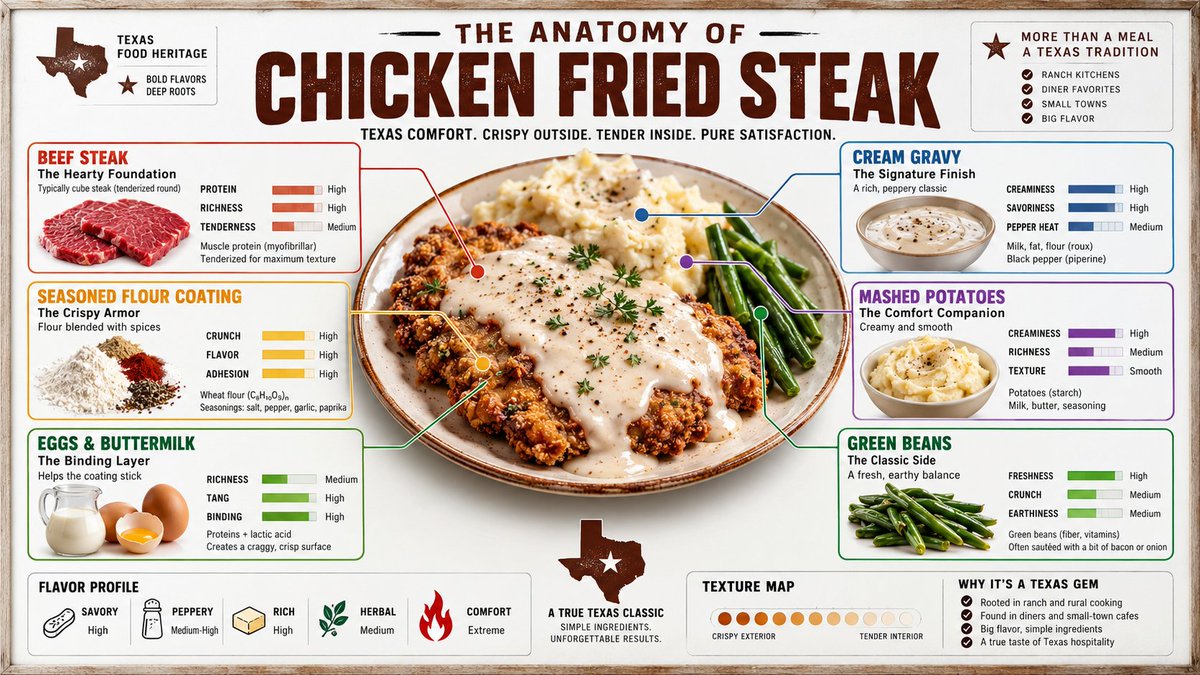
Preview results

Your prompt

16:9, do it for a much lesser known texan food to die for Do this for [Food / Dish / Meal / Snack / Beverage / Ingredient-Based Culinary Item]: 1. The Semantic Inference Engine (The Culinary Anatomy Board): Input A is a food item, prepared dish, snack, beverage, or edible composition. Analyze Input A and infer 6 Structural Components: The Central Hero Form: determine the most recognizable full assembled form of Input A as the centerpiece. The Core Ingredients: identify the 4–8 major components that define Input A’s structure, flavor, and identity. The Functional Roles: for each component, infer its culinary role — base, filling, binder, garnish, sauce, seasoning, texture layer, aromatic element, structural shell, etc. The Visual Breakdown: determine how each component should be separately represented — whole ingredient, chopped form, bowl of prepared component, sauce sample, leaf, grain cluster, powder, slice, or texture sample. The Analytical Metrics: infer 1–2 simple explainer charts or diagrams per component, such as flavor profile, texture intensity, heat level, crunch factor, acidity balance, sweetness, richness, freshness, or aroma spectrum. The Scientific Overlay: generate plausible educational-style labels such as simplified chemistry notation, structural classification, ingredient family, preparation type, or culinary property markers — visually credible, not hardcoded. 2. The Immutable Container (The Clean Educational Poster): Goal: a modern food anatomy infographic board. white framed poster or mounted display board ultra-clean background central assembled food item in the middle surrounding ingredient callout boxes distributed symmetrically around the hero object thin connecting lines from each ingredient panel to the relevant part of the central food 3. The Poster Construction (Centerpiece + Callout System): Build the poster as a structured educational layout: a large bold title at the top generated from Input A in the format of an anatomy / breakdown / composition study one central high-quality rendered image of Input A 4–8 surrounding ingredient boxes, each containing: a clean visual of one inferred component the component name one short scientific / pseudo-technical notation line one or two small chart graphics or profile diagrams color-code the component boxes subtly according to ingredient category if appropriate 4. No Hardcoding Constraint: Do not assume taco ingredients, sandwich ingredients, or any fixed food structure. Instead: if Input A is layered, infer layers if Input A is wrapped, infer shell + filling system if Input A is plated, infer sauce + protein + garnish + base if Input A is a beverage, infer liquid phases, toppings, foam, ice, aromatics, or inclusions if Input A is a dessert, infer crust, filling, glaze, texture contrast, decoration, and flavor accents if Input A is simple, infer fewer but more essential components The infographic must be generated from the variable food item itself. 5. Educational Graphic Style: The board should feel like a hybrid of: culinary science poster museum food explainer modern menu lab graphic clean commercial infographic Use: bold sans-serif typography neat line connectors minimalist charts clean color accents organized spacing and strong readability 6. Visual Syntax & Atmosphere: Camera: straight-on poster view, orthographic or near-orthographic Lighting: bright, soft, shadow-controlled studio lighting Background: clean tiled wall, neutral interior, or pure white presentation space Detail: premium food-render realism in the central item and ingredient samples Aesthetic: educational, appetizing, precise, modern, and visually balanced 7. Output Constraint: The final image should work for any Input A: tacos ramen croissants burgers sushi salad bowls dumplings bubble tea pizza pastries curries sandwiches All labels, component choices, and charts must be inferred from the variable dish, with no hardcoded ingredient set. Output: ONE image, square aspect ratio, clean framed educational food anatomy poster for Input A, featuring a central hero dish, AI-inferred ingredient callout panels, minimalist data charts, labeled connectors, and no hardcoded subject details.

Variable guide

[Food / Dish / Meal / Snack / Beverage / Ingredient-Based Culinary Item]

The food item to be anatomized; replace the full marker with your dish name.

Start of the template, after "Do this for".

Example value

chili con carne

much lesser known texan food to die for

The subject direction toward a lesser known Texan dish; editable for other regions.

Opening line before the [Food / Dish / Meal / Snack / Beverage / Ingredient-Based Culinary Item] marker.

Example value

a traditional little-known Texan dish

What you get

  • One image of a clean framed educational food anatomy poster
  • A central hero dish rendered with premium realism
  • 4–8 symmetrically distributed ingredient callout panels with labeled connectors
  • One short scientific/pseudo-technical notation line and 1–2 simple charts per component
  • Educational labels and classifications inferred from the dish itself with nothing hardcoded
  • A modern educational layout with bold typography, clean accents, and minimalist charts

Use cases

  • Educational content for Texan blogs and restaurants promoting lesser known dishes
  • Explanatory social media posts about dish anatomy
  • Menus and display boards showing a dish's components to customers
  • Teaching materials for culinary classes and food science workshops
  • A consistent infographic series across many dishes using the same template

How to use

  • Replace the [Food / Dish / Meal / Snack / Beverage / Ingredient-Based Culinary Item] marker with a lesser known Texan dish, such as chili con carne, chile rellenos, or smoked Texas sausage.
  • Note the original conflict: the prompt opens with 16:9 while the Output section specifies a square ratio — keep both as written, or decide your target ratio before generating if your tool allows it.
  • Send the prompt as-is to your image model; no reference image upload is needed because all components and callouts are inferred from the food item itself.
  • Review the result and check that each ingredient panel connects with a labeled line to the correct part of the central dish.
  • For a different dish, repeat the run changing only the marker without altering the template structure.
  • For best results, pick a dish with clearly distinct components (4–8 is ideal) so the callout panels stay informative.

Related prompts