Skip to content
ImagesFree

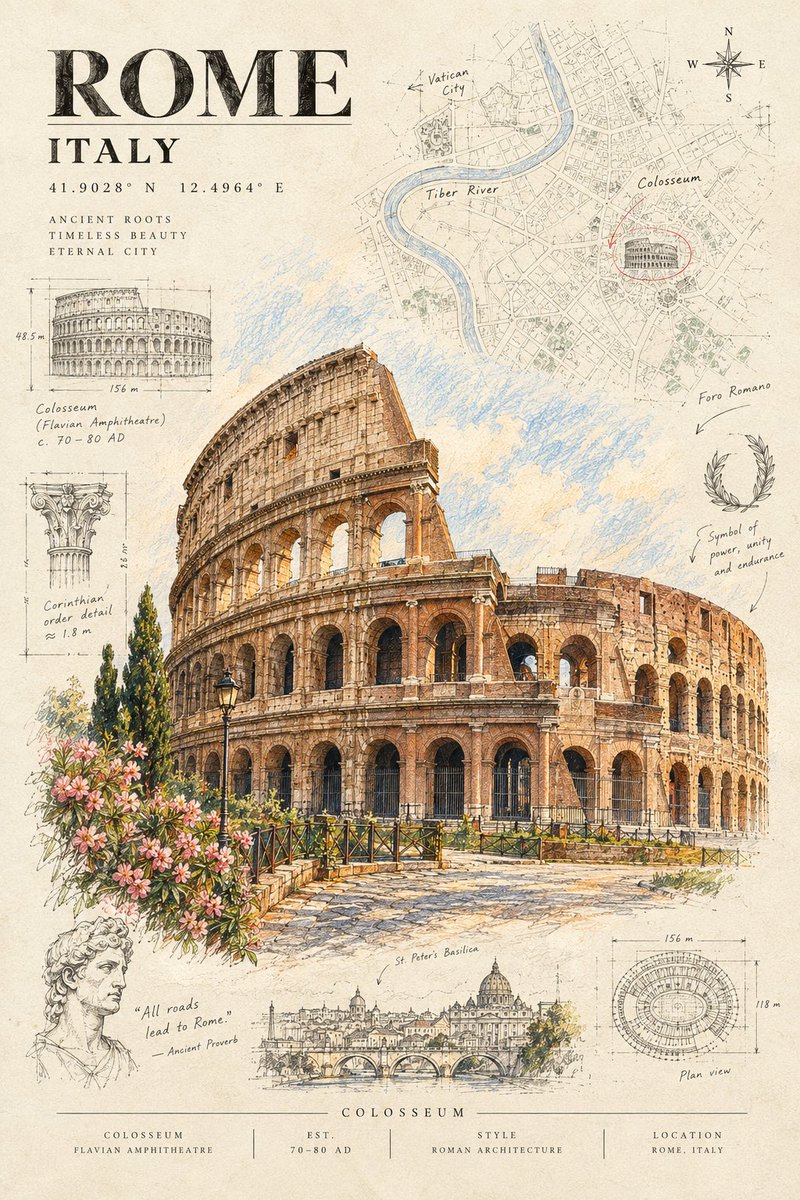
Detailed Vintage Architectural Passport Travel Poster

Prompt generating a collectible architectural travel poster blending fine hand-drawn landmark illustration with archival blueprint diagrams and editorial design.

OpenAI

Source previews

These example images come from the original source. DROPIDEA has not independently tested these examples; results depend on the model and settings.
Ready to personalize

Your prompt

English

Replace the red variables with your information. Copy the full prompt and use it with your preferred agent.

TXT MD English version
Create a highly detailed “Architectural Passport” travel poster for [CITY / LANDMARK], designed to look like a premium collectible art print that blends colored-pencil illustration, fine ink drawing, vintage architectural documentation, and subtle watercolor texture. Place the landmark as the dramatic hero, drawn with intricate hand-rendered details, realistic perspective, delicate pencil hatching, visible paper grain, and carefully controlled pops of natural color. Surround it with a faint city map, street names, architectural measurements, tiny elevation sketches, construction lines, botanical details, directional arrows, and miniature diagrammatic studies. Use an elegant warm ivory paper background with mostly muted graphite, charcoal, terracotta, olive green, dusty blue, and warm beige tones. Keep the background extremely clean and editorial, allowing the landmark to visually emerge from the page. Add sophisticated typography: [CITY] [LANDMARK NAME] small coordinates, founding/construction date, architectural style, neighborhood name, and tiny archival annotations. Include one or two miniature architectural detail drawings beside the main structure, as if taken from an architect’s sketchbook. Add subtle imperfections: pencil smudges, uneven ink pressure, erased construction marks, paper fibers, faint halftone texture, and hand-drawn annotation marks. The composition should feel like a cross between a vintage travel poster, an architectural magazine cover, a museum exhibition print, and a designer’s sketchbook. Visual hook: make the landmark extremely detailed and colorful while the surrounding city information remains almost ghost-like, creating a striking contrast between “the place” and “the blueprint of the place.” Vertical 4:5 composition, premium editorial design, sophisticated negative space, ultra-detailed hand illustration, realistic architectural perspective, tactile paper texture, collectible poster aesthetic, visually striking at thumbnail size, no photorealistic rendering, no 3D CGI look.
Preview results

Your prompt

Create a highly detailed “Architectural Passport” travel poster for [CITY / LANDMARK], designed to look like a premium collectible art print that blends colored-pencil illustration, fine ink drawing, vintage architectural documentation, and subtle watercolor texture. Place the landmark as the dramatic hero, drawn with intricate hand-rendered details, realistic perspective, delicate pencil hatching, visible paper grain, and carefully controlled pops of natural color. Surround it with a faint city map, street names, architectural measurements, tiny elevation sketches, construction lines, botanical details, directional arrows, and miniature diagrammatic studies. Use an elegant warm ivory paper background with mostly muted graphite, charcoal, terracotta, olive green, dusty blue, and warm beige tones. Keep the background extremely clean and editorial, allowing the landmark to visually emerge from the page. Add sophisticated typography: [CITY] [LANDMARK NAME] small coordinates, founding/construction date, architectural style, neighborhood name, and tiny archival annotations. Include one or two miniature architectural detail drawings beside the main structure, as if taken from an architect’s sketchbook. Add subtle imperfections: pencil smudges, uneven ink pressure, erased construction marks, paper fibers, faint halftone texture, and hand-drawn annotation marks. The composition should feel like a cross between a vintage travel poster, an architectural magazine cover, a museum exhibition print, and a designer’s sketchbook. Visual hook: make the landmark extremely detailed and colorful while the surrounding city information remains almost ghost-like, creating a striking contrast between “the place” and “the blueprint of the place.” Vertical 4:5 composition, premium editorial design, sophisticated negative space, ultra-detailed hand illustration, realistic architectural perspective, tactile paper texture, collectible poster aesthetic, visually striking at thumbnail size, no photorealistic rendering, no 3D CGI look.

Variable guide

[CITY / LANDMARK]

Target city or landmark to illustrate

First sentence following 'travel poster for '

Example value

Paris / Eiffel Tower

[CITY]

City name for the poster typography

Typography section, first line

Example value

PARIS

[LANDMARK NAME]

Specific name of the featured architectural structure

Typography section, second line beneath [CITY]

Example value

EIFFEL TOWER

What you get

  • A highly detailed colored-pencil and ink illustration of a focal architectural landmark.
  • Archival blueprint context including faint street maps, construction marks, and technical notes.
  • An elegant, vintage museum-grade travel print rendered on textured ivory paper.

Use cases

  • Wall art and collectible prints for interior design, offices, or study rooms.
  • Travel merchandise, postcard collections, and souvenirs.
  • Editorial covers for architectural publications, guides, and museum exhibitions.

How to use

  • Choose your target city and architectural subject, replacing [CITY / LANDMARK].
  • Fill in the typographical tags by replacing [CITY] with the city name and [LANDMARK NAME] with the structure's title.
  • Generate the image using a vertical aspect ratio (4:5 or 3:4) for optimum editorial layout composition.

Related prompts