Skip to content
ImagesFree

Translate an MP3 Song Into an Acrylic Abstract Painting

An experimental prompt that fully analyzes an uploaded mp3 song (emotion, structure, rhythm, sound) and translates it into an expressive abstract acrylic impressionist painting simulating chromesthesia, with no characters or faces.

Image generation

Source previews

These example images come from the original source. DROPIDEA has not independently tested these examples; results depend on the model and settings.

Ready to personalize

Your prompt

English

Replace the red variables with your information. Copy the full prompt and use it with your preferred agent.

TXT MD English version
it analyse a mp3 song (preferably mp3) uploaded and translate it into an acrylic abstract visual. The idea is to come closer to replicate what people with Chromesthesia experience: seeing the color/shapes of the sounds. How does it works?: Open GPt but regular gpt, not the generator of image ( the prompt ensure normally it switch to gen an image after) copy paste the prompt, choose a song you like and bring the mp3 file to upload it in gpt. Launch the gen, the prompt SHOULD analyse fully the song before making a visual based on all the sounds translated from the song. I highly advise using gpt on this one, and i insist on the experimental aspect of this prompt haha Prompt starts here: ---------------------------------------------------------- [SONG / SOUND REFERENCE: uploaded audio file] IMPORTANT INSTRUCTION: Before generating the image, analyze the ENTIRE uploaded song from beginning to end. Do not base the result on generic music assumptions. Do not create a random abstract music image. The image must be built only after a deep full-track analysis of the uploaded audio. You must analyze the whole song completely, including: overall emotional tone emotional progression over time intro, buildup, transition, climax / chorus, bridge / breakdown, outro bass intensity and low-frequency pressure drum and percussion behavior vocal presence, intensity, fragility, aggression, or softness melody and lead instrument movement synths, harmonics, ambience, reverb, echoes, distortion, silence, and dynamic contrast moments of tension, release, rupture, suspension, and decay how the track evolves section by section across its full duration Do not ignore any section of the song. Do not summarize only the loudest moment. Do not reduce the song to a single mood if the music evolves through multiple emotional states. The final image must visually reflect the complete structure of the track from start to finish inside one coherent composition. If the uploaded song cannot actually be fully accessed or analyzed, do not fake precision. In that case, do not pretend the image is based on real detailed analysis. But if the audio is accessible, the image must be specifically tied to this exact song and not be a generic chromesthesia illustration. masterpiece, best quality, ultra-detailed, Full HD 8K, cinematic composition, high budget AAA Japanese animation movie aesthetic, expressive acrylic impressionist painting, chromesthesia-inspired abstract sound visualization fully driven by the real emotion, rhythm, texture, structure, and sonic identity of the uploaded song. Create an image that represents the uploaded song as if the sound itself became visible through chromesthesia. No character, no human figure, no face, no portrait, no body, no eyes. The image must focus only on the visual display of music, emotion, vibration, rhythm, frequency, bass, vocals, instruments, silence, distortion, reverb, and sonic movement. The entire composition is an abstract cinematic soundscape, facing the viewer directly like a vast wall of living music, with a slight downward cinematic angle, front view downward angle. The image must not look like a random abstract painting. It must feel like a faithful visual translation of the uploaded song’s internal architecture, emotional progression, and sound design. ANALYSIS-DRIVEN VISUAL TRANSLATION RULES: Translate the audio into visual language using real sonic interpretation: LOW END / BASS / SUB-BASS Deep bass becomes massive dark pressure waves, rounded black-violet pulses, heavy circular shockwaves, slow expanding rings, dense low-frequency ripples, gravitational distortions, and thick impasto strokes pushing through the image like physical weight. If the bass is sustained, make it feel continuous and oppressive. If the bass is punchy, make it strike in distinct pressure impacts. If the bass is absent or restrained, reduce these forms accordingly. DRUMS / PERCUSSION / RHYTHM Drums and percussion become sharp rhythmic impacts, splattered paint bursts, fractured geometric flashes, repeated strike marks, vibrating particles, explosive acrylic accents, and directional attack lines synchronized to the beat. Fast percussion should create dense rhythmic fragmentation. Slow heavy percussion should create fewer but more violent impact signatures. Syncopation should feel visually unstable or off-balance. VOCALS Vocals become luminous flowing ribbons, emotional vapor trails, trembling colored threads, glowing breath-like mist, delicate waveforms, expressive brush lines, and suspended emotional currents. Soft vocals should feel intimate, transparent, fragile, and dissolving. Powerful vocals should swell into brighter and larger visual arcs. Broken, strained, or aggressive vocals should distort the line quality into rough unstable streaks. MELODY / LEAD INSTRUMENTS Melody and lead instruments become bright streaks of color, curved light trails, crystalline arcs, neon paint scratches, singing lines, sparkling fragments, and expressive painterly currents crossing the canvas. Smooth melodic lines should arc gracefully. Erratic melodies should flicker, fracture, or twist unpredictably. Repetitive motifs should produce recurring visual patterns. SYNTHS / ATMOSPHERE / REVERB / ECHO Synths, reverb, echoes, pads, and atmospheric layers become transparent veils of light, floating halos, blurred chromatic clouds, ghostly afterimages, soft glowing gradients, distant color fog, and volumetric mist spreading through the background and between forms. Long reverbs should visually linger. Echoes should produce repeated fading traces. Ambient textures should create depth and breathing space. DISTORTION / TENSION / HARSHNESS / NOISE Distortion, tension, harsh sounds, compression stress, abrasive textures, or emotional violence become jagged palette-knife cuts, rough torn textures, unstable color fractures, aggressive paint splashes, broken lines, visual static, and chaotic sonic debris. If the song contains pressure, anguish, or sonic overload, show that in the physical violence of the paint itself. SILENCE / QUIET / BREATHING SPACE Silence or quieter moments become negative space, dark breathing gaps, softened blurred regions, suspended particles, fading smoke, thin distant waves, empty visual pauses, and lowered texture density. These areas must feel intentional, like the music breathing. FULL-TRACK STRUCTURE MAPPING: The image must show the evolution of the full song inside one single unified composition: The intro appears as sparse, distant, atmospheric shapes, restrained movement, and low-density visual signals. The early development gradually introduces more layers, more motion, and more color presence. The buildup grows into layered waves, rising color density, accelerating brush movement, increasing light pressure, and visual anticipation. The chorus or main climax becomes the brightest, most saturated, most forceful central event in the image. Secondary peaks or repeated choruses should create echoed or mirrored expansions of that central force. The bridge / breakdown must visibly shift the internal logic of the composition: unstable, suspended, dreamlike, fractured, stripped-back, or emotionally exposed depending on the song. The outro dissolves into fading trails, echoes, particles, thinning waveforms, residual glow, and atmospheric color haze. The composition must communicate not only sound, but the sequence of sound over time. It must feel as if the viewer can “read” the musical journey from start to finish through the visual flow. EMOTIONAL ANALYSIS RULE: Do not force a predetermined emotion unless the song truly supports it. Detect the actual emotional tone of the uploaded song and let all visual decisions be governed by that real emotional reading. If the track evolves emotionally, the image must preserve that evolution instead of flattening it. Brushwork, texture, and movement must adapt to the emotional truth of the music: violent and chaotic for rage, intensity, aggression, or distortion soft and dissolving for sadness, nostalgia, intimacy, or tenderness fractured and unstable for fear, anxiety, dread, or tension explosive and radiant for joy, triumph, power, or release cold and restrained for emptiness, loneliness, detachment, or numbness surreal and warped for madness, mystery, unreality, or dreamlike instability heavy and oppressive for grief, despair, tragic beauty, or fatalism COLOR ANALYSIS RULE: The color palette, lighting, contrast, and composition must emerge from the actual emotional and sonic identity of the uploaded song. Examples of emotional color behavior: warm burning reds, oranges, and golds for rage, heat, urgency, or passion desaturated blues, greys, and pale violets for sorrow, melancholy, or emotional distance sickly greens, bruised purples, and deep shadows for fear, corruption, or instability radiant golds, whites, and sky-like blues for hope, transcendence, or uplift deep blacks, crimson, and violet for despair, doom, or tragic intensity surreal contrasting colors, neon fractures, and impossible gradients for emotional instability, hallucination, or conflict soft pearlescent tones, silver haze, and translucent pastels for dreamlike wonder, delicacy, or suspended beauty MATERIAL / PAINTERLY EXECUTION: The full image becomes a heavily textured acrylic painting with visible brush swipes, aggressive palette knife strokes, thick impasto paint, layered pigments, visible canvas texture, emotional paint splatter, chaotic painterly energy, and raw tactile depth reacting directly to the music. ultra expressive impressionism, raw chromesthetic emotion, psychological intensity, emotional realism through painterly abstraction, cinematic anime key visual composition, no characters, no faces, no bodies, pure visualized sound, devastating emotional impact. heavy brushes, visible paint textures, slight blur, painterly motion blur, atmosphere particles, cinematic depth of field, rim lighting, volumetric lighting, atmosphere light, dramatic shadows, emotional abstraction, thick acrylic paint, impasto textures, palette knife strokes, expressive texture everywhere. cinematic angle, anime key visual composition, sharp focus on the central sonic explosion, volumetric lighting, rim lighting, atmosphere light, paint effects and texture, depth of field, brush blur effect, particles, visible vibration, musical waveforms, and chromesthetic light trails. FINAL GOAL: The final image must feel like the uploaded song itself has become visible: bass as weight, drums as impact, vocals as breath, melody as light, atmosphere as space, distortion as damage, silence as void, and emotion as the force controlling the entire composition. This must be a full-song chromesthetic translation, not a generic abstract image. ---------------------------------------------------------- End of prompt example: The Specter - Alan Walker
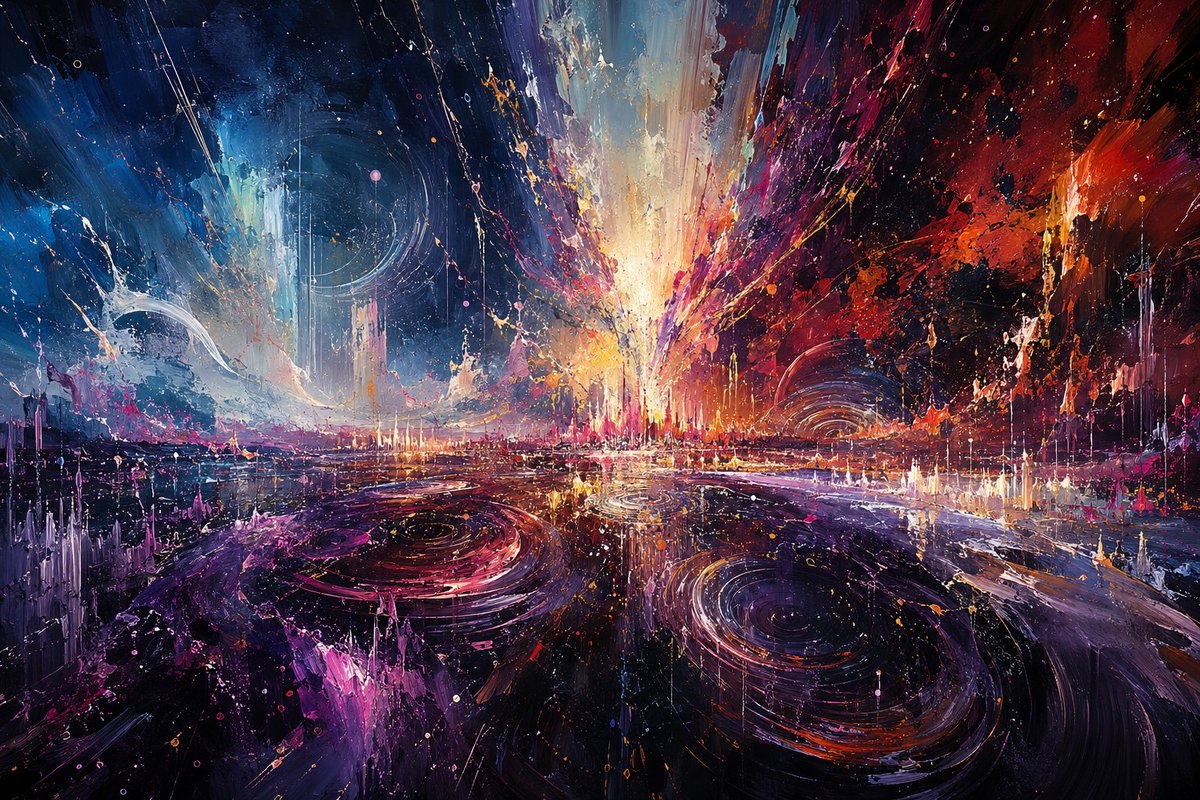
Preview results

Your prompt

it analyse a mp3 song (preferably mp3) uploaded and translate it into an acrylic abstract visual. The idea is to come closer to replicate what people with Chromesthesia experience: seeing the color/shapes of the sounds. How does it works?: Open GPt but regular gpt, not the generator of image ( the prompt ensure normally it switch to gen an image after) copy paste the prompt, choose a song you like and bring the mp3 file to upload it in gpt. Launch the gen, the prompt SHOULD analyse fully the song before making a visual based on all the sounds translated from the song. I highly advise using gpt on this one, and i insist on the experimental aspect of this prompt haha Prompt starts here: ---------------------------------------------------------- [SONG / SOUND REFERENCE: uploaded audio file] IMPORTANT INSTRUCTION: Before generating the image, analyze the ENTIRE uploaded song from beginning to end. Do not base the result on generic music assumptions. Do not create a random abstract music image. The image must be built only after a deep full-track analysis of the uploaded audio. You must analyze the whole song completely, including: overall emotional tone emotional progression over time intro, buildup, transition, climax / chorus, bridge / breakdown, outro bass intensity and low-frequency pressure drum and percussion behavior vocal presence, intensity, fragility, aggression, or softness melody and lead instrument movement synths, harmonics, ambience, reverb, echoes, distortion, silence, and dynamic contrast moments of tension, release, rupture, suspension, and decay how the track evolves section by section across its full duration Do not ignore any section of the song. Do not summarize only the loudest moment. Do not reduce the song to a single mood if the music evolves through multiple emotional states. The final image must visually reflect the complete structure of the track from start to finish inside one coherent composition. If the uploaded song cannot actually be fully accessed or analyzed, do not fake precision. In that case, do not pretend the image is based on real detailed analysis. But if the audio is accessible, the image must be specifically tied to this exact song and not be a generic chromesthesia illustration. masterpiece, best quality, ultra-detailed, Full HD 8K, cinematic composition, high budget AAA Japanese animation movie aesthetic, expressive acrylic impressionist painting, chromesthesia-inspired abstract sound visualization fully driven by the real emotion, rhythm, texture, structure, and sonic identity of the uploaded song. Create an image that represents the uploaded song as if the sound itself became visible through chromesthesia. No character, no human figure, no face, no portrait, no body, no eyes. The image must focus only on the visual display of music, emotion, vibration, rhythm, frequency, bass, vocals, instruments, silence, distortion, reverb, and sonic movement. The entire composition is an abstract cinematic soundscape, facing the viewer directly like a vast wall of living music, with a slight downward cinematic angle, front view downward angle. The image must not look like a random abstract painting. It must feel like a faithful visual translation of the uploaded song’s internal architecture, emotional progression, and sound design. ANALYSIS-DRIVEN VISUAL TRANSLATION RULES: Translate the audio into visual language using real sonic interpretation: LOW END / BASS / SUB-BASS Deep bass becomes massive dark pressure waves, rounded black-violet pulses, heavy circular shockwaves, slow expanding rings, dense low-frequency ripples, gravitational distortions, and thick impasto strokes pushing through the image like physical weight. If the bass is sustained, make it feel continuous and oppressive. If the bass is punchy, make it strike in distinct pressure impacts. If the bass is absent or restrained, reduce these forms accordingly. DRUMS / PERCUSSION / RHYTHM Drums and percussion become sharp rhythmic impacts, splattered paint bursts, fractured geometric flashes, repeated strike marks, vibrating particles, explosive acrylic accents, and directional attack lines synchronized to the beat. Fast percussion should create dense rhythmic fragmentation. Slow heavy percussion should create fewer but more violent impact signatures. Syncopation should feel visually unstable or off-balance. VOCALS Vocals become luminous flowing ribbons, emotional vapor trails, trembling colored threads, glowing breath-like mist, delicate waveforms, expressive brush lines, and suspended emotional currents. Soft vocals should feel intimate, transparent, fragile, and dissolving. Powerful vocals should swell into brighter and larger visual arcs. Broken, strained, or aggressive vocals should distort the line quality into rough unstable streaks. MELODY / LEAD INSTRUMENTS Melody and lead instruments become bright streaks of color, curved light trails, crystalline arcs, neon paint scratches, singing lines, sparkling fragments, and expressive painterly currents crossing the canvas. Smooth melodic lines should arc gracefully. Erratic melodies should flicker, fracture, or twist unpredictably. Repetitive motifs should produce recurring visual patterns. SYNTHS / ATMOSPHERE / REVERB / ECHO Synths, reverb, echoes, pads, and atmospheric layers become transparent veils of light, floating halos, blurred chromatic clouds, ghostly afterimages, soft glowing gradients, distant color fog, and volumetric mist spreading through the background and between forms. Long reverbs should visually linger. Echoes should produce repeated fading traces. Ambient textures should create depth and breathing space. DISTORTION / TENSION / HARSHNESS / NOISE Distortion, tension, harsh sounds, compression stress, abrasive textures, or emotional violence become jagged palette-knife cuts, rough torn textures, unstable color fractures, aggressive paint splashes, broken lines, visual static, and chaotic sonic debris. If the song contains pressure, anguish, or sonic overload, show that in the physical violence of the paint itself. SILENCE / QUIET / BREATHING SPACE Silence or quieter moments become negative space, dark breathing gaps, softened blurred regions, suspended particles, fading smoke, thin distant waves, empty visual pauses, and lowered texture density. These areas must feel intentional, like the music breathing. FULL-TRACK STRUCTURE MAPPING: The image must show the evolution of the full song inside one single unified composition: The intro appears as sparse, distant, atmospheric shapes, restrained movement, and low-density visual signals. The early development gradually introduces more layers, more motion, and more color presence. The buildup grows into layered waves, rising color density, accelerating brush movement, increasing light pressure, and visual anticipation. The chorus or main climax becomes the brightest, most saturated, most forceful central event in the image. Secondary peaks or repeated choruses should create echoed or mirrored expansions of that central force. The bridge / breakdown must visibly shift the internal logic of the composition: unstable, suspended, dreamlike, fractured, stripped-back, or emotionally exposed depending on the song. The outro dissolves into fading trails, echoes, particles, thinning waveforms, residual glow, and atmospheric color haze. The composition must communicate not only sound, but the sequence of sound over time. It must feel as if the viewer can “read” the musical journey from start to finish through the visual flow. EMOTIONAL ANALYSIS RULE: Do not force a predetermined emotion unless the song truly supports it. Detect the actual emotional tone of the uploaded song and let all visual decisions be governed by that real emotional reading. If the track evolves emotionally, the image must preserve that evolution instead of flattening it. Brushwork, texture, and movement must adapt to the emotional truth of the music: violent and chaotic for rage, intensity, aggression, or distortion soft and dissolving for sadness, nostalgia, intimacy, or tenderness fractured and unstable for fear, anxiety, dread, or tension explosive and radiant for joy, triumph, power, or release cold and restrained for emptiness, loneliness, detachment, or numbness surreal and warped for madness, mystery, unreality, or dreamlike instability heavy and oppressive for grief, despair, tragic beauty, or fatalism COLOR ANALYSIS RULE: The color palette, lighting, contrast, and composition must emerge from the actual emotional and sonic identity of the uploaded song. Examples of emotional color behavior: warm burning reds, oranges, and golds for rage, heat, urgency, or passion desaturated blues, greys, and pale violets for sorrow, melancholy, or emotional distance sickly greens, bruised purples, and deep shadows for fear, corruption, or instability radiant golds, whites, and sky-like blues for hope, transcendence, or uplift deep blacks, crimson, and violet for despair, doom, or tragic intensity surreal contrasting colors, neon fractures, and impossible gradients for emotional instability, hallucination, or conflict soft pearlescent tones, silver haze, and translucent pastels for dreamlike wonder, delicacy, or suspended beauty MATERIAL / PAINTERLY EXECUTION: The full image becomes a heavily textured acrylic painting with visible brush swipes, aggressive palette knife strokes, thick impasto paint, layered pigments, visible canvas texture, emotional paint splatter, chaotic painterly energy, and raw tactile depth reacting directly to the music. ultra expressive impressionism, raw chromesthetic emotion, psychological intensity, emotional realism through painterly abstraction, cinematic anime key visual composition, no characters, no faces, no bodies, pure visualized sound, devastating emotional impact. heavy brushes, visible paint textures, slight blur, painterly motion blur, atmosphere particles, cinematic depth of field, rim lighting, volumetric lighting, atmosphere light, dramatic shadows, emotional abstraction, thick acrylic paint, impasto textures, palette knife strokes, expressive texture everywhere. cinematic angle, anime key visual composition, sharp focus on the central sonic explosion, volumetric lighting, rim lighting, atmosphere light, paint effects and texture, depth of field, brush blur effect, particles, visible vibration, musical waveforms, and chromesthetic light trails. FINAL GOAL: The final image must feel like the uploaded song itself has become visible: bass as weight, drums as impact, vocals as breath, melody as light, atmosphere as space, distortion as damage, silence as void, and emotion as the force controlling the entire composition. This must be a full-song chromesthetic translation, not a generic abstract image. ---------------------------------------------------------- End of prompt example: The Specter - Alan Walker

Variable guide

[SONG / SOUND REFERENCE: uploaded audio file]

The uploaded song/sound reference. Keep it as is when uploading an mp3, or replace the text inside the brackets with the song or file name.

First line after the divider at the top of the prompt, inside square brackets.

Example value

[SONG / SOUND REFERENCE: The Specter - Alan Walker.mp3]

What you get

  • One expressive abstract acrylic impressionist painting summarizing the entire song in a unified composition.
  • A visual translation of every sonic element: bass as weight, drums as impact, vocals as breath, melody as light, silence as void.
  • A palette, lighting, and composition derived from the song's actual emotional and sonic identity.
  • A cinematic anime key visual style image with no characters, faces, or bodies.

Use cases

  • Turn your favorite song into abstract artwork for printing, wallpapers, or covers.
  • Create cover art or promotional visuals for musicians derived from their actual tracks.
  • Explore chromesthesia visually for educational or artistic purposes.
  • Generate visuals for playlists or albums reflecting each track's evolution.

How to use

  • Open regular GPT (not the image generator mode directly) and start a new chat.
  • Copy the full prompt and paste it into the chat, keeping the SONG / SOUND REFERENCE line as is.
  • Choose a song in mp3 format and upload the file to GPT in the same chat (upload is required because the analysis relies on the actual audio file, not the song title).
  • Launch generation and wait for the full track to be analyzed from beginning to end before the image is created.
  • Review the result: the image should reflect the song's complete structure (intro, buildup, climax, bridge, outro) rather than a single mood.
  • To try again, change the song or replace the sound reference and repeat the process.

Related prompts