Skip to content
ImagesFree

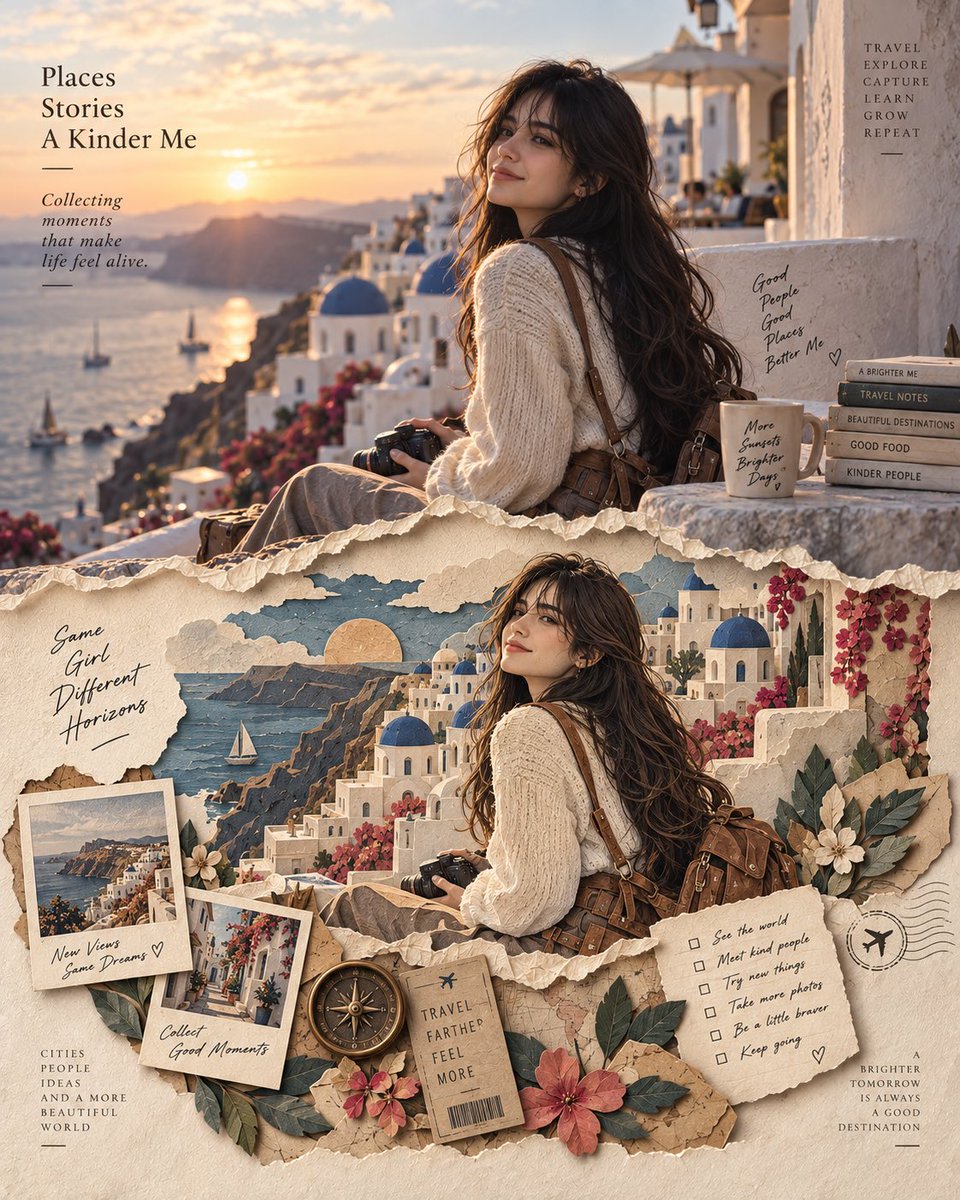
Editorial Poster Blending Realism with Paper-Cut Art

Prompt to generate a high-end 4:5 editorial poster transitioning from a cinematic photo portrait into handcrafted layered paper-cut storytelling artwork.

OpenAI

Source previews

These example images come from the original source. DROPIDEA has not independently tested these examples; results depend on the model and settings.

Ready to personalize

Your prompt

English

Replace the red variables with your information. Copy the full prompt and use it with your preferred agent.

TXT MD English version
GPT Image 2.5 on ChatGPT Prompt; Create a premium 4:5 editorial art poster featuring an original character and a visually rich personal story. The upper section should be a highly realistic cinematic portrait of the character in a natural environment connected to their story. Give the character a distinctive appearance, authentic expression, realistic skin texture, believable clothing, and carefully composed environmental details. The scene should feel like a frame from a sophisticated travel or lifestyle magazine. Gradually transform the lower section of the same composition into an intricate handcrafted layered paper-cut artwork. Reinterpret the character, surroundings, landmarks, objects, and small narrative elements entirely through cut and sculpted paper. Use stacked paper layers, finely cut silhouettes, subtle embossing, folded and torn edges, tactile fibers, miniature details, and realistic depth created by delicate shadows. Let the paper artwork visually continue elements from the photograph above, almost as if the real world is unfolding into a miniature handmade world. Include visual motifs connected to the character’s city, profession, passion, travels, or personal journey rather than simply copying the photographic scene. Use a sophisticated palette of warm ivory, parchment, muted earth tones, dusty neutrals, and restrained accent colors, with visible paper grain and handcrafted imperfections. Add elegant editorial typography with a refined serif typeface, a short fictional name or title, and minimal supporting text. Composition: sophisticated magazine cover aesthetic, strong visual hierarchy, generous negative space, balanced symmetry, premium art direction, subtle cinematic lighting, tactile realism, museum-quality paper craftsmanship. The key visual idea is: a real cinematic moment evolving into a handcrafted paper memory. No reference image, no existing celebrity likeness, no copied composition. Create the character, environment, and narrative from scratch while maintaining a polished, recognizable visual identity throughout.
Preview results

Your prompt

GPT Image 2.5 on ChatGPT Prompt; Create a premium 4:5 editorial art poster featuring an original character and a visually rich personal story. The upper section should be a highly realistic cinematic portrait of the character in a natural environment connected to their story. Give the character a distinctive appearance, authentic expression, realistic skin texture, believable clothing, and carefully composed environmental details. The scene should feel like a frame from a sophisticated travel or lifestyle magazine. Gradually transform the lower section of the same composition into an intricate handcrafted layered paper-cut artwork. Reinterpret the character, surroundings, landmarks, objects, and small narrative elements entirely through cut and sculpted paper. Use stacked paper layers, finely cut silhouettes, subtle embossing, folded and torn edges, tactile fibers, miniature details, and realistic depth created by delicate shadows. Let the paper artwork visually continue elements from the photograph above, almost as if the real world is unfolding into a miniature handmade world. Include visual motifs connected to the character’s city, profession, passion, travels, or personal journey rather than simply copying the photographic scene. Use a sophisticated palette of warm ivory, parchment, muted earth tones, dusty neutrals, and restrained accent colors, with visible paper grain and handcrafted imperfections. Add elegant editorial typography with a refined serif typeface, a short fictional name or title, and minimal supporting text. Composition: sophisticated magazine cover aesthetic, strong visual hierarchy, generous negative space, balanced symmetry, premium art direction, subtle cinematic lighting, tactile realism, museum-quality paper craftsmanship. The key visual idea is: a real cinematic moment evolving into a handcrafted paper memory. No reference image, no existing celebrity likeness, no copied composition. Create the character, environment, and narrative from scratch while maintaining a polished, recognizable visual identity throughout.

Variable guide

4:5

Desired aspect ratio for the editorial poster

In the first line of the prompt after 'Create a premium '

Example value

4:5

warm ivory, parchment, muted earth tones, dusty neutrals, and restrained accent colors

The editorial color palette and paper textures

In the color palette paragraph after 'Use a sophisticated palette of '

Example value

warm ivory, parchment, muted earth tones, dusty neutrals, and restrained accent colors

What you get

  • A premium 4:5 editorial magazine-style art poster with balanced negative space and rich visual hierarchy.
  • A top section featuring a cinematic, lifelike photo portrait set in a storytelling environment.
  • A bottom section seamlessly dissolving into handcrafted, intricate dimensional paper-cut art.
  • Sophisticated editorial serif typography with minimal storytelling text elements.

Use cases

  • Editorial travel, fashion, and lifestyle magazine cover concepts.
  • Narrative-driven advertising campaigns and brand storytelling visuals.
  • Fine art posters and collector prints blending realism with tactile craft art.

How to use

  • Copy the complete prompt and paste it into your preferred image generation tool supporting detailed artistic prompts.
  • Optionally adjust the aspect ratio (4:5) or customize the color palette keywords to fit your project theme.
  • Run the generation and let the model construct the original character narrative and layered paper transition.

Related prompts